Lintels: What Holds the Brick Up Over Your Windows
Every window and door in a brick wall has something spanning the gap above it. On most homes in Rutherford County that something is a piece of steel, and steel in a wet wall does not sit still.
Brick cannot span an opening by itself
Brick is strong in compression and weak in bending. Stack it and it will hold enormous weight. Ask it to bridge a four foot gap over a window and it has nothing to hold it there.
So every opening needs a spanning element. On homes built in Middle Tennessee over the last several decades, that element is almost always a steel angle, commonly called a lintel or a shelf angle. The brick above the window sits on the horizontal leg of that angle, and the angle carries the load sideways into the brick on either side of the opening.
Older buildings solved the same problem differently, with brick arches, stone lintels or heavy timber. The physics did not change. Only the material did.
How a steel lintel actually works
Picture an L shaped piece of steel running the width of the opening. The vertical leg hides in the wall behind the brick face. The horizontal leg projects out under the first course above the window, and that course and everything above it rest on it.
The load then travels to the ends. This is why bearing length matters. A lintel needs to sit a meaningful distance onto solid masonry at each end, and one cut too short concentrates that weight on a small patch of brick at the jambs.
The other detail is what happens above the lintel. Water inside a masonry wall runs down and needs a way out. That means flashing over the lintel and open weep holes in the course directly above it, so the drainage path does not dead end on a piece of steel.
- Steel angle spanning the opening, hidden behind the brick face
- Adequate bearing onto sound masonry at each end
- Flashing above it to carry water back out of the wall
- Open weep holes in the joint directly over the opening
- A joint under the ends of long angles so the steel can move without cracking brick
Want a price for your own wall?
Four quick questions and we come back with a written quote. Or call (772) 251-6654 if that is faster.
Request a quote
Four questions, about a minute. We'll call you back.
Rust jacking, the failure that defines this subject
Steel corrodes when it stays wet. What makes it a masonry problem rather than a cosmetic one is volume. Rust occupies several times the space of the steel it consumed, and it forms in layers between the lintel and the brick sitting on it.
That expansion has nowhere to go but up. It lifts the brick course above the opening, opens the bed joint into a visible horizontal line, and pushes the wall outward. Masons call it rust jacking, and it is why a small maintenance issue turns into a structural repair if it runs long enough.
Our climate feeds it. Wind driven rain from spring storms pushes water into the wall, freeze thaw cycling works joints open and gives it more entry points, and humid summers keep the cavity from drying quickly. Steel in a wall here has plenty of opportunity to rust.
The warning signs above an opening
Rust jacking announces itself well before anything falls. The signs are subtle at first and they cluster directly above windows and doors, which is what distinguishes them from general settlement cracking.
Stand back and sight along the wall above each opening. A course that is no longer level, or brick that bows outward compared to the wall on either side, is the classic pattern. Then get closer and look at the joints and the visible edge of the steel.
- A horizontal crack in the mortar joint just above a window or door
- The brick course above the opening lifted or bowed out of plane
- Orange or brown staining bleeding down the brick from that joint
- Paint blistering or flaking off the exposed edge of the lintel
- Windows or doors that suddenly bind, particularly garage doors
- Cracked or crushed brick at the corners of the opening
Why it turns up so often on homes here
Three habits account for most of the lintel failures found around Rutherford County, and none of them are exotic.
The first is a drainage path that never worked. If flashing above the lintel was skipped or the weep holes were mortared shut, water sits on the steel instead of leaving the wall. The second is paint used as maintenance. A coat of paint on the visible lintel edge looks like protection, but water is reaching the steel from behind, and paint on the front does nothing about that.
The third is age plus neglect. A lot of the brick housing stock here, including much of the older rental property near MTSU, has lintels that have never been touched since construction. Steel does not need attention often. It does need it eventually.
What a lintel repair involves
This is not a caulk and paint job once jacking has started, because the expanding rust sits under the brick and has to be removed.
The sequence is fairly consistent. The brick above the opening is shored or temporarily supported, the affected courses are carefully taken down and salvaged where possible, the steel is exposed, and then it is either cleaned back to sound metal and coated or replaced outright if section has been lost. Flashing and weeps get installed or corrected, and the brick goes back with mortar matched to the existing wall.
Cost tracks the width of the opening, the courses above it, whether the brick can be reused, and access. A single window on a one story ranch is a modest job. A row of openings on a two story elevation needing scaffold is a different scale, and only a site visit produces the real number.
- Temporary support for the masonry above
- Careful removal and salvage of the affected courses
- Steel cleaned and coated, or replaced where section is lost
- Flashing and weep holes installed or restored
- Brick relaid with matched mortar and a matched joint profile
Arches, stone and what to check on new construction
Not every opening uses steel. Jack arches and segmental arches carry load through the geometry of the brick itself, wedging the units against each other so the load travels to the jambs. You see both on the older buildings around the Murfreesboro square, and when they fail it is usually because the abutment beside them moved, not because the arch was weak.
Precast concrete and cut stone lintels also appear, especially on newer builds going for a particular look. They do not rust, which removes one failure mode, though they still need the flashing and drainage above them.
On a new build in Smyrna or La Vergne, the useful moment to look is before the brick goes up past the openings. Ask to see flashing over the lintels and confirm the weep holes above them stay open. It takes five minutes and it is the cheapest lintel maintenance you will ever do.
Related questions
Can a rusting lintel just be sanded and painted?
Early on, yes, and it is worthwhile maintenance. Once rust has expanded enough to lift the brick course above, painting the visible edge does nothing, because the damaging material is behind the face where a brush cannot reach. The test is whether the joint above the opening has opened up.
How long does a steel lintel last?
In a wall that drains properly it can last the life of the building. In a wall where flashing was skipped or weeps are blocked, it can be lifting brick within a couple of decades. Longevity has far more to do with how the wall handles water than with the steel itself.
Is a horizontal crack over a window urgent?
It is worth having looked at, though it is rarely an emergency. Rust jacking progresses over years, not weeks. The reason not to sit on it is cost, because the repair grows as more courses are displaced and more brick gets damaged beyond reuse.
Does homeowners insurance cover lintel repair?
Usually not, because rust jacking is gradual deterioration rather than sudden damage, and policies tend to draw the line there. Storm damage is a separate conversation, which is worth knowing in Middle Tennessee, where severe weather comes through every spring: a lintel lifted by rust and a wall struck by wind or a falling limb get handled differently. Your carrier decides it either way, so put the question to them and not to a contractor.
Can a lintel be replaced without taking down the whole wall?
Yes. The work is local to the opening and the courses immediately above it. The masonry gets supported, a limited area comes down, the steel is cleaned or replaced, and the brick goes back. On the sixties and seventies brick around Murfreesboro the brick that goes back is usually the brick that came out, since that run has not been made in decades and salvaging first is what keeps the repair from reading as a patch. It is disruptive to one opening rather than to a whole elevation.
Are garage door openings more prone to this?
They tend to show it sooner. A garage opening is the widest span on most houses and carries the most brick above it, so a lintel losing section has the least margin there. The two car fronts across the Smyrna and La Vergne subdivisions are worth a look for that reason. The first symptom an owner notices is usually the door binding in its track rather than anything in the brick.
More guides
All guides → Hiring
Red Flags When Hiring Someone to Work on Your Brick
The trouble with masonry is that the work you paid for gets buried the moment it is finished. These are the patterns worth slowing down over, and what to ask in each case.
ReadHiringWhat a Masonry Warranty Really Covers
A masonry warranty is a promise about workmanship, not a promise that the ground under your house will stop moving. Knowing the difference is how you read one quote against another.
ReadMortar Types N, S and O, and Why Stronger Is Often Wrong
Ask a mason what mortar is going in your wall and the answer should be a letter with a reason attached. If the reason is that it is the strongest available, something is off.
ReadBrick Maintenance on MTSU Area Rentals: A Landlord's Working List
Rental brick near campus fails in a predictable order, and almost all of it starts with water that was never managed. Here is how to triage it across a portfolio.
Read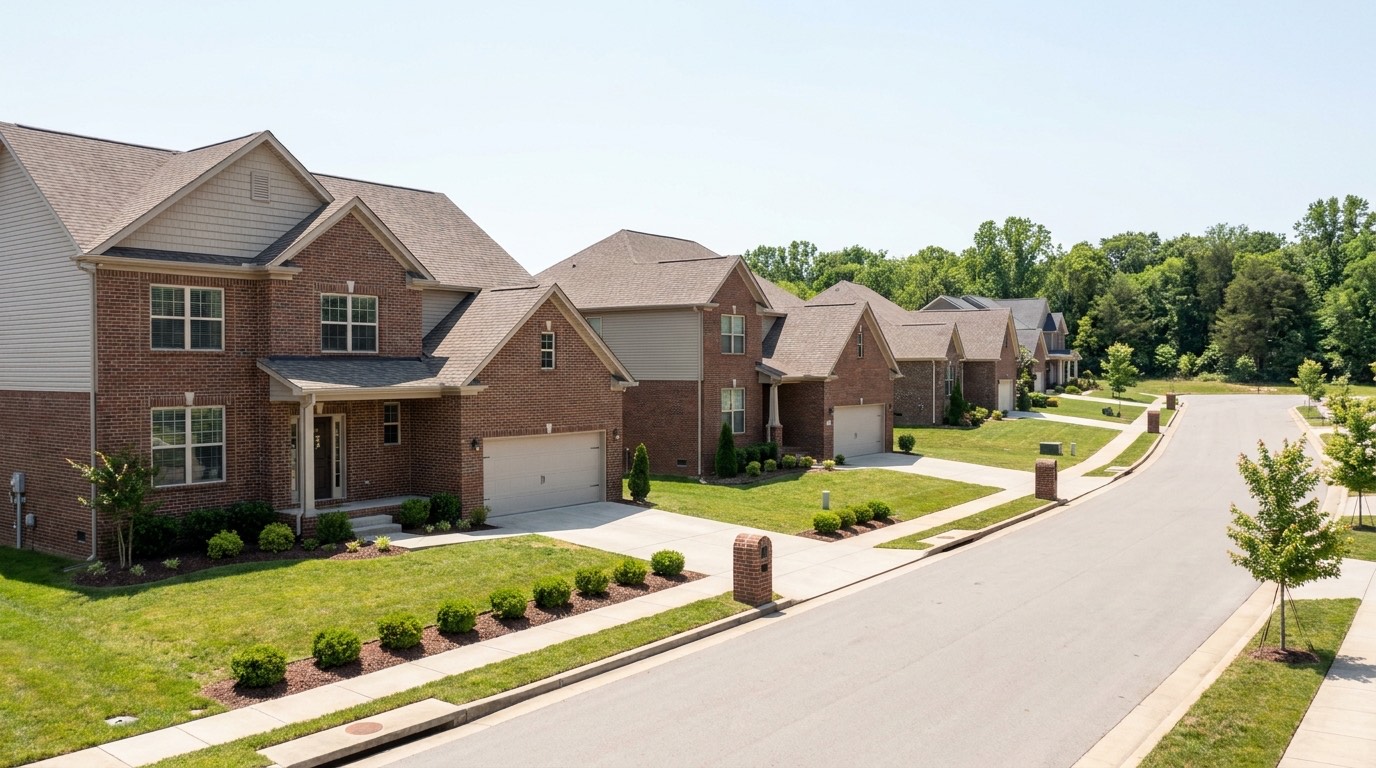 Local guide
What to Watch on New Brick Veneer in Smyrna and La Vergne
A ten year old subdivision house is not old. It is just old enough for the details behind the brick to start reporting on how carefully they were built.
ReadStraight answer on your wall.
Call, or send the form and we will get you a written price.