Masonry Repair and Restoration in Murfreesboro, TN
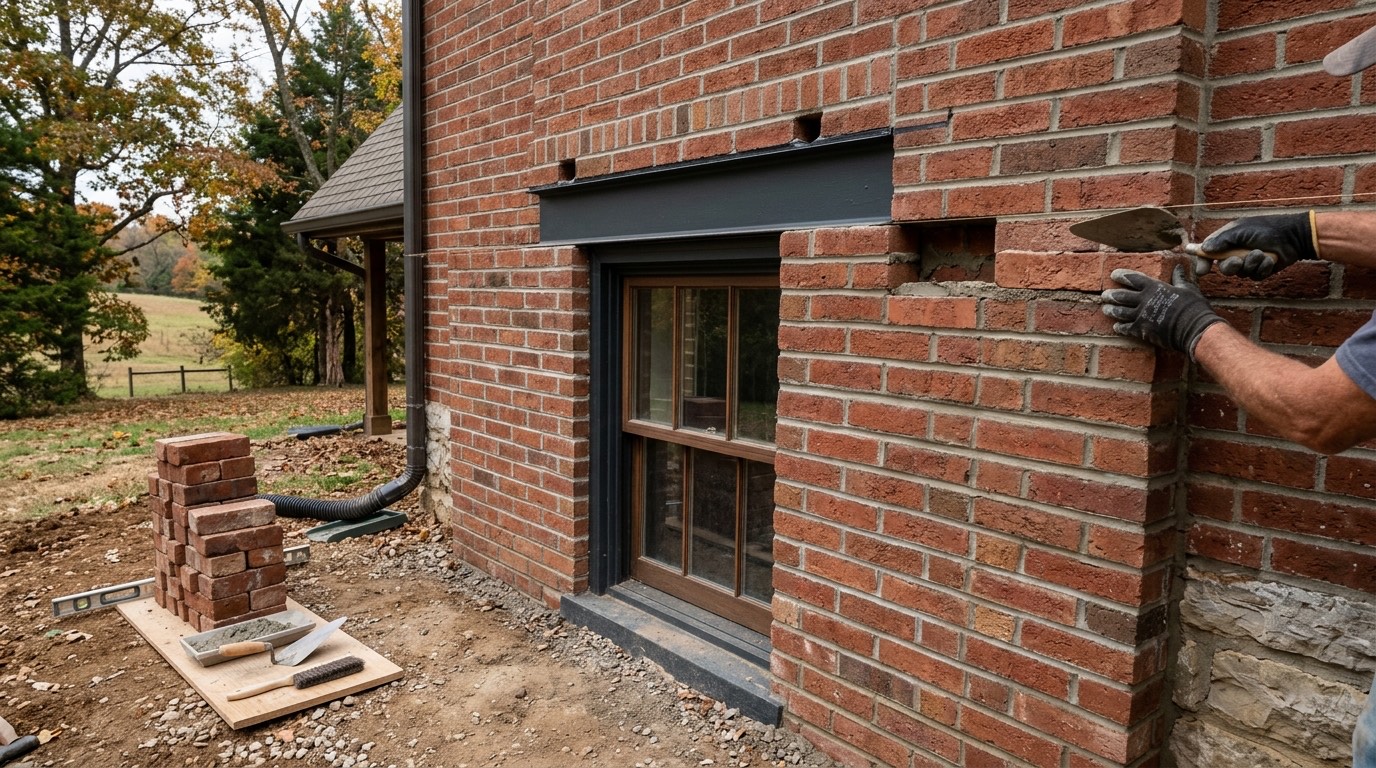
Brick moves, and Middle Tennessee gives it plenty of reasons to. We repair cracked walls, spalled faces, failed lintels and settled corners across Murfreesboro and Rutherford County, and we work out what caused the damage before we cut anything out.
Request a quote
Four questions, about a minute. We'll call you back.
We read the crack before we mix anything
A crack is a record of what a wall has been doing. Its direction, its width and where it starts tell us more than a photograph ever will. Stair-step cracking that follows the mortar joints usually means something below the wall has moved. A straight vertical split running through the brick faces themselves means the load found the units before it found the joints. Those two get very different repairs.
We also want to know whether the crack is still working. A hairline that has not changed in five years, with old paint unbroken across it, is a different problem from one that opens wider every August. Where it matters we mark the ends, note the width and look again after a wet season. Cutting into a wall that is still settling only buys you a fresh crack in new mortar.
- Stair-step cracking through joints, usually footing or soil movement
- Vertical cracks splitting brick faces, heavy load or hard restraint
- Horizontal cracking with a slight bulge, wall ties or lateral pressure
- Cracks running out of window and door corners, stress at the opening
- Spalled faces where the hard outer skin has popped off, water and frost
- Sagging brick over an opening, a rusted or undersized steel lintel
Clay soil, limestone and why walls here settle
Rutherford County soils carry a lot of clay, and clay is not a stable thing to build on. It swells as it takes on water and shrinks back through a dry stretch of summer. A footing sitting in that soil rides up and down with it, while the brick above the footing has no give at all. That is the mechanism behind most of the stair-step cracking we get called out to look at.
Then there is the rock. Middle Tennessee sits on limestone, often shallow, and that limestone is karst. One end of a house can bear on solid stone while the other end bears on soil that keeps moving. The difference between the two ends is what cracks the wall. So we look at gutters, grade and downspout discharge before anything else, because on plenty of houses the soil is only moving because roof water is being dumped beside the foundation.
- Downspouts discharging within a few feet of the footing
- Grade that falls back toward the house instead of away from it
- Long dry spells followed by heavy spring rain
- Large trees close enough to pull moisture out of the clay
- Fill soil under an addition that was never properly compacted
Freeze-thaw damage and spalled brick
Winter here runs the same cycle every year. Nights below freezing, days above it, repeated from December into February. A brick or a joint holding water freezes with that water inside, and ice takes up more room than water does. Enough repetitions and the face of the brick pops off. Once that hard fired face is gone, the softer body behind it drinks water faster than it ever did.
Spalling shows up where the water is. Under a leaking gutter, along the bottom courses where splashback lands, on chimneys, under a sill with no drip edge. Replacing the failed units without fixing the water source buys a few winters at best. We chase the water first, then cut out the damaged brick and reset new units matched to what surrounds them.
- Splashback zones in the bottom two or three courses
- Walls under leaking gutters, roof valleys and open edges
- Sills, caps, steps and any flat masonry surface that holds water
- Masonry coated with a film-forming sealer that traps moisture inside
- Elevations that catch winter sun and thaw fastest each afternoon
Repair it, rebuild it, or leave it alone
Not every crack needs work, and we will say so. A stable hairline in a garage wall with no water getting through it is not worth a rebuild. You are usually better off spending that money on gutters and grading, because those actually remove the cause.
When work is warranted, the scope steps up in stages. Repointing handles failed joints where the units are still sound. Cut-and-piece replacement handles isolated spalled or cracked brick. A section rebuild takes the wall down to a sound course and lays it back up, and that is the honest answer when brick has moved out of plane or a lintel has let go. Rebuilding a section once beats patching the same wall three times.
- Monitoring, for stable cracks with no water entry
- Repointing, where joints have failed and the brick is sound
- Unit replacement, for spalled or cracked brick in a solid wall
- Section rebuild, where a wall is out of plane or ties have failed
- Lintel replacement, where steel over an opening has rusted and lifted
- Helical tie work, where veneer has separated from the backup wall
Matching old brick and old mortar
Murfreesboro has genuine nineteenth century brick in and around the historic square, and the MTSU rental stock keeps a lot of older brick housing in service. Those walls were laid with soft lime mortar and soft brick. Repoint them with a hard modern Portland mix and the mortar ends up stronger than the units, so the wall relieves stress by breaking brick instead of joints. That is how a repointing job quietly ruins a historic wall.
On older work we match the mortar to the masonry rather than to whatever bag is closest. The National Park Service Preservation Brief on repointing historic masonry is the standard reference for that thinking, and ASTM C270 covers mortar types on newer work. Matching brick is the other half of the job. Color, size, texture and the original bond pattern all matter, and salvage often beats the closest new run.
- Softer lime based mortar for historic soft-fired brick
- Joint profile and width tooled to match the original
- Salvaged brick where the original run is long out of production
- Sample panels in an out-of-sight spot before the main elevation
- Sand matched for color, since sand is what colors mortar
What moves the price on a repair
Repair pricing follows access and uncertainty more than it follows square footage. A crack six feet off the ground on a flat wall is a ladder and a day. The same crack high on a three story gable above a deck means staging before anyone lays a brick. Season plays into it too. Mortar work generally stops below about forty degrees without heat and protection, and that protection is real cost.
The other variable is what turns up once the first course comes out. Sounding and probing gives us a good picture, but a wall can hide a rusted lintel or missing ties until it is open. We would rather hand you a range and explain what would push it to the top end than write a low number and follow it with a change order.
- Height, and whether staging or a lift is needed
- How far the failure runs past what you can see
- Brick matching difficulty, including sourcing salvage
- Whether steel lintels or wall ties have to be replaced
- Cold weather protection if the work lands in deep winter
- Drainage and grading corrections that remove the cause
How to read a masonry repair estimate
Look for a cause first. An estimate that says seal the cracks and repoint, with no word on why the wall cracked, is selling you a season. Ask what the contractor believes is moving and what happens if nothing is done about it. A straight answer to that question tells you most of what you need to know.
Then look at the detail. Mortar type should be named, not left as mortar. The brick match should be described, and ideally sampled, before work starts. If a rebuild is quoted, the number of courses coming down belongs in writing. Tennessee has no standalone masonry license, though the state Board for Licensing Contractors requires a contractor license above a dollar threshold, so ask about licensing and verify it yourself with the board.
- A stated cause, not just a list of tasks
- Mortar type and why it suits your wall in particular
- How brick will be matched and whether you approve a sample
- Extent of any rebuild, written in courses or square feet
- What happens if the damage runs wider than quoted
- Licensing and insurance details you can check independently
Masonry Repair and Restoration across our area
All areas →Questions about masonry repair and restoration in Murfreesboro
Is stair-step cracking always a foundation problem?
It usually points at movement below the wall, but not always at something needing underpinning. Seasonal clay movement, a settled footing, a washed out void and a plain drainage fault can all produce the same pattern. Width and whether it is still opening matter more than the pattern by itself. We look hard at the ground and the water before anyone starts talking about foundation work.
Can you match the brick on a house built in the 1960s?
Often we get close, and sometimes exact if that run is still in production. Where it is not, we look at salvage yards and at your own house, pulling brick from a rear wall or a hidden return and putting new units in the concealed spot. Brick also shifts color as it weathers, so a perfect factory match can still read wrong on the wall. We would rather set a sample and let you judge it in daylight.
Should I seal my brick to stop it spalling?
Be careful with that. A film-forming sealer over brick that is already taking on water traps the moisture inside, and freeze-thaw then works on a wall that cannot dry out. Breathable water repellents have a place on sound, properly pointed masonry. They are not a fix for failed joints or a gutter that overflows every storm. Correct the water path first, then decide whether a repellent adds anything.
Can masonry repair be done in winter?
Some of it, with planning. Mortar needs to hydrate and cold stalls that, so exterior work generally pauses below about forty degrees unless materials are heated and the work is tented. Interior repairs and demolition can go ahead in cold weather without much trouble. For a large exterior rebuild we would usually rather schedule spring or fall than fight the temperature and accept weaker joints.
How long should a proper repair last?
If the cause was corrected, the repaired section should outlast the rest of the wall, because it is now the newest material on the house. Joints on well built masonry here commonly run decades before they need attention again. The thing that shortens it every time is water. A repair under a gutter that still overflows will fail on the same schedule the last one did.
Other services
All services →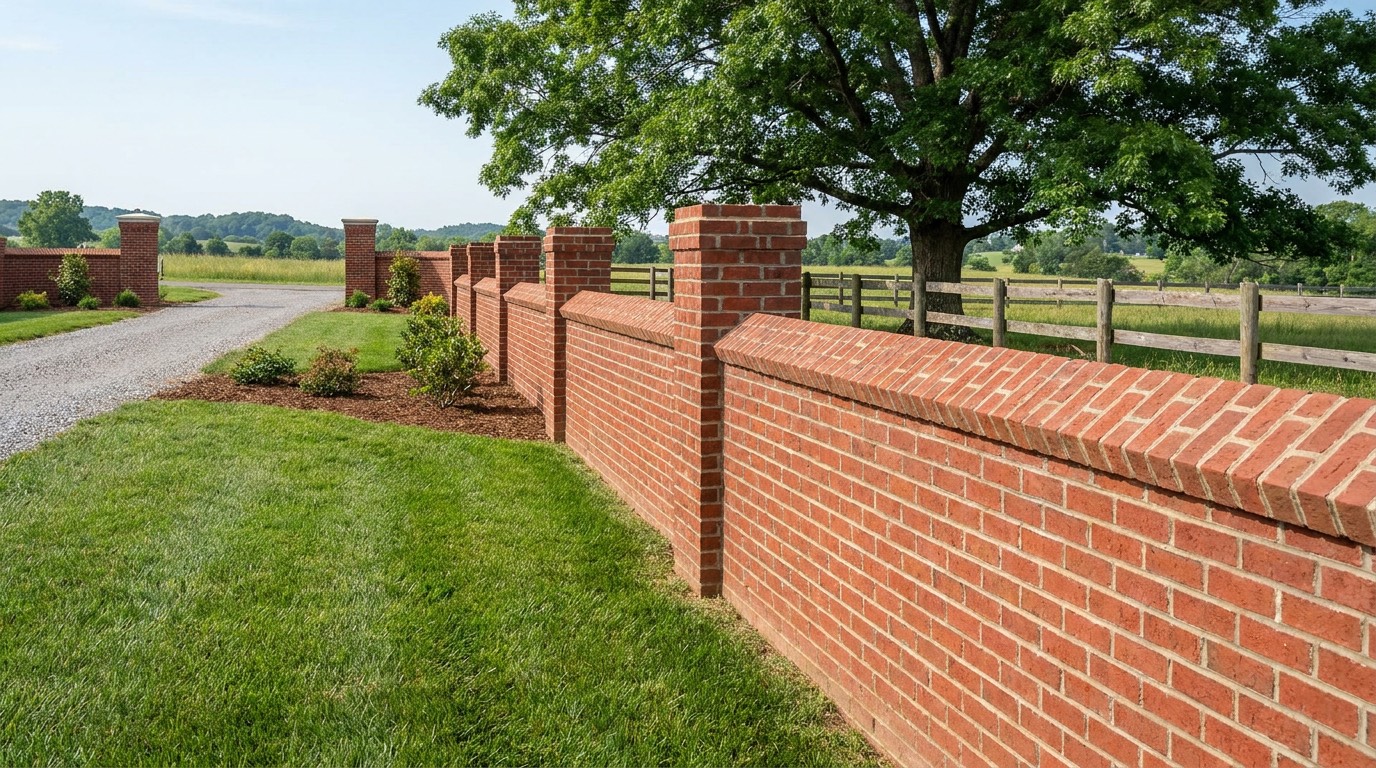
Brick Masonry
New brickwork, walls, columns and steps
Learn more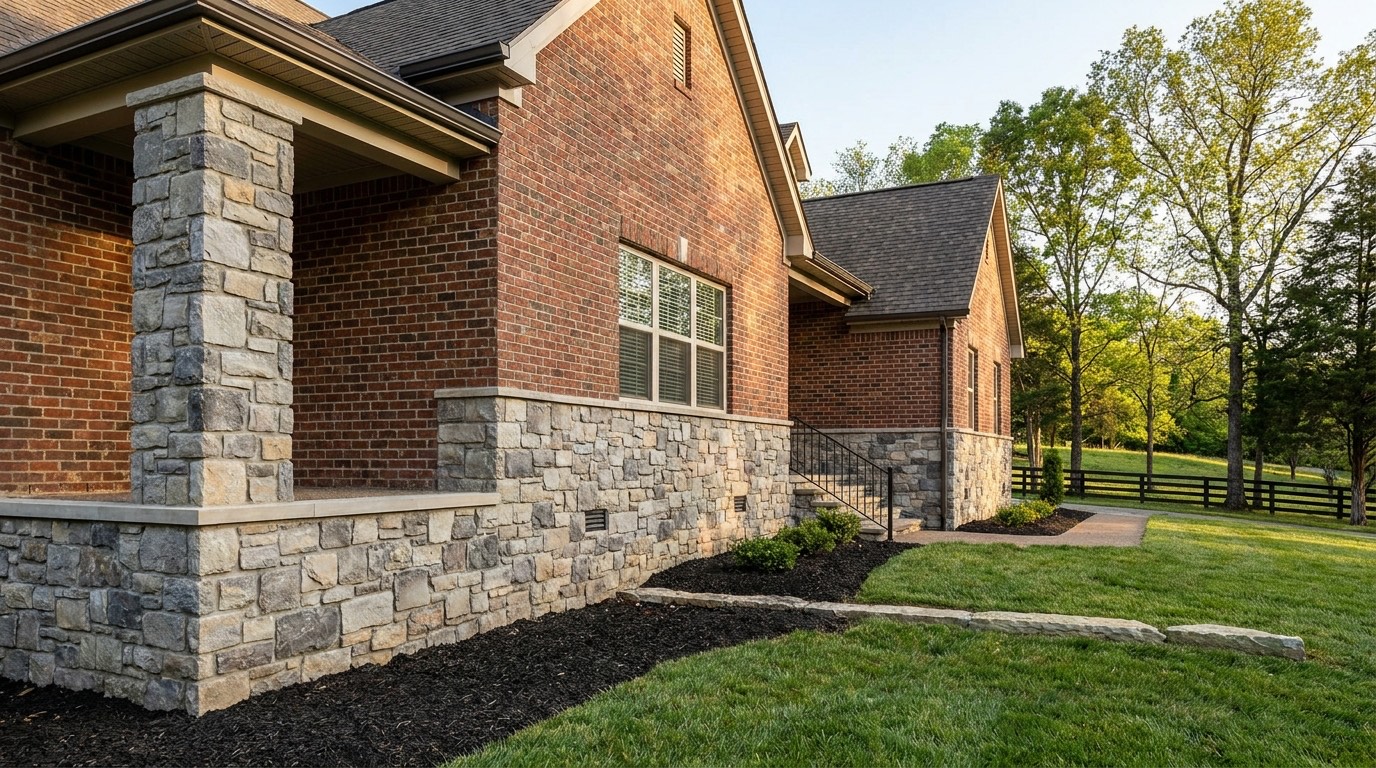
Stone Masonry
Natural and manufactured stone installation
Learn more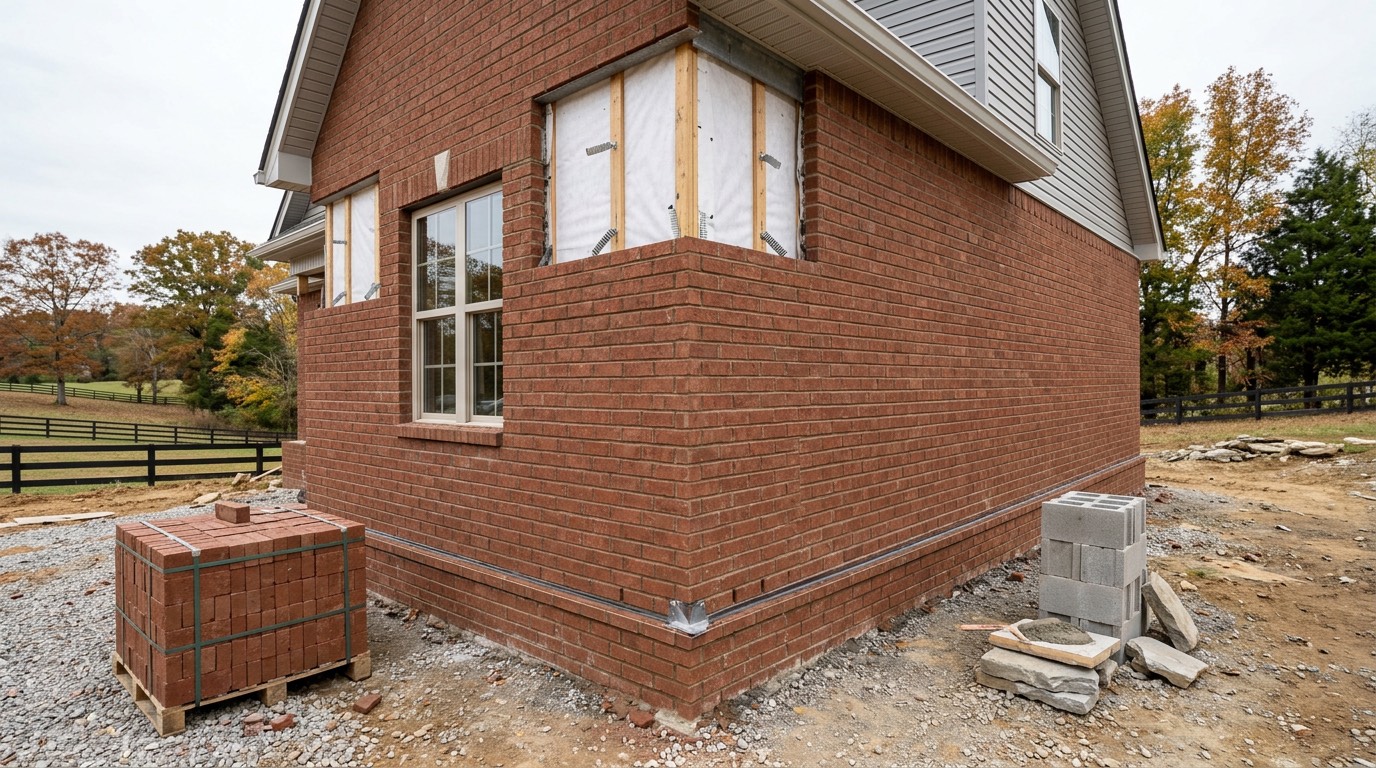
Brick Veneer Installation
Veneer over frame or block walls
Learn more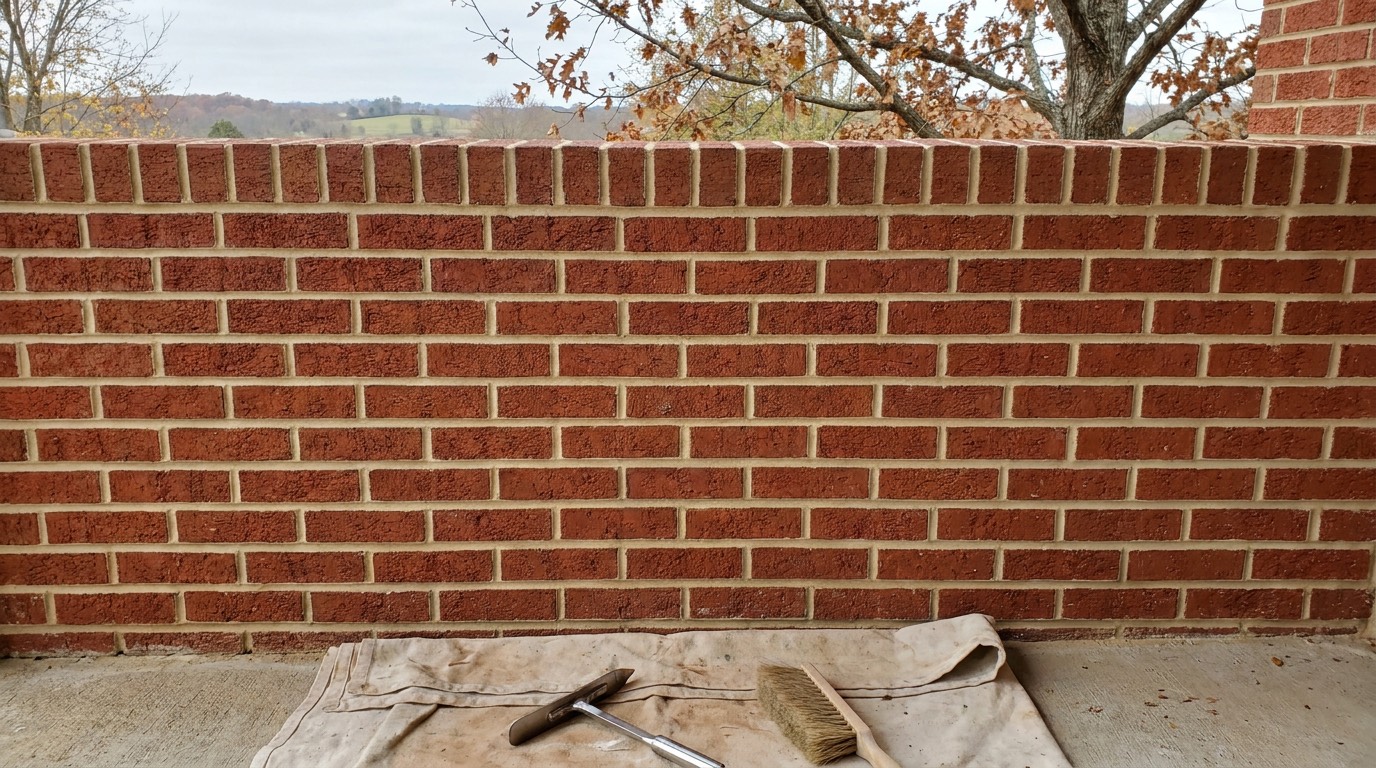
Tuckpointing and Repointing
Replacing failed mortar joints
Learn more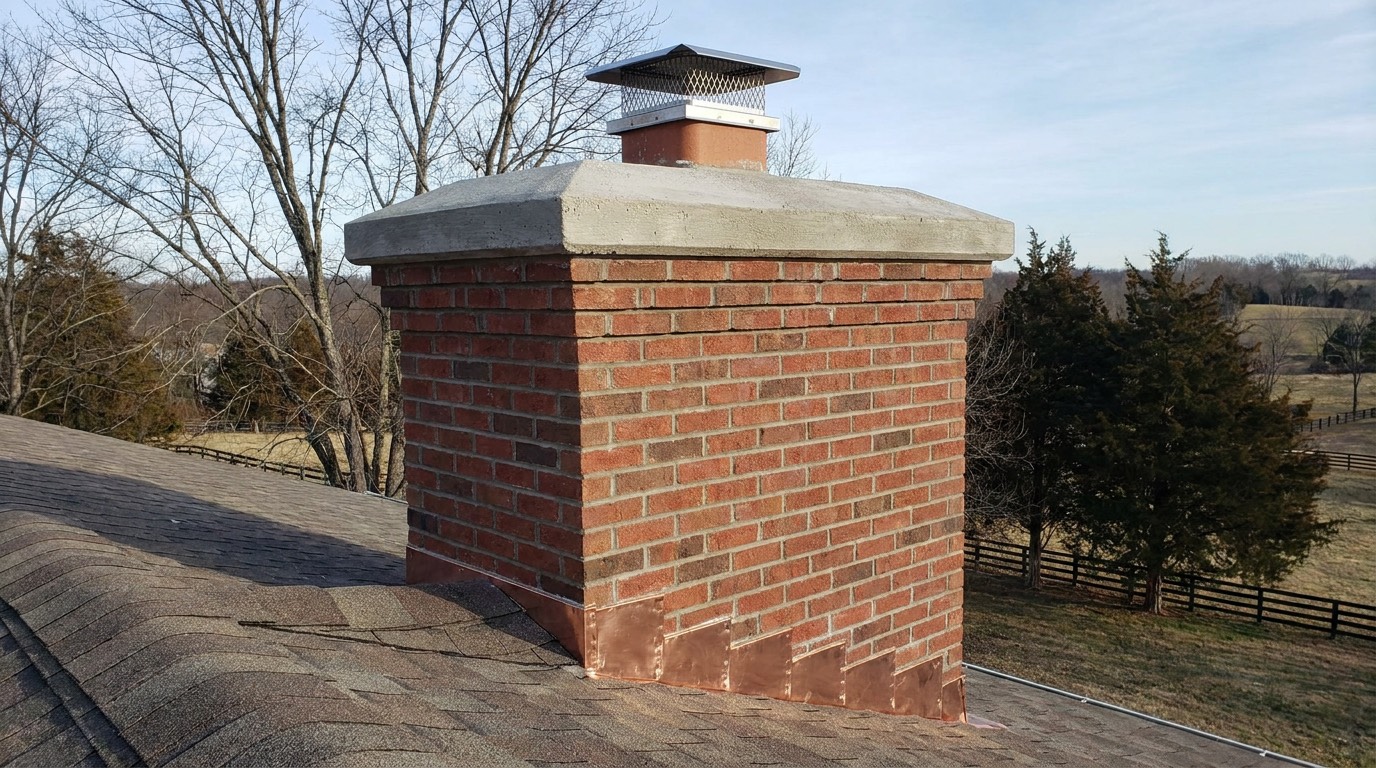
Chimney Masonry Repair
Crowns, flashing, rebuilds and relining
Learn more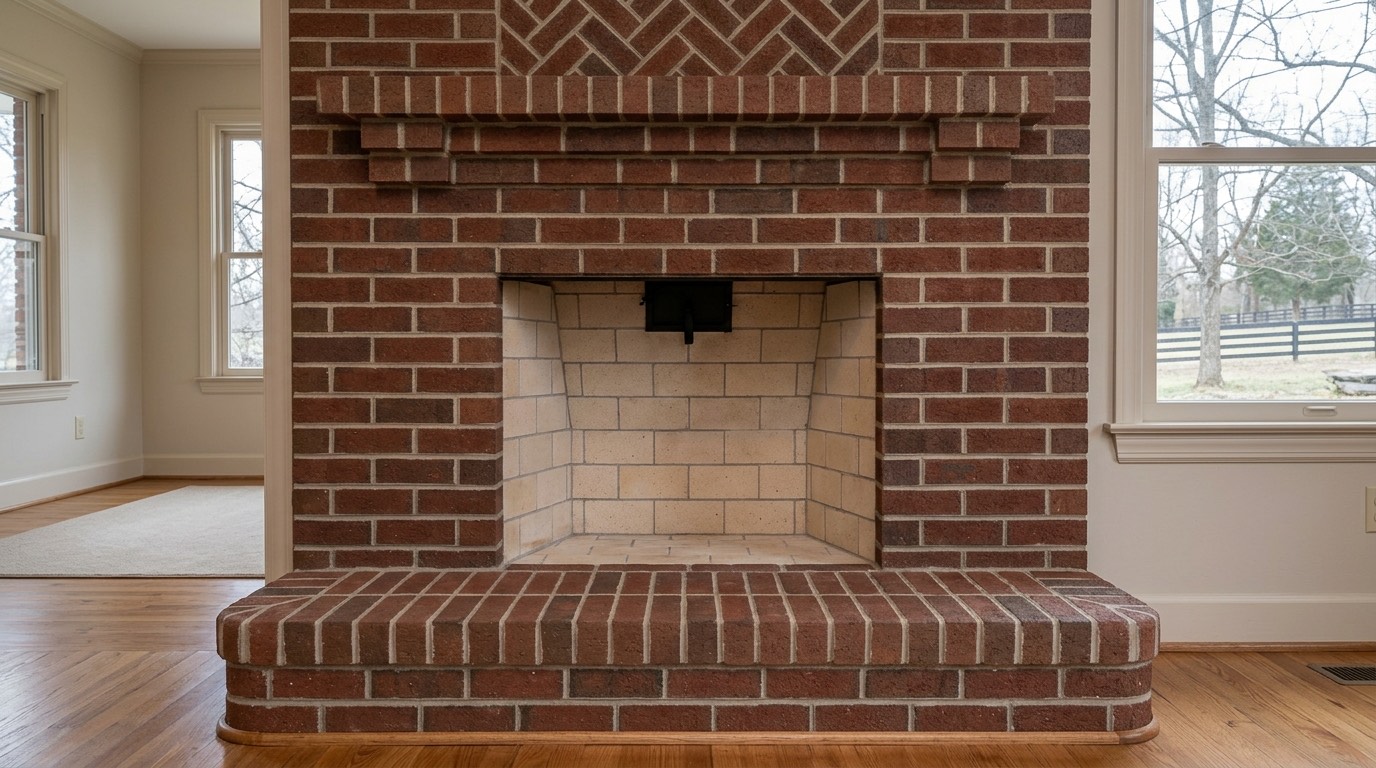
Brick Fireplaces
Indoor and outdoor fireplace masonry
Learn more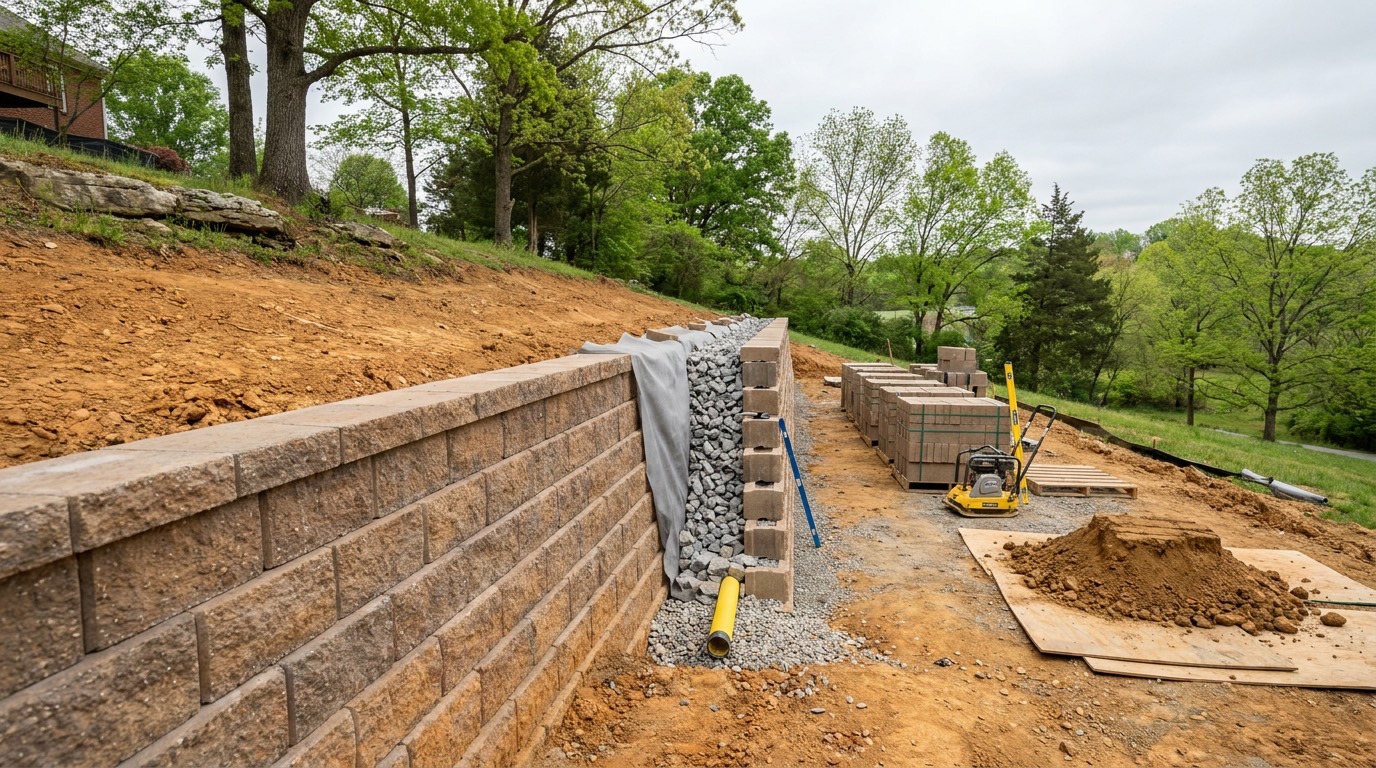
Retaining Walls
Block, brick and stone retaining walls
Learn more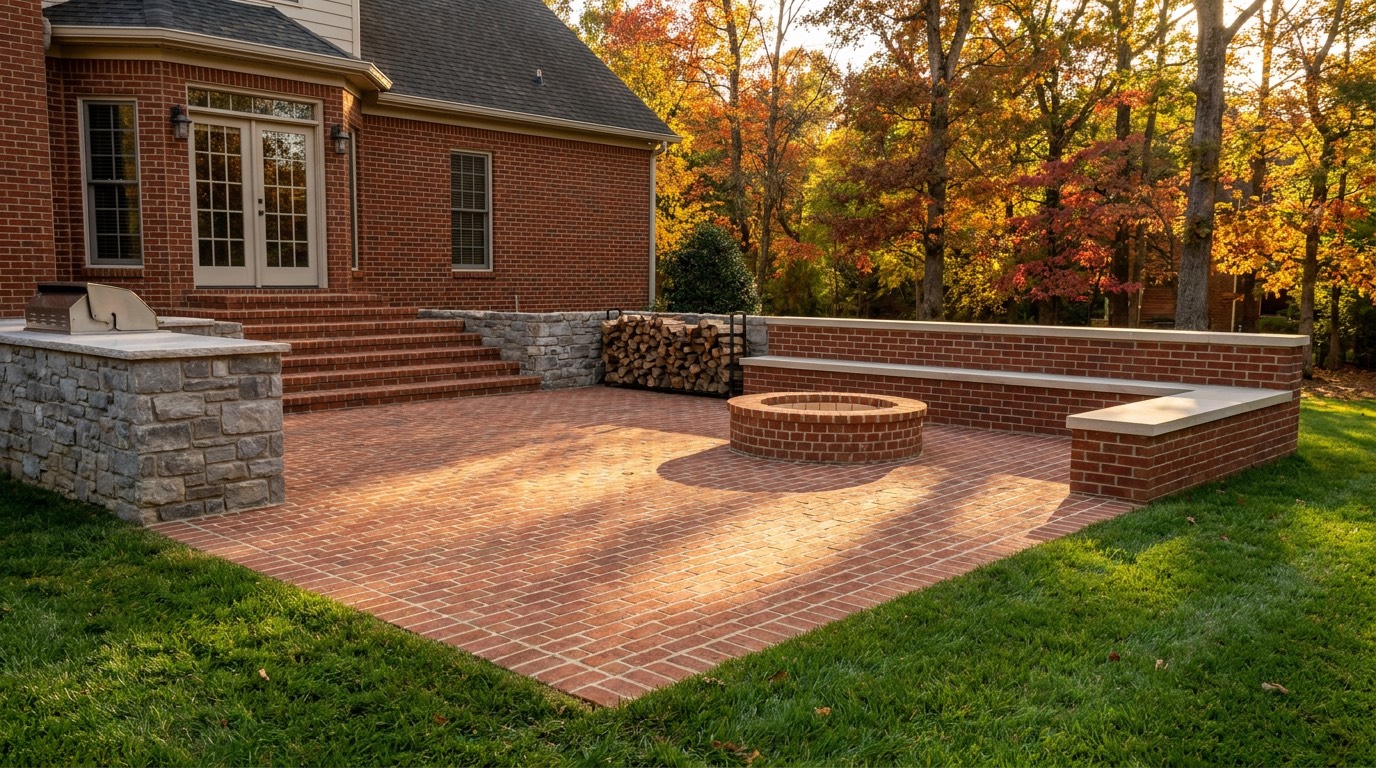
Outdoor Living Masonry
Patios, kitchens, fire pits and seat walls
Learn more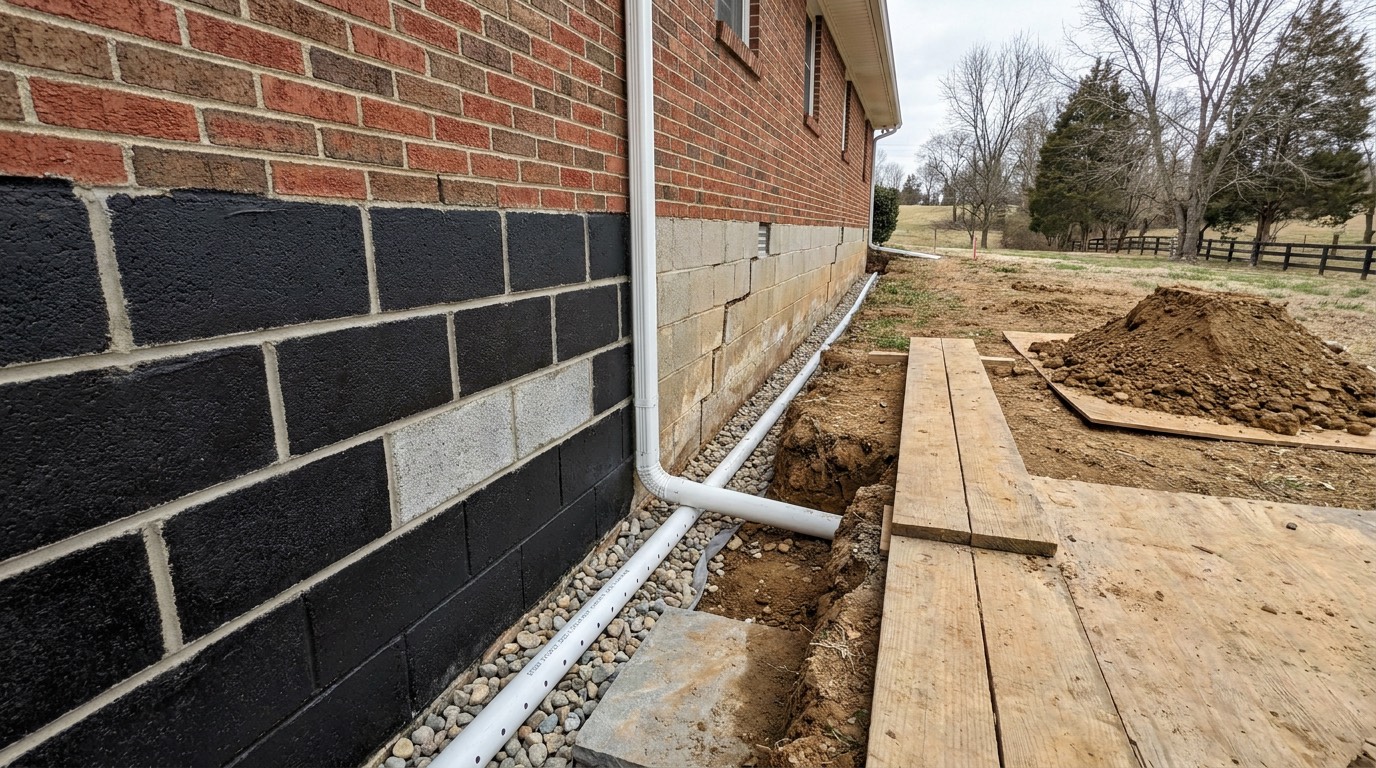
Foundation and Basement Masonry
Foundation repair and basement walls
Learn more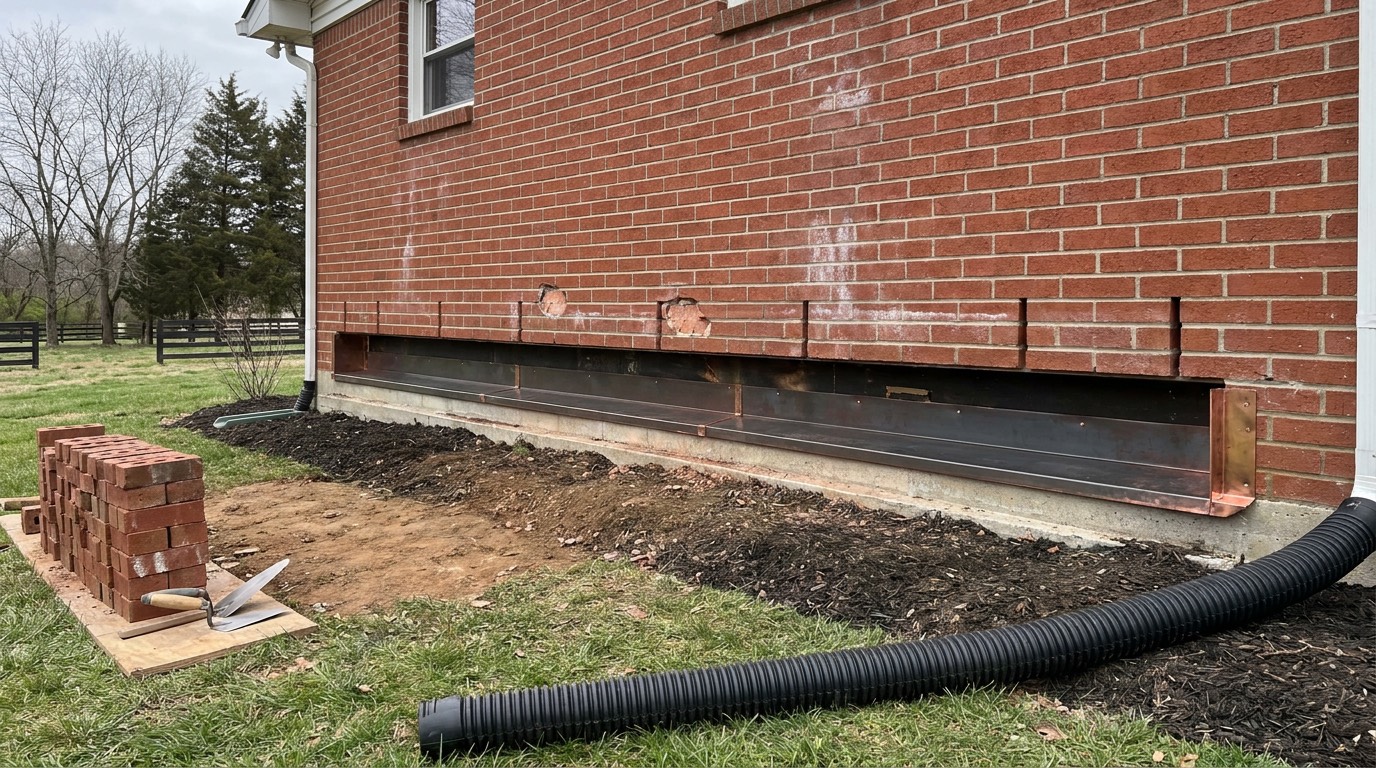
Masonry Waterproofing and Sealing
Sealers, flashing and drainage details
Learn more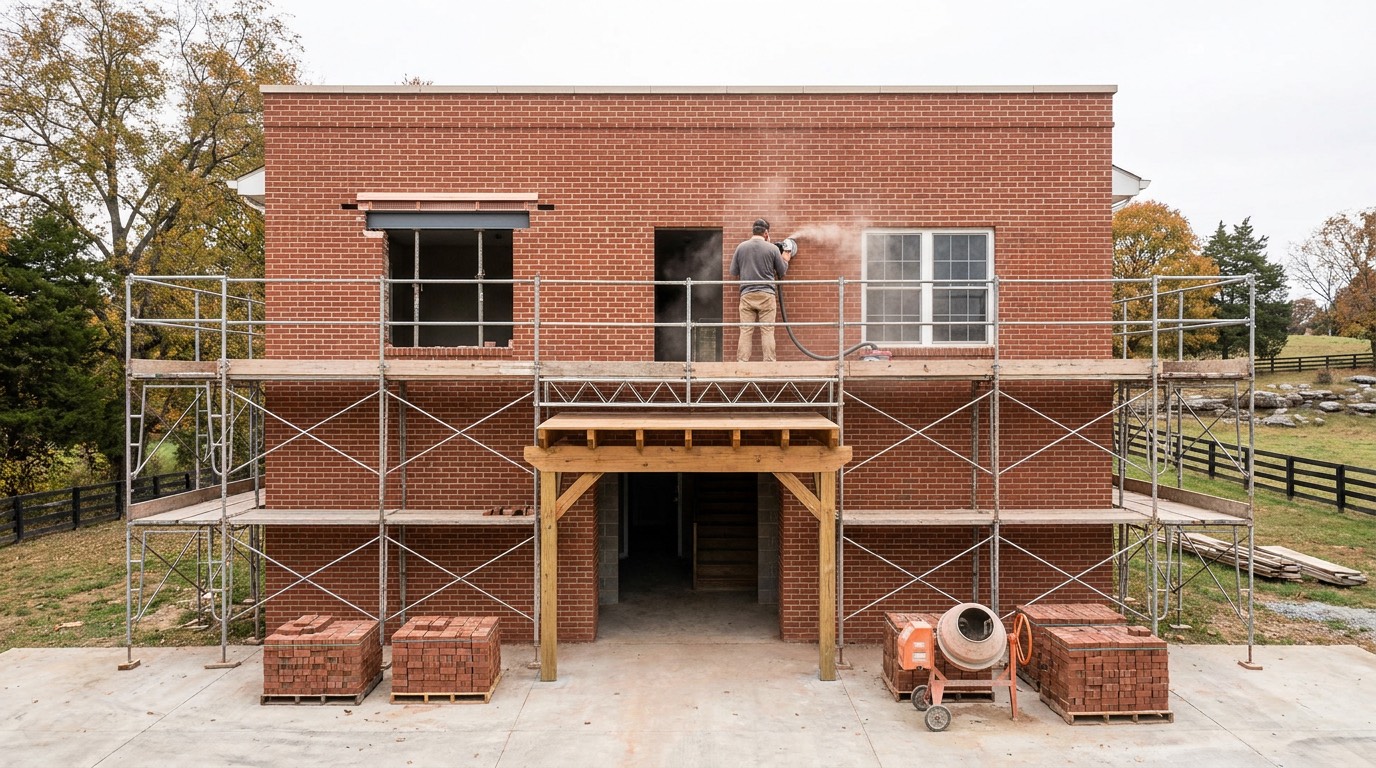
Commercial Masonry
Retail, multi-family and light commercial
Learn moreStraight answer on your wall.
Call, or send the form and we will get you a written price.