Chimney Masonry Repair in Murfreesboro, TN
A chimney is the most exposed masonry on any house. Weather hits it from four sides, nothing shelters the top, and it freezes and thaws faster than any wall below it. We repair crowns, flashing, joints and full stacks throughout Murfreesboro and Rutherford County.
Request a quote
Four questions, about a minute. We'll call you back.
Chimneys fail from the top down
Almost every chimney problem starts at the highest point and works its way down. The crown cracks, water runs into the top of the brickwork, and from there it has the whole stack to travel through. By the time a homeowner notices a stain on a bedroom ceiling, the damage above the roofline has usually been going for several winters.
That is why our first look is from the roof, not from the living room. We want to see the crown, the top courses, the flashing line, the cap and the flue itself. Diagnosing a chimney from the ground with binoculars is guesswork, and guesswork is how people end up paying to reflash a chimney that was leaking through its crown the whole time.
- Cracked or missing crown at the very top
- Open head and bed joints in the top few courses
- Spalled or crumbling brick above the roofline
- Failed or caulk-patched counterflashing at the roof
- Rusted chase cover or a missing rain cap
- Staining on the interior wall beside the fireplace or in the attic
A crown is not a smear of mortar
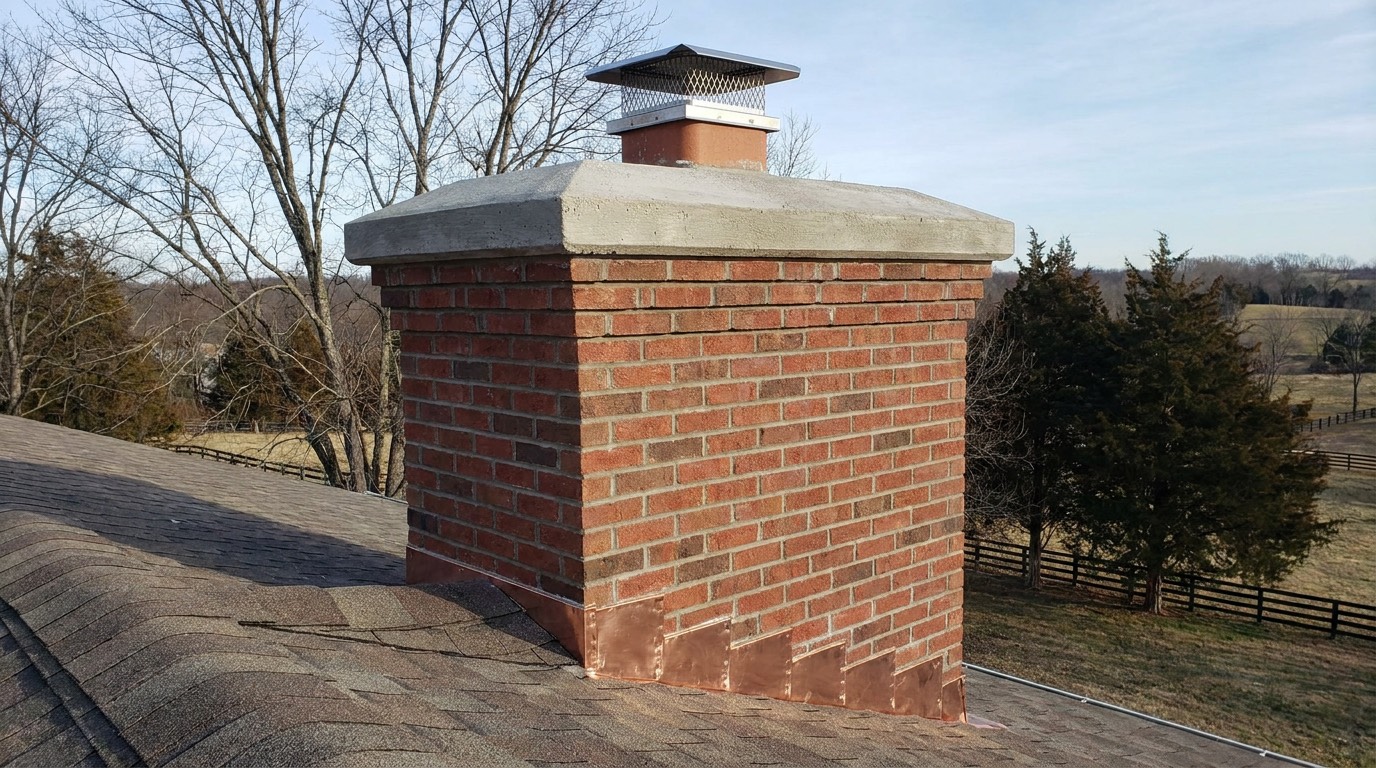
The crown is the concrete slab across the top of the chimney that sheds water off the brickwork. A proper one is cast thicker than a mortar coat, reinforced, sloped away from the flue, and run past the face of the brick with a drip edge underneath so water leaves the structure instead of running down the wall. It should also have a break at the flue tile, because the tile expands with heat and rigid contact cracks the crown.
What sits on most older chimneys around here is a mortar wash, troweled thin and finished flush with the brick. Mortar wash is not designed for that exposure. It cracks within a few winters, and every crack is a funnel pointing straight into the top of the stack. Recasting a crown is one of the highest value repairs on the house because it stops water at the point of entry.
- Cast concrete rather than a thin mortar wash
- Slope away from the flue on every side
- Overhang past the brick face with a drip edge cut underneath
- An expansion break where the crown meets the flue tile
- Sealed hairline cracking with a flexible crown coating where the slab is sound
Most chimney leaks are flashing leaks
Where the chimney passes through the roof there should be two layers of metal working together. Step flashing woven into the shingle courses, and counterflashing let into a mortar joint above it and folded down over the step flashing. Water hits the counterflashing and gets sent back out onto the roof. When that detail is right it lasts as long as the roof does.
When it is wrong, it is usually because someone ran a bead of roof cement around the joint and called it done. Caulk dries out, shrinks and lets go, generally within a couple of seasons. On the upslope side of a wide chimney there is a second problem. Rainwater and debris pile against the brick unless a cricket has been built to split the flow, and a chimney without one on a broad roof stays wet along its back face.
- Step flashing woven course by course into the shingles
- Counterflashing cut into a mortar joint, not surface caulked
- A cricket behind a wide chimney to divide roof runoff
- Sealant used as a detail, never as the waterproofing itself
- Roof and masonry work coordinated so neither trade blames the other
Above-roof rebuilds and the rest of the stack
When the joints have washed out and the brick above the roof has lost its faces, repointing is throwing money at it. At that stage we take the stack down to a sound course, usually just below the roofline, and rebuild from there. That rebuild is a chance to fix what caused the trouble, so it comes back with a proper crown, correct flashing, hard brick suited to exposure and a cap on top.
Below the roof, damage moves inside the house. A chimney breast in an attic that shows white mineral bloom and damp mortar is telling you water has been coming down inside the masonry. Occasionally we find a stack that is leaning or pulling away from the wall, which is a footing problem rather than a brick problem, and that gets diagnosed on its own terms before anyone lays a single unit.
- Partial rebuild from the roofline up, the most common chimney job
- Full height rebuild where damage runs below the roof
- Rebuilt smoke chamber or firebox where heat has broken it down
- Corbel and shoulder detailing rebuilt to shed water properly
- Footing investigation first on any chimney that leans
Where our work stops and a sweep's begins
We are masons. We handle the structure, which means brick, block, mortar, crowns, caps, flashing and the firebox and smoke chamber. What runs inside the flue is a different specialty. A cracked clay flue tile or a chimney that needs a stainless liner sized to an appliance should be looked at by a certified chimney sweep with a camera, and we will say so rather than guess.
Those two trades overlap and the work is often best sequenced together. A camera inspection before a rebuild tells everyone what the flue is doing, and a new liner is far easier to install while the top of the stack is open. If you are changing appliances or converting a fireplace, requirements can apply to clearances and to venting, so check with the Rutherford County building department or your city before the work is scheduled.
- Masonry structure, crowns, flashing, firebox and smoke chamber, our work
- Flue inspection, sweeping and liner sizing, a certified sweep's work
- Camera inspection before any significant rebuild is quoted
- Liner installation sequenced while the stack is open
- Permit and inspection questions verified with the local building department
What winter does to a chimney
A chimney gets the worst of Middle Tennessee weather. It stands clear of the roof with no shelter, it gets wind-driven rain on every face, and it warms and cools faster than the walls. Through December, January and February the freeze-thaw cycle runs over and over, and any masonry holding water pays for it. Spalled faces and open joints on a chimney nearly always come from that cycle rather than from age alone.
Watch for white powdery staining on the brick. That is efflorescence, salts carried out of the masonry by water moving through it, and it is a straightforward signal that the chimney is wet inside. It is not dangerous by itself, but it means the water path is open. Keeping a chimney dry with a sound crown, a cap and correct flashing is most of what keeps it standing.
- White efflorescence bloom on the exterior brick
- Spalled brick faces with sandy debris on the roof below
- Mortar you can rake out with a screwdriver by hand
- Rust streaks from a damper, chase cover or firebox steel
- A damp, musty smell in the firebox after heavy rain
Cost drivers and reading a chimney quote
The two things that move a chimney price hardest are height and roof pitch. A short chimney on a shallow roof over a one story house is straightforward access. The same repair on a steep three story roof requires staging or roof jacks and a slower, safer pace. Chimney height above the roofline, the shingle type and whether the drive can take a lift all feed into the number as well.
On the quote itself, look for scope written in plain terms. How many courses are coming down. Whether the crown is cast or coated. Whether the flashing is being replaced or reused. Whether a cap is included. And ask what happens if the masonry below the roofline turns out to be wet, because that answer should be agreed before the first brick comes off, not after.
- Roof pitch, height and staging requirements
- Number of courses to be rebuilt versus repointed
- Cast crown versus a coating on a sound existing slab
- New flashing and counterflashing, or reuse of the existing metal
- Cap, damper or chase cover included or excluded
- Coordination with a roofer or sweep where the work overlaps
Chimney Masonry Repair across our area
All areas →Questions about chimney masonry repair in Murfreesboro
What does the white staining on my chimney mean?
That is efflorescence. Water moves through the masonry, dissolves salts inside it and leaves them on the surface as it evaporates. The staining itself is cosmetic and washes back over time, but it tells you the chimney is taking on water somewhere above. On most chimneys we look at, the source is a cracked crown or open joints in the top courses.
My chimney is leaning away from the house. How urgent is that?
It should be looked at soon, though not always for the reason people expect. A leaning stack usually means the chimney footing has settled or was never sized properly, so the fix is at the bottom, not the top. Straps bolting the stack back to the house are a symptom-level repair. We would want to see the footing and the ground around it before recommending anything.
Can you just repair the crown and leave the rest?
Frequently, yes, and it is often the best money you can spend on a chimney. If the brick and joints below are still sound, recasting or properly coating the crown stops water at the entry point. Where the top courses have already gone soft, a new crown over failing brick is a short term result. We will tell you which situation you have.
Do I need a cap on the chimney?
For any flue in service, a cap is well worth having. It keeps rain out of the flue, keeps birds and animals from nesting in it, and a spark arrestor screen catches embers on the way out. Caps have to suit the flue and the appliance, so sizing is worth getting right rather than buying whatever fits. On an unused flue it also stops rain soaking the stack from the inside.
We never use the fireplace. Is repairing the chimney worth it?
It depends on what you want from it. An unused chimney still has to keep water out of the house, so a sound crown, cap and flashing still matter. If the stack is badly deteriorated and you have no plan to burn anything, taking it down below the roofline and roofing over it is a legitimate option, and sometimes the cheaper one. We will price both so the comparison is in front of you.
Other services
All services →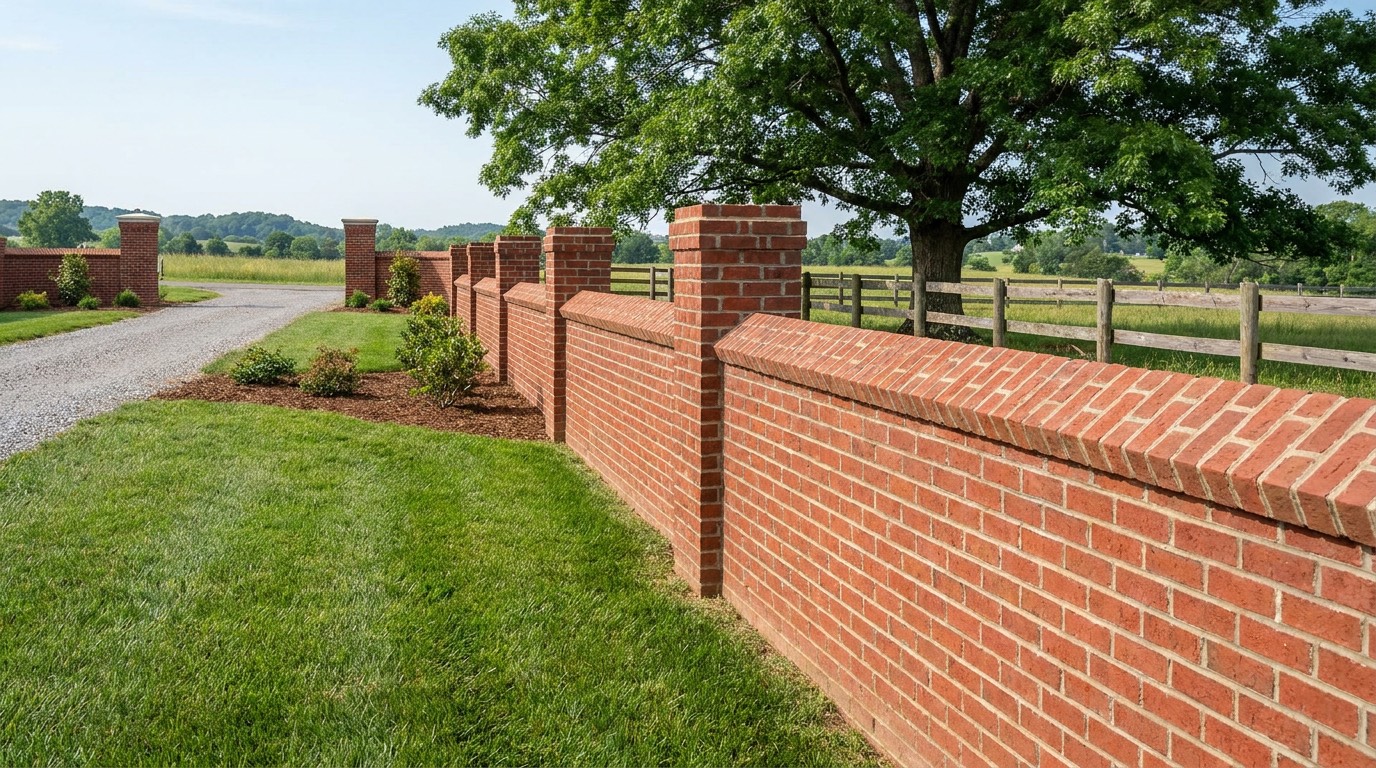
Brick Masonry
New brickwork, walls, columns and steps
Learn more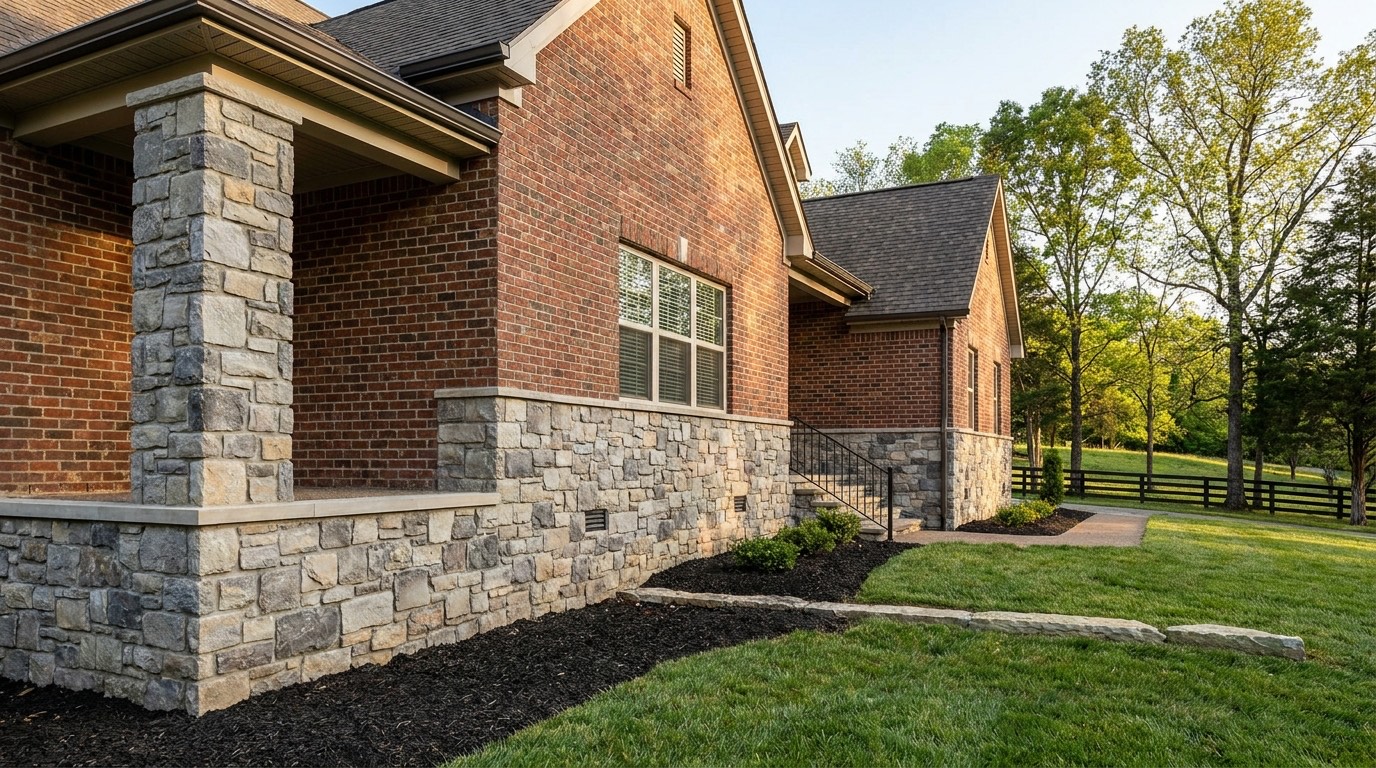
Stone Masonry
Natural and manufactured stone installation
Learn more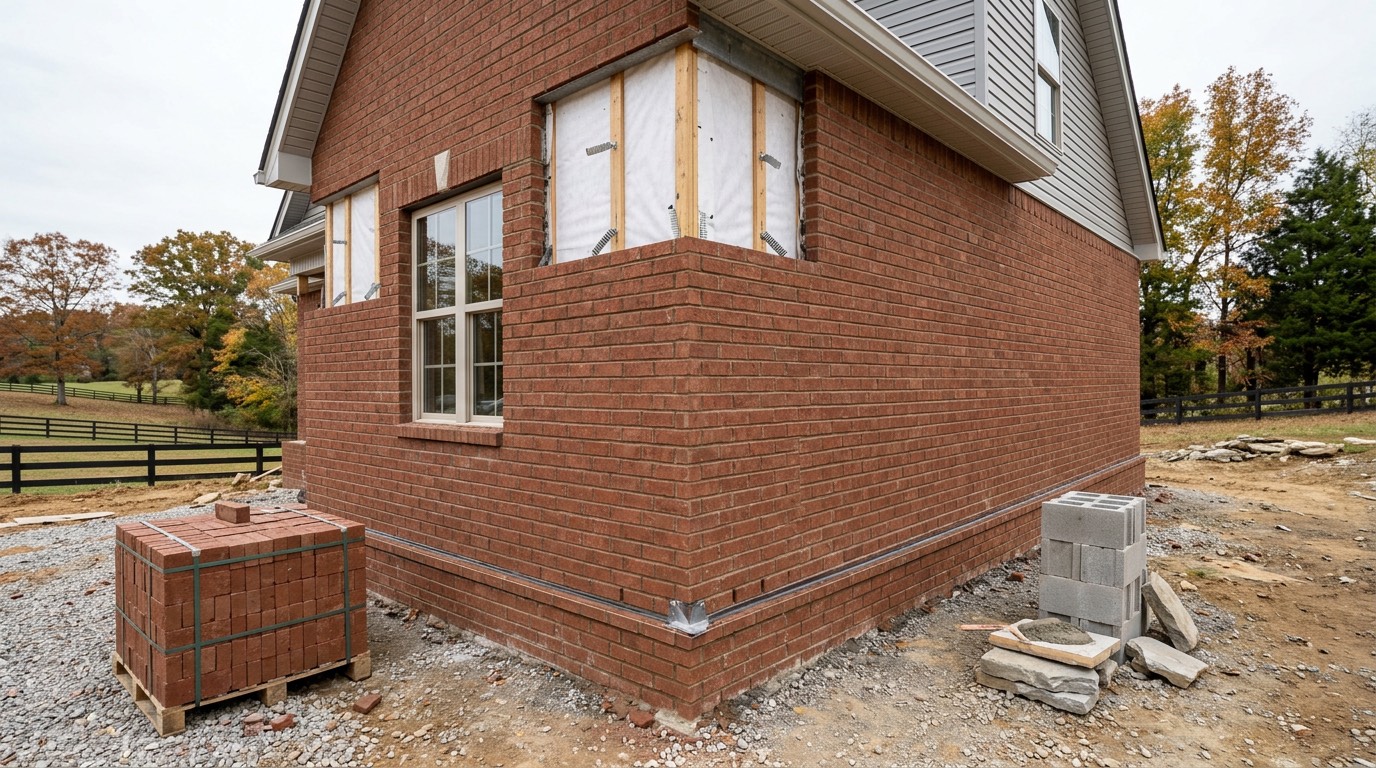
Brick Veneer Installation
Veneer over frame or block walls
Learn more
Tuckpointing and Repointing
Replacing failed mortar joints
Learn more
Masonry Repair and Restoration
Cracks, settlement and rebuilds
Learn more
Brick Fireplaces
Indoor and outdoor fireplace masonry
Learn more
Retaining Walls
Block, brick and stone retaining walls
Learn more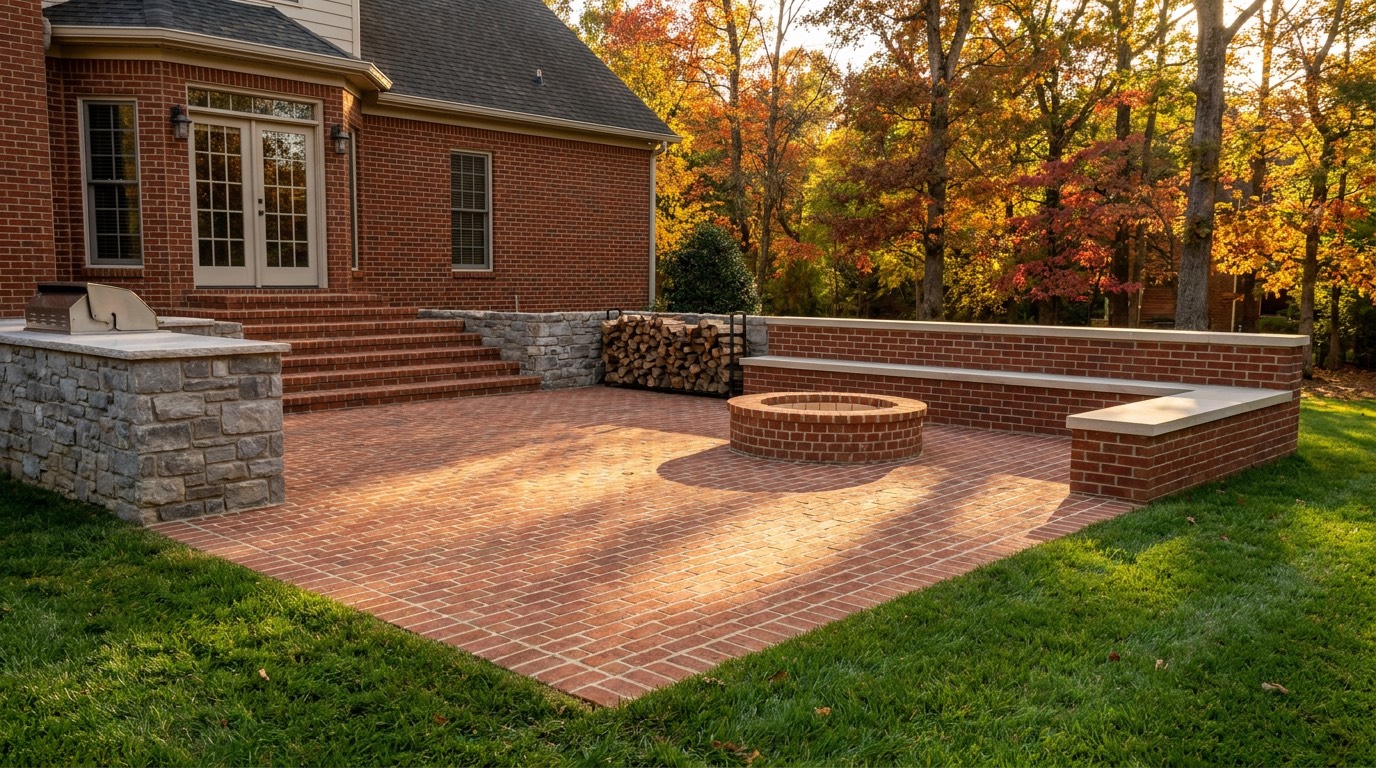
Outdoor Living Masonry
Patios, kitchens, fire pits and seat walls
Learn more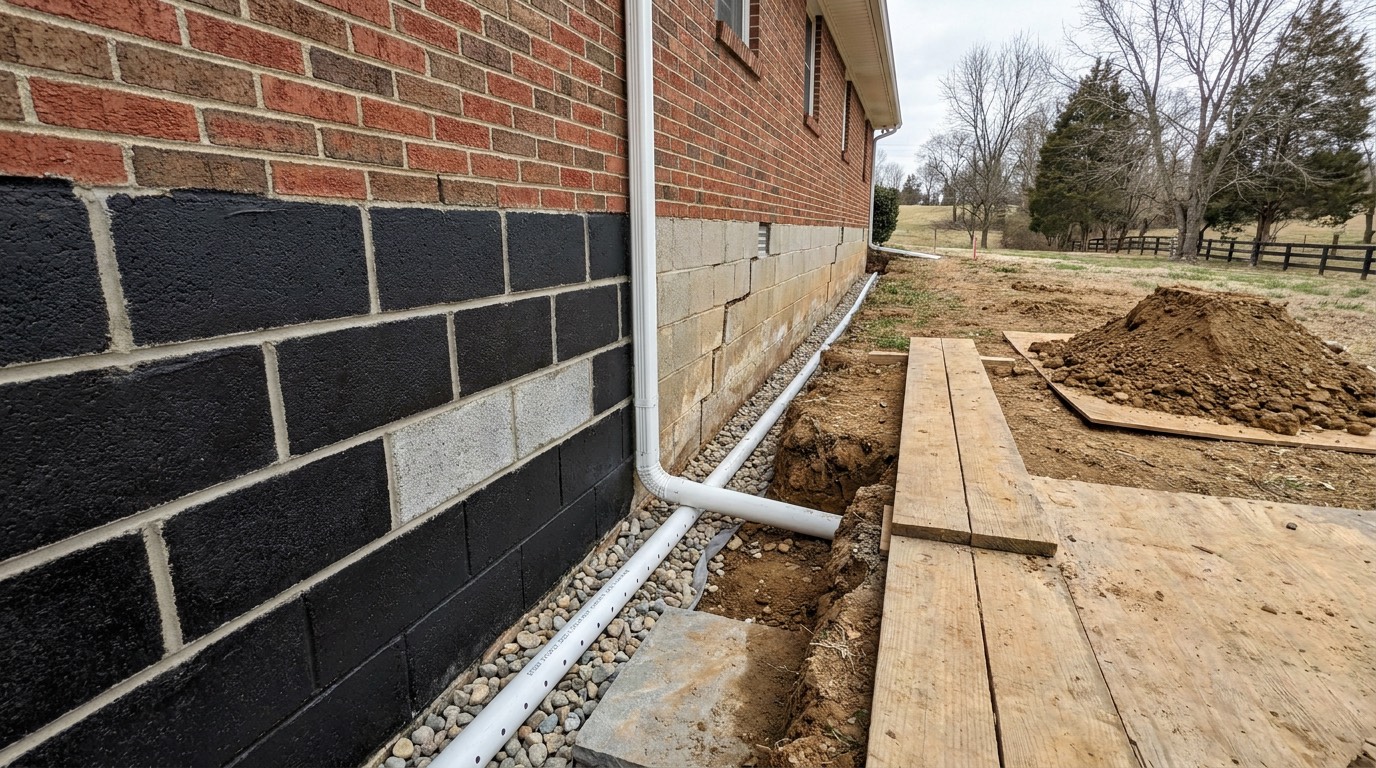
Foundation and Basement Masonry
Foundation repair and basement walls
Learn more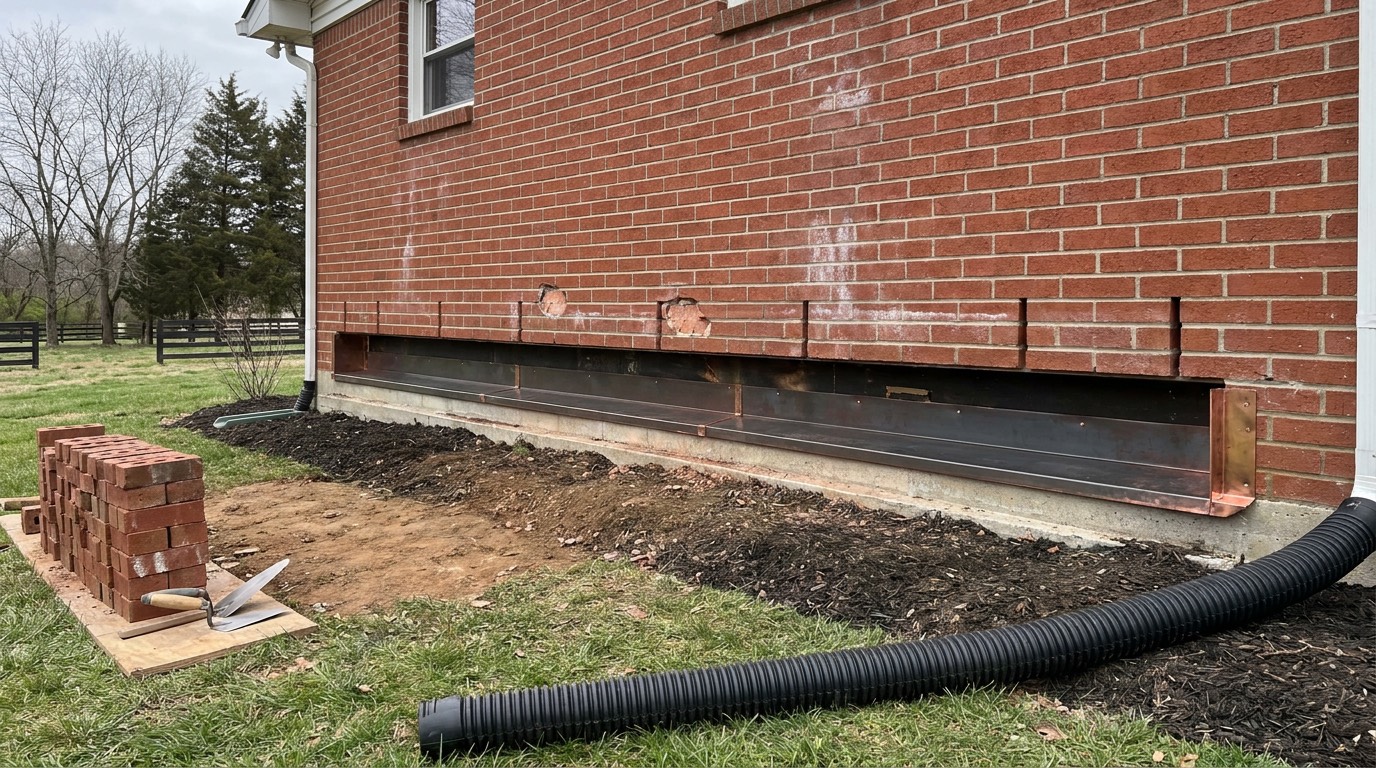
Masonry Waterproofing and Sealing
Sealers, flashing and drainage details
Learn more
Commercial Masonry
Retail, multi-family and light commercial
Learn moreStraight answer on your wall.
Call, or send the form and we will get you a written price.