The Annual Masonry Walk-Around Any Homeowner Can Do
You are not diagnosing anything. You are building a record, so that next year you can tell what moved and what has been sitting still since the house was built.
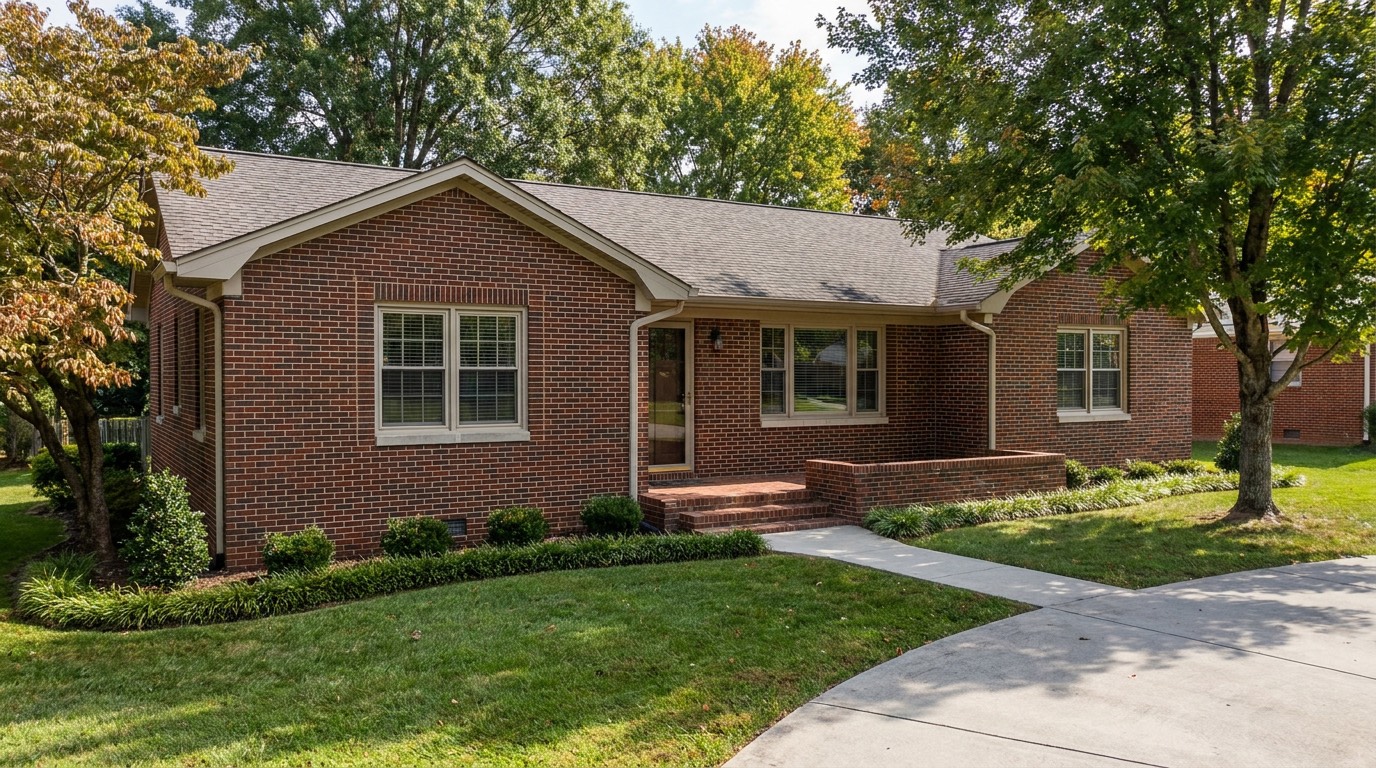
The point is the record, not the diagnosis
A homeowner standing on the lawn cannot tell a settled crack from an active one. Nobody can, from a single look. What tells you is the same crack photographed a year apart.
So the goal of this walk is not to work out what is wrong. It is to leave behind twenty dated photographs and a short list. Do that three years running and you own something a mason would love to have: a history.
When to do it, and what to take
Late February into March is the best window in Middle Tennessee, and the reason is the winter you have just come through. Our cold does not settle in and stay. It crosses the freeze point and comes back, over and over, and each of those crossings expands the water sitting in a mortar joint and takes a little more of the wall with it. Walking the house once the crossings are done shows you what the winter actually cost.
The timing helps on the repair side too. Mortar work largely stops while temperatures sit below about 40 degrees, so anything you find in February is waiting on the first settled warm stretch regardless, and the crews fill up quickly once it arrives. The leaves are also still down, so you can see the walls.
It takes twenty minutes and almost no equipment.
- Binoculars, which do most of the work on the chimney
- An old flathead screwdriver for testing mortar
- Your phone, with the date stamp on
- A tape measure, and a coin to sit beside cracks for scale
- A notepad, or a note on your phone you will actually find next year
Want a price for your own wall?
Four quick questions and we come back with a written quote. Or call (772) 251-6654 if that is faster.
Request a quote
Four questions, about a minute. We'll call you back.
Start low, where the water is
Walk the perimeter looking at the bottom three courses of brick and the ground in front of them. Nearly every masonry problem in Rutherford County is a water problem first and a freezing problem second, and both of them start at grade, where the wall stays damp longest.
You want soil sloping away from the wall, not toward it. You want mulch and flower beds below the brick rather than piled against it. You want downspouts discharging well clear of the foundation instead of dumping at the corner.
Weep holes deserve a hard look, particularly on the newer brick veneer around Smyrna and La Vergne, where those small openings at the base course are the entire drainage path for the wall cavity. A landscaper with a fresh load of mulch can bury every one of them in an afternoon.
Look for a fine line of sand or grit along the base. That is mortar leaving the wall, and it means something above is shedding.
- Soil and mulch held down off the brick, not banked against it
- Downspouts extended away, splash blocks still where you left them
- No standing water or dark saturated soil against the foundation
- Weep holes at the base course open, not caulked or blocked by mulch
- Air conditioner condensate lines draining clear of the wall
Then the joints and the field
Take the screwdriver to a few mortar joints on each elevation, including one on the shaded north side. That side dries slowest and freezes first, so it is usually where soft mortar turns up before anywhere else. Sound mortar resists a firm push. If the tip sinks in or the joint crumbles into sand, that section wants repointing.
Then look at the field of the wall from about ten feet back, where cracks show up better than they do with your nose against the brick. Photograph anything with a measurement or a coin beside it. Note whether the crack runs through the mortar or straight through the brick faces, because the two mean different things.
Do not try to decide what a stair-step crack means. Just record where it is, how wide, and whether it has an end.
Openings, sills and lintels
Windows and doors are where masonry walls are weakest, and where damage hides behind trim. Look at the steel lintel above each opening. Rust streaking on the brick below usually means the lintel is corroding, and corroding steel expands and lifts the brick above it.
Check the sill under each window. It should shed water away from the wall, and the joint where it meets brick should be closed. A sill that holds a puddle instead of draining it is a small problem in July and a spalled sill after a winter of overnight freezes. Cracks that fan up and out from the top corners of an opening are worth photographing every year.
Look up: chimney, flashing and caps
The chimney takes weather on all four sides and gets ignored because nobody sees it. Binoculars from the far side of the yard beat any other method available from the ground.
You are looking for a cracked crown at the top, mortar joints that read dark or ragged, brick with the face popped off, and flashing that has lifted where the chimney meets the roof. Sight the chimney against a vertical line, such as a corner of the house, and see whether it stands parallel.
Do the same for anything else with a horizontal top. Retaining wall caps, step treads, pier caps and porch columns all hold standing water rather than shedding it, which is exactly the condition that a freeze overnight and a thaw by lunchtime pulls apart.
Sort what you found into three piles
Watch means photograph and revisit next year. Hairline cracks with no displacement, light efflorescence, and one weathered joint fall here. Plenty of masonry sits in this pile for a decade and never moves.
Schedule means real but not urgent. Soft mortar over an area, a couple of spalled brick faces, a cracked crown, mulch that needs pulling back. This is spring or summer work by necessity as much as by choice, since mortar will not cure properly in the cold, and it is much cheaper than what it turns into if you leave it through another winter.
Call now is short. A chimney out of plumb, a wall that bulges when you sight along it, a crack you can put a pencil into, a retaining wall that has leaned since last year, or fresh cracking that appeared over a single season. None of that needs a lecture. It needs someone standing at the wall.
Related questions
How do I tell if a crack is new?
You cannot, from one look, which is exactly why the photographs matter. Shoot each crack with a coin or tape beside it and note the date. Next year the same shot answers the question in seconds, and if the crack has widened or lengthened you have proof rather than a feeling.
What exactly is the screwdriver test?
Press the tip firmly into a mortar joint and try to scrape it. Sound mortar shrugs it off. Mortar that gouges, powders or lets the tip disappear has lost its binder and is holding water rather than shedding it. Test several joints per wall, since deterioration is usually patchy.
Does a professional need to look at it too?
Not annually for most homes. Your walk-around catches the things worth catching. A mason is worth calling when something moves between years, when you are buying or selling, after a serious storm, or when a chimney has not been looked at closely in a long time. Older rental houses near MTSU in Murfreesboro are the common exception, since the walk has usually not happened in years and there is a backlog rather than a change to find.
There are hairline cracks everywhere. Should I be worried?
Usually not. The shrink-swell clay under much of Rutherford County takes on water in spring and pulls back in a dry August, and brick veneer moves seasonally along with it. Shallow limestone in places means one corner of a house can sit on rock while another sits on clay, so fine cracking in mortar joints is common on almost every house here. What matters is width, displacement between the two sides, and change over time.
How do I check a wall hidden behind shrubs?
Prune it back, ideally to a foot of clearance. Plants against masonry hold moisture on the wall, block airflow, and stop weep holes from doing their job. A wall that stays wet going into a cold snap is the wall most likely to spall. If you cannot see a wall, you also cannot inspect it, and that is usually the wall where problems start.
Should I do this after storms as well?
A shorter version, yes. Severe weather season runs March through May here, so through the spring the walk is worth doing after any rough night: fresh debris, gutters running over, shifted caps, damp patterns showing up inside. Out on the rural places around Tullahoma, put the outbuildings on the loop as well. A barn wall or a shop foundation is the masonry nobody thinks to look at, and it is usually where a couple of unnoticed years have piled up.
More guides
All guides → Seasonal
The Real Masonry Season in Middle Tennessee
Unlike trades in the Sunbelt, masonry in Rutherford County has a genuine season. Here is how each part of the year behaves, and why winter is a slowdown rather than a shutdown.
ReadWhat Brick Repair Costs in Murfreesboro, and What Moves the Number
Brick repair is priced off joint count, brick match and how a crew reaches the wall, not off the damage you can see from the driveway. Here is the frame homeowners around Rutherford County run into.
ReadBrick Veneer or Solid Masonry: Two Walls That Look Identical
From the street they look the same. Behind the brick, one wall is carrying your house and the other is carrying only itself, and that changes what every crack means.
ReadBulging Brick: What It Means and When It Is Serious
Most people find it by accident, standing at the wrong angle in evening light. A bulge is not automatically an emergency, but it is never nothing, and the difference is measurable.
ReadChimney Anatomy: Crown, Flashing and Flue, and What Fails First
Most chimney leaks get blamed on the brick. The brick is rarely where it started. A plain walk through the parts, from the cap down to the roofline.
ReadStraight answer on your wall.
Call, or send the form and we will get you a written price.