How to Hire a Mason in Tennessee: What to Verify First
Masonry mistakes are permanent and expensive to undo. These are the things worth confirming before work starts, in the order a homeowner can actually do them.
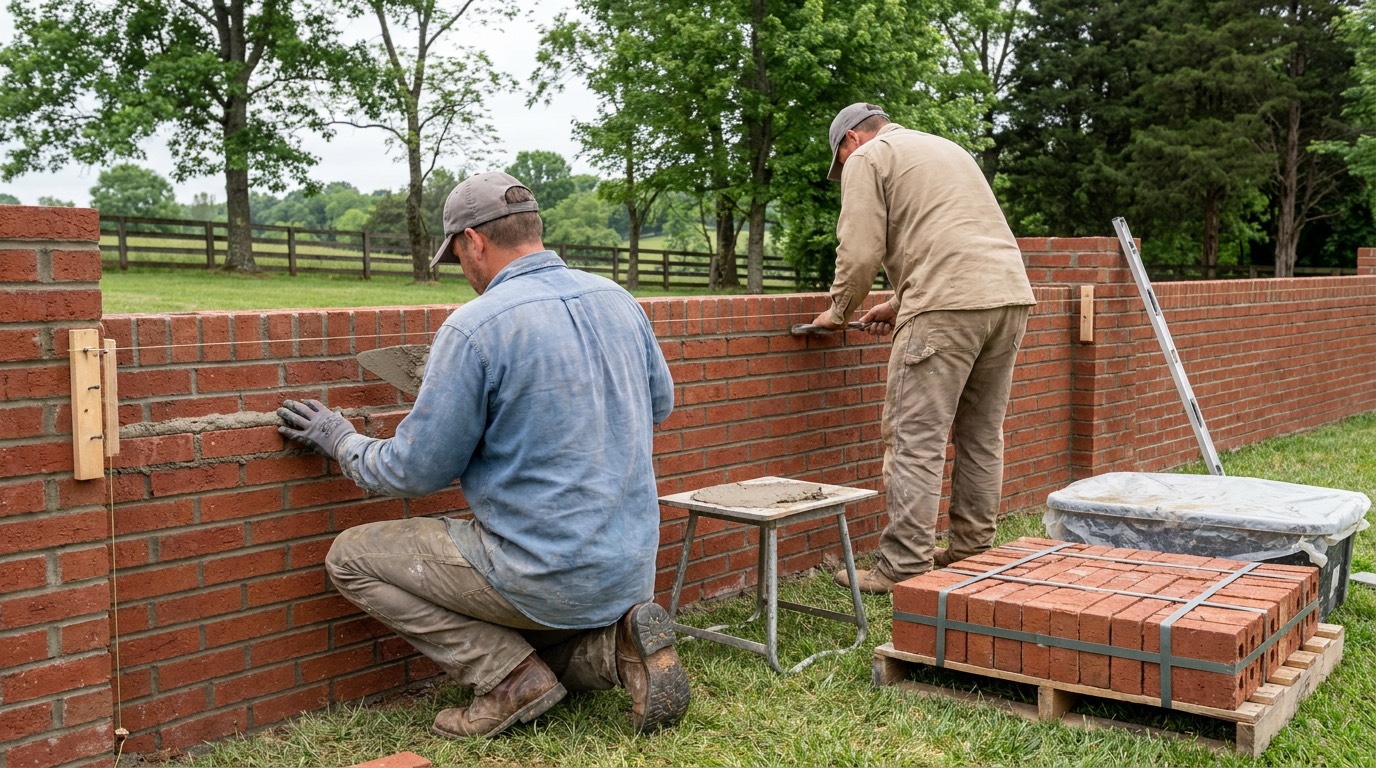
Why the stakes are different from other trades
A bad paint job gets repainted. A bad masonry job gets ground out of a wall by hand, one joint at a time, by someone charging more than the original work cost. Mortar that is too hard cannot be softened. Brick with the face spalled off cannot be refaced.
That asymmetry is the whole argument for spending an evening on verification. None of it takes long.
Tennessee licensing, and what it does not tell you
Do this one first, because you can do it sitting down before anybody drives out to look at your wall. Nobody in Tennessee holds a masonry license, and no state examination exists for laying brick. The credential actually in play is a state contractor license, issued by the Tennessee Board for Licensing Contractors in classifications that take in masonry as part of something broader. It kicks in by project value rather than by trade.
That figure moves, so take it from the Board rather than from a contractor or from a page like this one. While you are on their site, run the license lookup: the exact business name printed on the estimate, the classification, the current status. Ten minutes there thins the list before you spend an evening reading quotes.
Then be clear about what you have proved. You have proved a business exists and stands in good order with the state. You have not proved anyone can match a mortar. It tells you who is worth keeping on the list. It does not tell you who to hire.
- Confirm the current license threshold with the state board rather than assuming
- Look the license up yourself instead of accepting a number on a quote
- Check the name on the license matches the name on the contract and the insurance
- Ask about local business registration in Murfreesboro, Smyrna or your county
Want a price for your own wall?
Four quick questions and we come back with a written quote. Or call (772) 251-6654 if that is faster.
Request a quote
Four questions, about a minute. We'll call you back.
Insurance is the check that actually protects you
This is the item people skip and the one that matters on the day something goes wrong. Masonry involves heavy material, scaffold, grinders and work above head height, often over a driveway with cars on it. General liability covers damage to your property. Workers compensation covers injury to the crew, which is the exposure homeowners rarely think about.
Do not accept a photocopied certificate from the contractor's folder. Ask for the certificate of insurance to be sent directly from their agent or carrier with your name and address on it. That takes one email, it costs nothing, and it confirms the policy is active today rather than in whatever month the photocopy was made. Read the coverage dates too, because a policy that lapses mid project is worth catching before the scaffold goes up.
Telling a mason from a handyman with a bag of mortar
Masonry attracts general contractors who will attempt it and handymen who own a trowel. Some of them do acceptable work on a low garden wall. Almost none of them should be repointing the front elevation of your house.
The tells come out in conversation, and you do not need trade knowledge to hear them. Ask what depth they intend to cut joints to and why. Ask what mortar type they would use on your wall and what makes it the right one. Ask how they will match the existing color. A mason answers those with specifics and often with a question back about the age of the house. A generalist answers with reassurance.
- Do they ask when the house was built before they quote?
- Do they walk all four elevations, or only the one you pointed at?
- Do they sound the brick and probe joints, or just look?
- Do they mention the water source, gutters, grading or flashing without prompting?
- Can they explain why stronger mortar is not automatically better?
Three things about hiring here specifically
Mortar work has a temperature floor. Below roughly forty degrees, exterior joint work either stops or needs protecting, and mortar that freezes before it cures is compromised whether or not it looks fine in March. That shapes the calendar here. So if the crew you liked best is booked out until spring, read it as a good sign rather than a brush off. The ones with an empty schedule in April are usually the ones nobody rebooks.
Ask what happens if they hit rock. Limestone bedrock sits shallow across a lot of Rutherford County, sometimes a foot or two down, and anything with a footing under it can find it: a retaining wall, a porch column, a chimney rebuilt from the ground. Rock excavation is the most common reason a masonry price around here moves after signing. Somebody who has dug this ground explains how it gets priced before you ask. Put that in the written scope, not in a phone call after the machine stops.
Ask which yard they buy sand from. It sounds like an odd question and it is the most useful one here. Mortar color comes mostly from the sand, and sand is a local product, so two crews working to the same mix can hand you two different grays. A mason repointing around Murfreesboro every week has a supplier he matches to and will name it without hesitating. Then go look at something he repointed a few years back and see whether the patch still reads as a patch.
The written scope, and what a vague one hides
Two bids that both say repoint front elevation can be different jobs by a factor of three. What makes them comparable is quantity, method and material written down. Ask every bidder for the same items and compare those before you compare price.
If a contractor resists putting this in writing, that is the answer to the question you were asking. It is not an unreasonable request and any established mason has it in a template already.
- Measured quantities, in linear feet of joint or brick count, not adjectives
- Joint removal depth and the tools being used to reach it
- Mortar type and whether a cured color sample is being approved before work starts
- Source of replacement brick and the plan if an exact match is unavailable
- Access method, and whether scaffold or a lift sits inside the price
- Site protection for windows, plantings, driveways and neighboring property
- How hidden damage found after opening the wall gets priced
- Start window, expected duration and how weather delays are handled
Money and the pace of a real job
A deposit for material on a defined job is normal. Full payment up front is not, and neither is a large cash discount for paying before work starts. Sensible structure is a modest deposit, then progress payments tied to things you can go outside and look at: material delivered, joints cut back and ready to inspect, wall closed up, site cleaned and washed down.
A schedule built on calendar dates instead of milestones can have you paying for a week in which nothing happened. Keep the last payment until you have walked the finished work with the contractor in daylight.
Then watch the pace. Masonry goes slower than most people expect, and a crew that is racing is usually already late for the next house. If the mixer is running before the old joints have been cut back properly, say so that day rather than at the end, because once a wall is tooled nobody can see what is behind the face.
Related questions
Does a mason in Tennessee need a license for a small repair?
Possibly not. A genuinely small repair can sit under the state's line without anybody doing anything wrong, because the requirement scales with the price of the work. Where that line currently sits is a question for the Tennessee Board for Licensing Contractors, so ask them rather than the person bidding. Ask the bidder too, and notice whether the answer is specific or vague.
How many quotes should I get?
Three is a reasonable target for anything beyond a small repair. The point is not to find the cheapest, it is to find out whether the three of them describe the same problem. When one bidder scopes something the other two did not mention, that discrepancy is the most useful information you will get.
Should I be suspicious of the lowest bid?
Not automatically, but find out why it is low before you accept it. Usually the answer is a smaller scope: shallower joint removal, or ignoring the water problem that caused the damage. On anything with a footing under it, check how rock is handled, because limestone turns up shallow across Rutherford County and a bid that quietly excludes rock excavation is cheap only until the machine stops. Lay the written scopes beside one another and the reason usually shows itself.
What if a contractor knocks on my door offering a repair?
Door knocking is not how established masons in this area fill their schedule. It is not proof of anything by itself, but it should mean no decision on the doorstep and no deposit that day. Take the name, verify the license and insurance independently, and get two other quotes on the same scope.
Do I need a permit, and who pulls it?
It depends on scope and jurisdiction, and Murfreesboro, Smyrna, La Vergne and unincorporated Rutherford County administer their own permitting. Structural work is treated differently from cosmetic repair. Ask the contractor what they intend to pull, get it in the written scope, and confirm the requirement with the building department yourself.
What kind of warranty should I expect?
A workmanship warranty on the labor is normal and should be written into the contract with a stated term. Be realistic about its limits. No mason can warrant against further foundation movement, against water from a roof or gutter they did not touch, or against damage from an unrelated failure elsewhere on the house. Read what is excluded, not just the headline number.
More guides
All guides →How Tuckpointing Works, Step by Step
Good joint work is mostly removal. Here is what happens between the grinder and the finished joint, and why a skim of fresh mortar over failed joints never lasts.
Read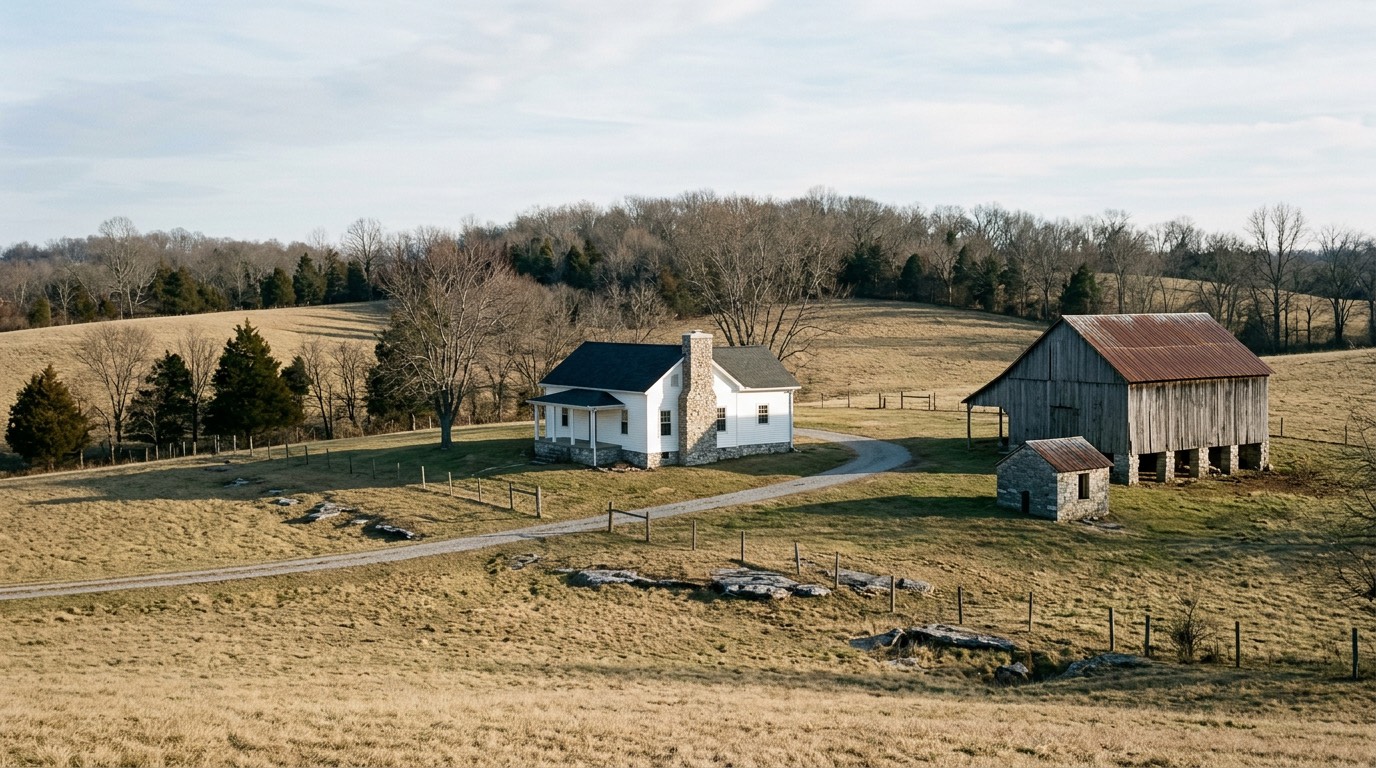 Local guide
Karst, Sinkholes and Masonry in Middle Tennessee
The rock under Murfreesboro dissolves. That is not a defect, it is just what limestone does with rainwater, and it shapes how masonry here is built and how it fails.
ReadA Leaning Chimney: What the Tilt Is Telling You
Most leaning chimneys around Murfreesboro are not falling over this week. But the lean is a symptom, and the thing to work out is whether it is finished moving or still going.
ReadBuilding on Rock: Limestone Footings in Rutherford County
Around here the rock is often close enough to the surface that a shovel finds it. Good for what sits on it, complicated for what has to go through it, and it changes how any wall gets started.
ReadLintels: What Holds the Brick Up Over Your Windows
Every window and door in a brick wall has something spanning the gap above it. On most homes in Rutherford County that something is a piece of steel, and steel in a wet wall does not sit still.
ReadStraight answer on your wall.
Call, or send the form and we will get you a written price.