What a Pressure Washer Really Does to Brick and Mortar
A rented pressure washer can remove more mortar in ten minutes than weather removes in ten years. The damage is quiet, and it usually shows up the following winter.
The tool is stronger than the wall
Homeowners assume brick is tough enough to take anything, and brick mostly is. Mortar is not, and mortar is what a pressure washer finds first. Mortar is designed to be the softer, weaker part of the assembly so that movement cracks a joint instead of a brick. That same softness is why a wand takes it out.
The machines are the problem. The rental units on the shelf at the big box stores on Old Fort Parkway in Murfreesboro hold pressure that no residential mortar joint was ever meant to face. Nothing warns you. The wall just quietly starts giving up sand.
Pressure is one of four variables
People argue about PSI and ignore the three settings that matter more. Tip angle, distance and dwell time change the force on the wall far more than the number printed on the pump.
A narrow tip held close concentrates everything into a line. A wide fan held back spreads the same machine across a broad area at a fraction of the force. Two people with identical washers can produce completely different results.
The practical version is simple. Widen the fan, back off the wall, keep the wand moving, and let a cleaner do the work instead of the water.
- Tip angle: use the widest fan you have, never a zero degree tip
- Distance: force falls off fast, so work from well back and creep in
- Angle of attack: hit the wall square, never up into a joint or sill
- Dwell: let detergent sit and work, then rinse gently
- Movement: a stationary wand cuts, a moving wand rinses
Want a price for your own wall?
Four quick questions and we come back with a written quote. Or call (772) 251-6654 if that is faster.
Request a quote
Four questions, about a minute. We'll call you back.
What fails, in order
Mortar joints go first, and they go from the outside in. You lose the tooled face of the joint, then the wand starts hollowing behind it. The tell is a line of sand and grit at the base of the wall when you finish.
Next is the brick face itself. Then sealant at window and door perimeters, which is thin, sun-aged and easy to cut. Then the assembly, once enough joints are open to let water past the drainage plane instead of down it.
That last one is the expensive failure. A cleaned wall with cut joints looks better than it did in the morning and performs worse than it has in decades.
Older brick will not survive it
Brick fired in the 1800s got a hard skin on the outside and stayed comparatively soft in the middle. Strip that skin and the body underneath drinks water. That is the situation on much of the older stock around the Murfreesboro square, and on a good deal of the aging rental brick near MTSU, where deferred maintenance has usually left the joints soft long before anyone points a wand at the wall.
There is no safe pressure setting on brick like that. Soft historic brick gets washed with water, a soft bristle brush, patience, and a mild cleaner matched to what you are removing. If you are not sure how old the wall is, treat it as though it is old.
The freeze-thaw problem nobody mentions
Every wash drives water into the wall, and the amount is not small. In Middle Tennessee that matters more than it does in a warm climate, and more than it does in a genuinely cold one. A Rutherford County winter does not settle in and stay frozen. It crosses the freeze point and comes back, night after night, and each crossing gives water sitting in a joint or a brick face another chance to expand and push that face off.
Washing a brick wall in November puts a saturated wall into that cycle. Spring and early autumn are the sensible windows. Give the wall weeks of dry weather afterwards, not days.
The same logic applies to steps, caps and retaining wall tops. Horizontal masonry holds standing water rather than shedding it, so it takes the worst of those cycles and deserves the gentlest treatment of anything on the property.
The low pressure method
Cleaning brick well is mostly chemistry and time. Pressure is only how you rinse. Start with a test panel somewhere inconspicuous, wait for it to dry fully, and look at it in daylight before you touch the rest of the house.
Saturating the wall first matters more than people expect. A dry wall pulls cleaner deep into the brick and then leaves it there to blotch and bloom later.
- Test one small area first and judge it dry, not wet
- Pre-wet the whole wall so it cannot absorb the cleaner
- Apply a masonry-appropriate cleaner and let it dwell
- Rinse from the bottom up, then a final pass from the top down
- Keep the wand well back with the widest fan on the machine
- Stop the moment you see sand at the base of the wall
Repair first, then clean
The order gets reversed constantly. People wash the house to see what they are dealing with, and the washing creates half of what they end up dealing with. Open joints, cracks and a failed chimney crown all get worse with water forced into them.
A fair share of this work starts with a letter from an HOA in Smyrna or La Vergne about a dirty elevation. Those walls are newer veneer and look tough, but the joints in them are still mortar, and the letter asks for a clean wall rather than a damaged one. A soft wash satisfies it without opening a single joint.
Walk the wall first. Repoint what is soft, replace what is spalled, then clean once everything is cured and closed. You will use less pressure because a sound wall cleans more easily.
If the wall is above one story, historic, or already shedding sand, hand it to someone who cleans masonry for a living. The cost of a careful wash is a fraction of the cost of repointing an elevation that did not need it last week.
Related questions
Is there a safe PSI for brick?
Lower than most people expect, and the number on the pump will not protect you by itself. Sound modern brick with tight joints takes a gentle rinse at low pressure, wide fan, from a distance. Older brick should not see a pressure washer at all, and that covers a lot of what stands around the Murfreesboro square and in downtown Shelbyville, where nineteenth century units are still doing the work. Test a hidden panel first and judge it after it dries.
Can I pressure wash my chimney?
It is a poor idea on two counts. You are on a ladder with a wand that kicks back, and the chimney is the most weather-beaten masonry on the house with the most vulnerable joints. Water forced under flashing has a direct path into the roof deck. Clean a chimney from a proper platform, gently, or leave it.
Will washing get rid of the white staining?
Efflorescence usually rinses off and comes straight back, because it is salt carried out of the wall by water moving through it. The stain is the symptom. It shows worst in a Middle Tennessee spring, when the wall has taken weeks of rain and is finally drying, which is also why washing it in April tells you nothing about whether the cause is fixed. Until you find where the water is getting in, you will clean the same wall every year.
What about painted brick?
Paint hides everything underneath, including joints that are already gone, and pressure will find those weak spots and peel outward from them. You end up with lifted paint edges and an open joint in one pass. Wash painted masonry gently, and expect any failing paint to keep failing.
Do the same rules apply to a retaining wall or patio?
Mostly yes, with one addition. Horizontal surfaces let you rest the wand and cut without noticing, and washing out the joints between wall caps or pavers removes what holds them in place. Keep moving, keep back, and re-sand joints afterwards if the cleaning took material out.
I already washed it and mortar came out. Now what?
Do not panic, and do not seal it. Have somebody rake a few joints to see how deep the loss goes, because surface damage and deep damage get repaired differently. Then look at the calendar. Mortar work largely stops once temperatures sit below about 40 degrees, and open joints left through a Rutherford County winter get worked on by every freezing night and every thaw behind it. Caught in September the repointing is ordinary work. Left until January it is a bigger job.
More guides
All guides →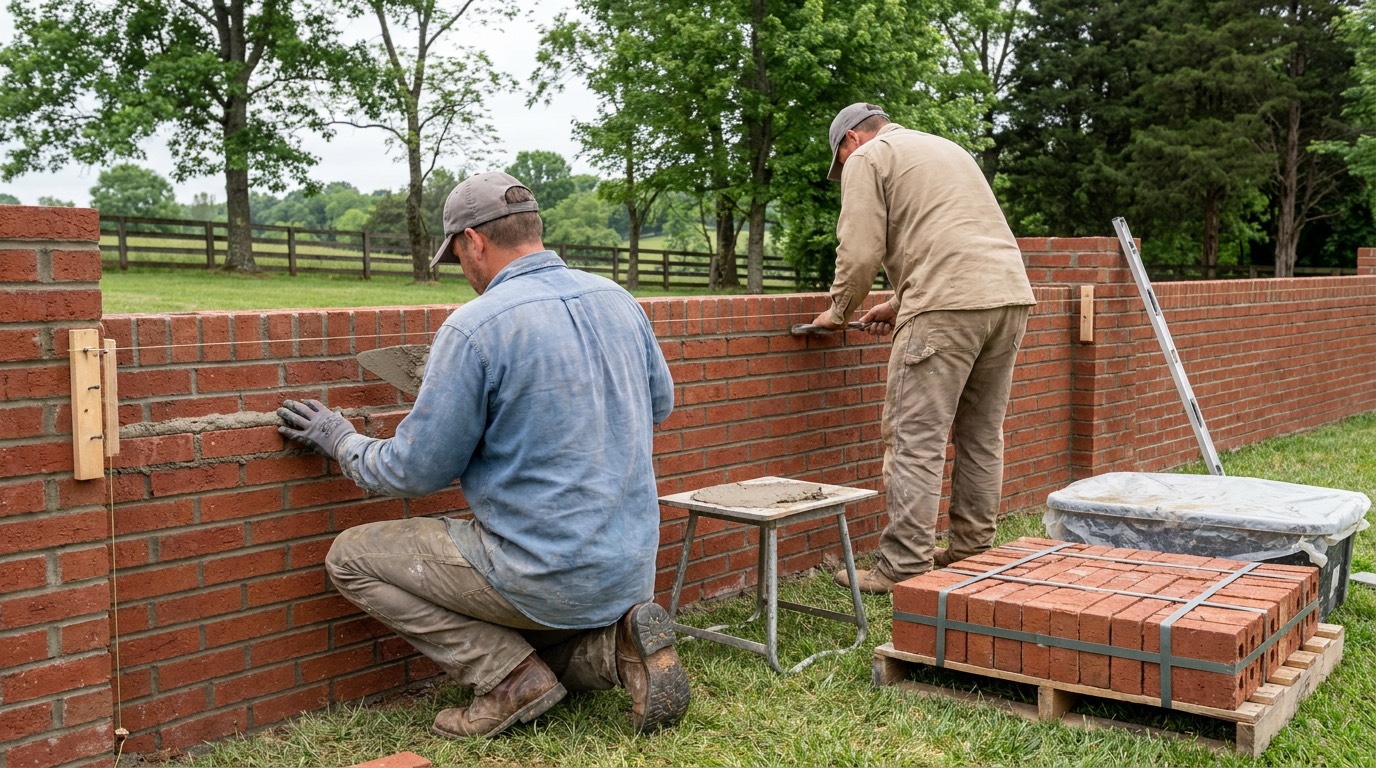 Hiring
Questions That Tell You Whether You Are Talking to a Mason
You do not need to know masonry to hire well. You need six or seven questions and the patience to listen to how somebody answers them.
Read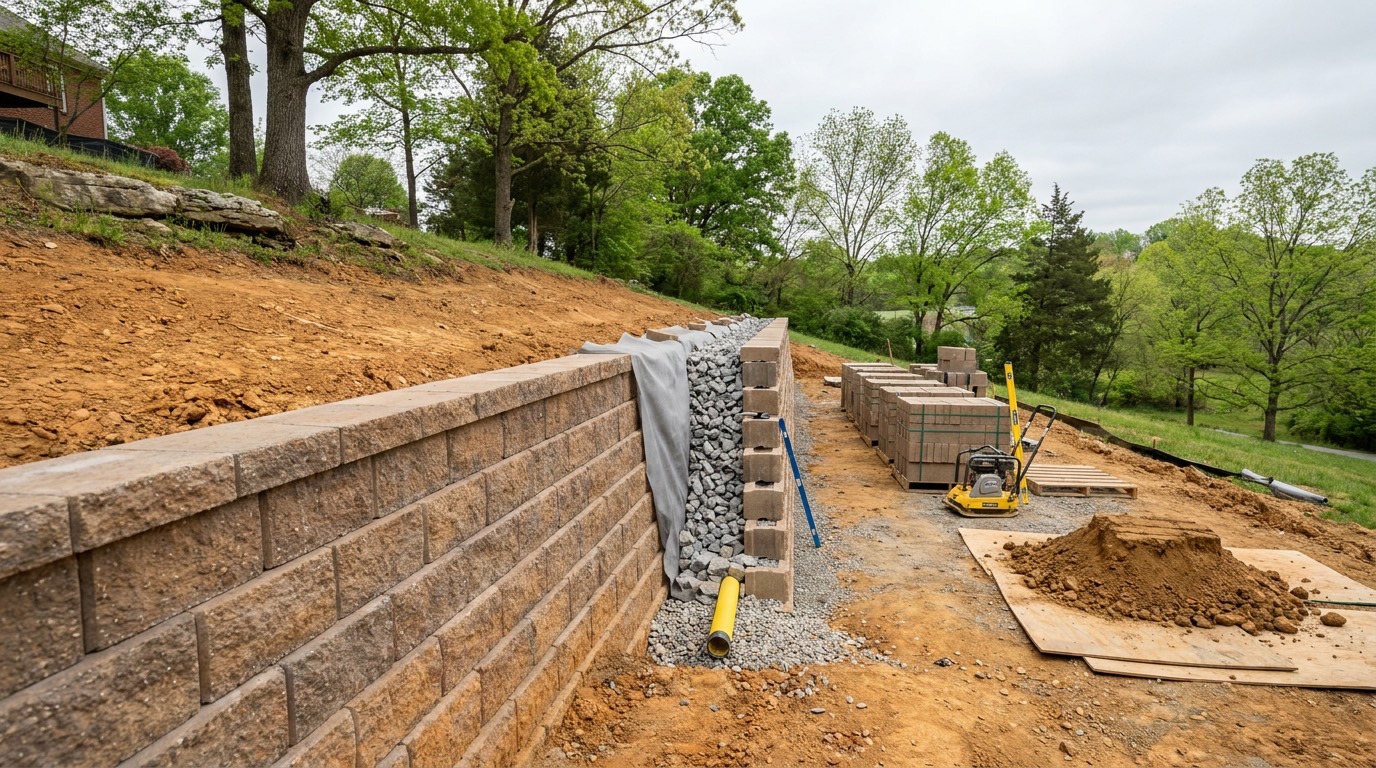 Cost guide
What a Retaining Wall Really Costs in Middle Tennessee
Two walls the same length on the same street can be double each other. Almost all of the difference is buried behind the face, in the base, the backfill and the drainage.
ReadDiagnosisRetaining Wall Failure Signs: Lean, Bulge, Separation and Drainage
A retaining wall gives you months of warning before it goes. Four signs to read, in the order they usually show up on Middle Tennessee clay.
Read Local guide
Do You Need a Permit for Masonry Work in Rutherford County?
Permits follow structure, not brickwork. Here is how masonry jobs usually get sorted around Rutherford County, and why the only answer that counts comes from the office covering your address.
ReadShould You Seal Your Brick? Usually Not, and Here Is Why
Somebody offered to seal your brick and it sounded like cheap insurance. On most Murfreesboro houses it is the wrong move, and the reason is what winter does to trapped water.
ReadStraight answer on your wall.
Call, or send the form and we will get you a written price.