Do You Need a Permit for Masonry Work in Rutherford County?
Permits follow structure, not brickwork. Here is how masonry jobs usually get sorted around Rutherford County, and why the only answer that counts comes from the office covering your address.
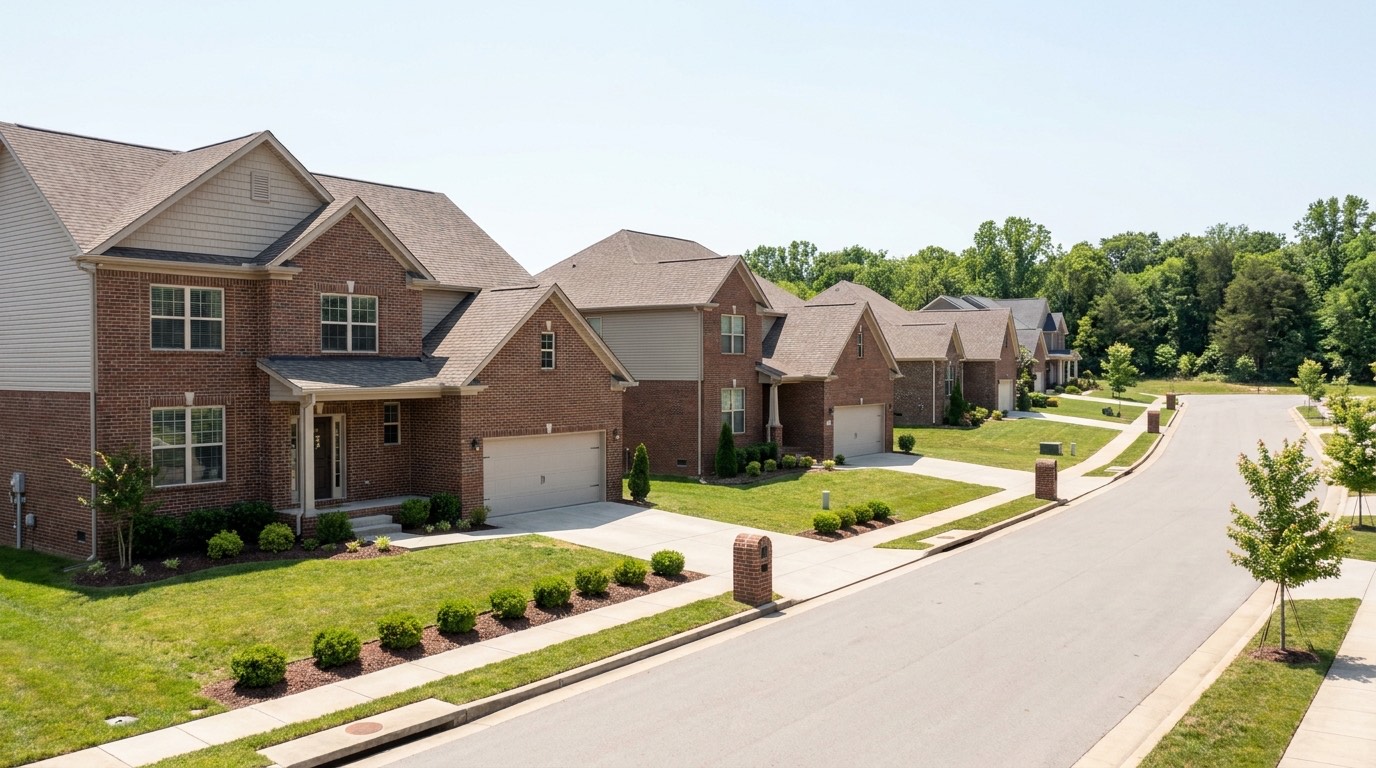
Permits follow structure, not brickwork
The question is rarely whether a job involves brick. It is whether the job touches structure. Replacing mortar in a wall that is already standing is maintenance. Pouring a footing, opening up a wall, or rebuilding a chimney from the ground changes how load moves, and that is the kind of work a building department wants eyes on.
Tennessee jurisdictions adopt model codes published by the International Code Council and then amend them locally. That is why a friend two counties over can tell you confidently what the rule is and still be wrong about your house.
Nothing here replaces a phone call. Treat this as a way to know which questions to ask before you dial.
Work out which office is actually yours
Rutherford County has a county government and several cities inside it. An address inside the Murfreesboro city limits is handled by the city. Smyrna and La Vergne run their own permitting. Property out toward Christiana, Rockvale or the unincorporated stretches goes to the county. Cross north west into Williamson County and it starts over again, with Franklin and Brentwood each running their own review.
A lot of homes carry a Murfreesboro mailing address and sit outside the city limits. The mail carrier and the building inspector do not use the same map. Confirm your parcel before you call, and give the clerk a street address rather than a zip code.
Want a price for your own wall?
Four quick questions and we come back with a written quote. Or call (772) 251-6654 if that is faster.
Request a quote
Four questions, about a minute. We'll call you back.
Masonry work that commonly requires a permit
The pattern across most Middle Tennessee jurisdictions is consistent even where the details differ. New structure, new footings, and anything holding load or soil tends to be reviewed.
Chimneys catch people out. A crown repair is one thing. Taking a chimney down past the roofline and rebuilding it is another, and once a rebuild reaches the footing you are usually in permit territory.
- New foundation or footing work of any kind
- Rebuilding a chimney below the roofline, or building a new one
- A new masonry fireplace, indoors or out
- Cutting a new window or door opening into a masonry wall
- Structural repair to a load-bearing wall or a block foundation
- Retaining walls above the height your jurisdiction sets
Work that usually does not
Repair that returns a wall to its existing condition is normally treated as maintenance. Repointing, replacing spalled brick face for face, resetting loose caps, patching veneer and cleaning are ordinary upkeep in most jurisdictions.
The line moves once quantity turns into reconstruction. Repointing a chimney is maintenance. Repointing an entire two story elevation while replacing several hundred brick starts to look like something else to a plans examiner. When you are near that line, call and describe the scope in plain words. Inspectors would rather answer the question than find the work later.
Retaining walls are the usual surprise
More homeowners get caught by a wall than by anything else. Most jurisdictions set a height above which a retaining wall needs a permit, and often engineered drawings with it. That height is not the same everywhere, so verify it rather than trusting a supplier or a neighbor.
Two other things matter locally. Our clay soils swell when saturated and push hard on a wall, and shallow limestone changes what a footing can bear on. Both are reasons a reviewer wants to see drainage and a base detail, not just a stack of block.
Splitting one tall wall into two short terraces to duck a threshold does not always work. If the terraces are close enough to load each other, many reviewers treat them as one wall. Ask before you design around it.
Who pulls it, and where licensing fits
On contracted work the contractor normally pulls the permit. When a company asks you to pull it in your own name, ask why. Sometimes there is a fair answer. Sometimes it means the liability for the inspection is being moved onto you.
Licensing runs on a different track from permitting, and the counter will still want to know who is doing the work. There is no masonry trade license in this state to produce. What the state issues is a contractor license, through the Tennessee Board for Licensing Contractors, and whether a given job needs one comes down to what the job is worth. That number is not ours to quote and not your contractor's either. Get it from the Board, and while you are there confirm that any license you have been shown is active and covers work of this kind.
Expect inspections tied to the permit, usually at the stages a reviewer cannot see later. Footings before concrete is the classic one. Build that into the schedule instead of discovering it on pour day.
What skipping it costs later
Unpermitted work is cheap until the house changes hands. Sellers in Tennessee disclose known conditions, and a buyer's agent who spots a new fireplace with no permit history will ask. That conversation lands during negotiation, which is the worst possible time.
Two other exposures are worth naming without overselling them. An insurer reviewing a claim on structure that was never inspected has room to argue. And a stop work order in the middle of a job means open masonry sitting through weather while a retroactive permit is sorted out.
The application is the cheapest part of any masonry project. Handle it first.
Related questions
Does repointing my brick need a permit?
In most jurisdictions repointing is maintenance and does not, because nothing structural changes. Very large scopes can be treated differently, and historic districts may add review of their own. Describe the actual scope to your local office and let them classify it.
My HOA approved the work. Is that the same as a permit?
No. They are two separate approvals with different purposes. An HOA reviews appearance under its own covenants, while a building department reviews safety and code. In Smyrna and La Vergne subdivisions you will often need both, and approval from one says nothing about the other.
What about older brick near the Murfreesboro square?
Some older areas carry design review in addition to normal permitting, and requirements differ block to block. If your property sits in or near a designated district, ask the city what review applies before you commit to materials. Mortar color and joint profile can both be part of that conversation.
Can I pull a permit as the homeowner?
Many jurisdictions allow it for work on your own residence, with conditions. The catch is that you take on responsibility for scheduling inspections and for the work meeting code. If a licensed contractor is doing the job, having them pull it is usually the cleaner arrangement.
Will I need an engineer?
Sometimes. Retaining walls above the local height, foundation repair, and any job where a structure has already moved are the usual triggers. Rock is the other one around here. Limestone lies shallow and unevenly across Rutherford County, so half a footing can sit on ledge while the rest of it sits on soil, and that is exactly the case a reviewer wants stamped drawings for. Your contractor should raise it before the dig, not on the day of it.
How long does approval take?
It varies by office, by season, and by whether drawings are involved. Straightforward residential applications tend to move quickly. Anything needing engineering takes longer. Bear in mind too that this county is not the only counter people deal with: a house in Franklin sits in Williamson County, with its own queue and its own paperwork. Ask the office covering your address for a realistic timeline, and do not book a crew before the permit is in hand.
References
Standards bodies and agencies referenced above. We are not affiliated with them.
More guides
All guides →Should You Seal Your Brick? Usually Not, and Here Is Why
Somebody offered to seal your brick and it sounded like cheap insurance. On most Murfreesboro houses it is the wrong move, and the reason is what winter does to trapped water.
ReadSpalling Brick: Why the Face Pops Off and Spreads
Spalled brick is the face of the unit flaking or popping away, leaving a rough lighter interior exposed. Once it starts on a Middle Tennessee wall it tends to get worse each winter, and the reason is simple physics.
Read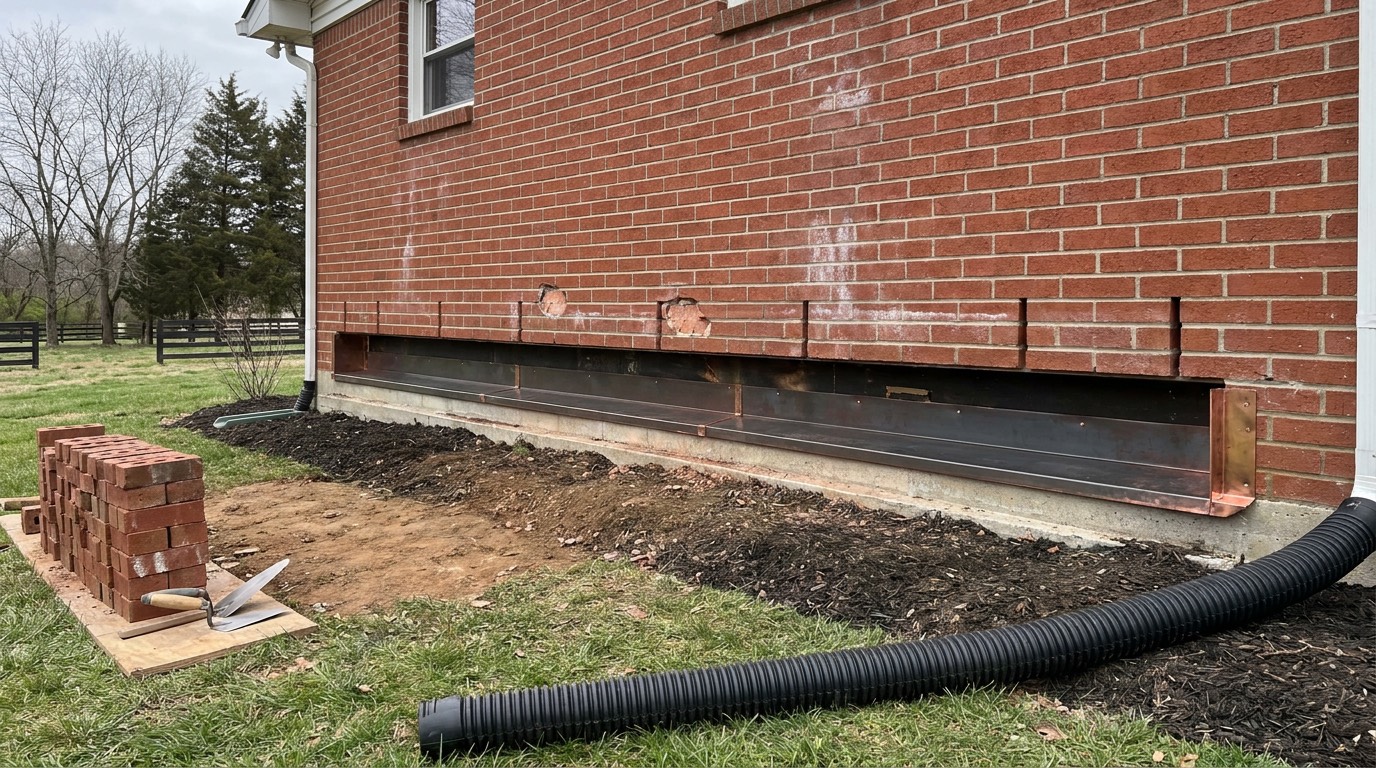 Seasonal
After a Spring Storm: What to Check on Brick and Stone
The damage that matters after a spring storm is rarely the kind you can see from the driveway. It is water that got somewhere it does not normally go.
ReadStair-Step Cracks in Brick: Reading What the Wall Is Telling You
A diagonal crack that steps through the mortar joints is the wall reporting movement below it. The pattern, the direction and the width all mean something specific.
Read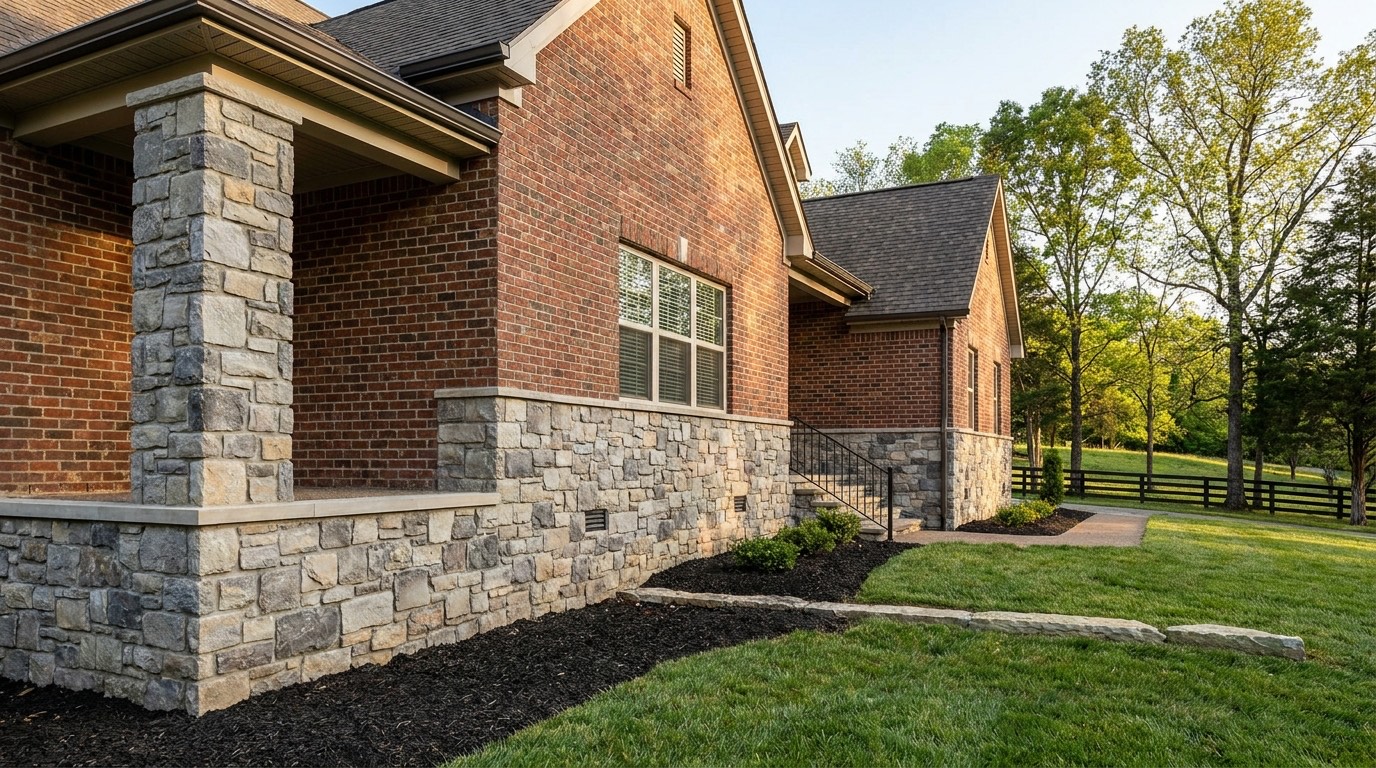 Cost guide
Stone Veneer Cost in Tennessee: What Moves the Number
Two stone veneer bids on the same Murfreesboro house can differ by half. Almost always the gap sits in three places: which stone, what is behind it, and how many hours the pattern takes to set.
ReadStraight answer on your wall.
Call, or send the form and we will get you a written price.