Spalling Brick: Why the Face Pops Off and Spreads
Spalled brick is the face of the unit flaking or popping away, leaving a rough lighter interior exposed. Once it starts on a Middle Tennessee wall it tends to get worse each winter, and the reason is simple physics.
What you are looking at
Spalling is the loss of the outer face of a brick. Sometimes it flakes off in thin layers like old paint. Sometimes a whole face lets go at once and lands in the flower bed as a curved chip.
The tell is the color underneath. A fired brick has a hard skin from the kiln, and it is usually darker or more even than the material behind it. When the skin is gone you see a rougher, paler, thirstier surface. That contrast across a few units is what most homeowners notice first.
Look at the ground too. A scattering of brick flakes along a foundation wall or at the base of a chimney is the same story, told before anyone looks up.
The mechanism, in one paragraph
Brick is porous. It takes on water, and in Middle Tennessee it takes on plenty of it through a wet winter. When the temperature drops below freezing, water trapped inside the pores turns to ice and expands. Ice takes up more room than the water it came from, and that expansion pushes outward on the brick from the inside.
One cycle rarely does visible harm. The problem is repetition. Murfreesboro runs through freezing nights and above freezing afternoons repeatedly from December into February, so a saturated wall can cycle dozens of times in a single winter. Each cycle works the same microscopic cracks a little wider.
This is the single biggest difference between masonry here and masonry in a warm climate. The Brick Industry Association publishes technical guidance on brick durability and weathering exposure, and the whole subject exists because of exactly this cycle.
Want a price for your own wall?
Four quick questions and we come back with a written quote. Or call (772) 251-6654 if that is faster.
Request a quote
Four questions, about a minute. We'll call you back.
Why it accelerates once it starts
The fired skin on a brick is denser than the core. It slows water absorption. When it comes off, the wall loses that protection at that spot and the exposed interior soaks up water considerably faster than the intact units around it.
So the damaged brick enters the next winter wetter than its neighbors. It freezes harder, loses more material, and exposes still more absorbent surface. The curve is not linear. A wall that showed three spalled units two winters ago and shows fifteen now is behaving exactly as expected, not suffering some new event.
The same acceleration applies to the mortar joints around a spalled unit. Once water finds an easy path in, it starts working the joints as well, and joint failure feeds more water into more brick.
Where it shows up first on homes here
Spalling is a water map. It appears wherever the wall gets wettest and stays wet longest, which makes the pattern more diagnostic than the damage itself.
Walk the house and note where the damage clusters. If it sits under one downspout, you have found the cause. If it is spread evenly across a whole elevation, the story is different and usually involves joints, a missing cap or a chronic exposure.
- The bottom two or three courses, where splash off a walk or driveway soaks the wall
- Directly under a leaking gutter joint or an overflowing downspout
- Chimney brick above the roofline, exposed on all four sides with no cap or a cracked one
- North and northeast faces that dry slowest in winter
- Below window sills that shed water onto the brick instead of past it
- Anywhere soil, mulch or a raised planter bed touches the brick
- Steps, porch piers and low garden walls that stay damp underneath
Find the water before you touch the brick
Replacing spalled units without solving the water source is buying the same repair twice. New brick in a wet wall spalls too, just on a slower schedule.
The diagnosis is mostly walking and looking. Check that gutters actually carry water and that downspouts discharge well away from the wall rather than at its base. Check that grade falls away from the house. Check whether an irrigation head is hitting brick every morning. Check the chimney crown and the mortar joints in the same trip.
In older Murfreesboro housing stock, including a lot of the rental brick near MTSU, the cause is frequently deferred gutter work rather than anything about the masonry itself.
- Gutters clear, joints sealed, downspouts extended away from the wall
- Grade sloping away from the foundation for several feet
- Sprinkler heads not spraying the wall
- Mulch and soil pulled back off the brick
- Chimney crown intact and joints sound above the roofline
What actually repairs it
The real repair for a spalled unit is removal and replacement. The damaged brick is cut out, the opening is cleaned, and a matching unit is laid back in with mortar compatible with what surrounds it. Done well, the patch disappears into the wall within a season.
Matching is the hard part and it drives the price. Brick color, size and texture have changed over the decades, and an exact match for a 1960s Murfreesboro ranch is not sitting on a shelf. Options include salvage yards, pulling units from an inconspicuous elevation such as behind a deck, and accepting a close blend.
One thing does not repair it. Coating the wall with a film forming sealer traps moisture behind the surface and generally makes spalling worse in a freezing climate. If a product is being sold to you as a fix for spalling, ask what it does with the water already inside the wall.
When to act and when to watch
Not every spalled brick is an emergency, and it is worth saying so plainly. A handful of units with light surface flaking on a veneer wall is cosmetic. Fix the water, note the locations, and look again next spring.
What moves it up the list is depth, spread and location. Units losing significant thickness rather than a skin, damage spreading noticeably year over year, or spalling in something load bearing such as a porch pier, a step or a chimney stack all warrant a look from a mason rather than another winter of waiting.
Chimneys deserve their own line. A stack that is shedding brick above the roofline is dropping material onto a roof and a walkway, and the deterioration is often further along than it looks from the yard.
- Cosmetic and monitorable: light flaking on a few veneer units, no spread
- Get it looked at: units losing real thickness, or the count climbing each winter
- Do not wait: spalling in piers, steps, retaining walls or chimney stacks
Related questions
Is spalled brick a structural problem?
On a brick veneer wall it usually is not, because the veneer carries only itself and the frame behind it does the structural work. On solid masonry, on porch piers or on a chimney, the brick is the structure and spalling matters much more. Which one you own tends to follow the age of the house. Veneer went onto almost every subdivision house of the past few decades. Solid walls turn up in the older housing near the square and in some of the aging rental stock around MTSU, and the answer changes on those.
Can you turn the brick around and reuse it?
Occasionally, on a solid brick wall where the back face is sound and the unit comes out whole. It is not an option on a modern veneer, where the brick is a single wythe with one finished face. Most of the time the unit is cut out and replaced instead.
Will sealing my brick stop the spalling?
Generally no, and a film forming sealer often makes it worse. Brick needs to release the moisture it absorbs. Seal the outside and that water gets trapped, then freezes in place. Breathable water repellents have narrow legitimate uses, but they are not a treatment for brick that is already spalling.
Why did it appear suddenly after one winter?
It rarely is sudden. Damage builds over several seasons and then the face lets go all at once, which is what makes the timing look abrupt. The local version of the story is a wet fall that leaves a wall loaded, followed by a Rutherford County winter that keeps stepping back and forth across freezing instead of staying cold. Ice forms and releases inside the same brick again and again between December and February. The last crossing gets blamed for all of them.
Can I paint over spalled brick to tidy it up?
Painting hides the appearance and keeps the moisture in, so the deterioration continues out of sight. It also commits future owners to repainting forever, since paint on brick is difficult to remove without damaging the face. Repair the units and fix the water instead.
How hard is it to match brick on an older Murfreesboro home?
It ranges from straightforward to genuinely difficult depending on the age. Newer Smyrna and La Vergne veneer is often still available or has a close current equivalent. Mid century and older brick usually means a salvage yard or harvesting units from a hidden elevation. Expect matching to be a real part of the estimate.
More guides
All guides →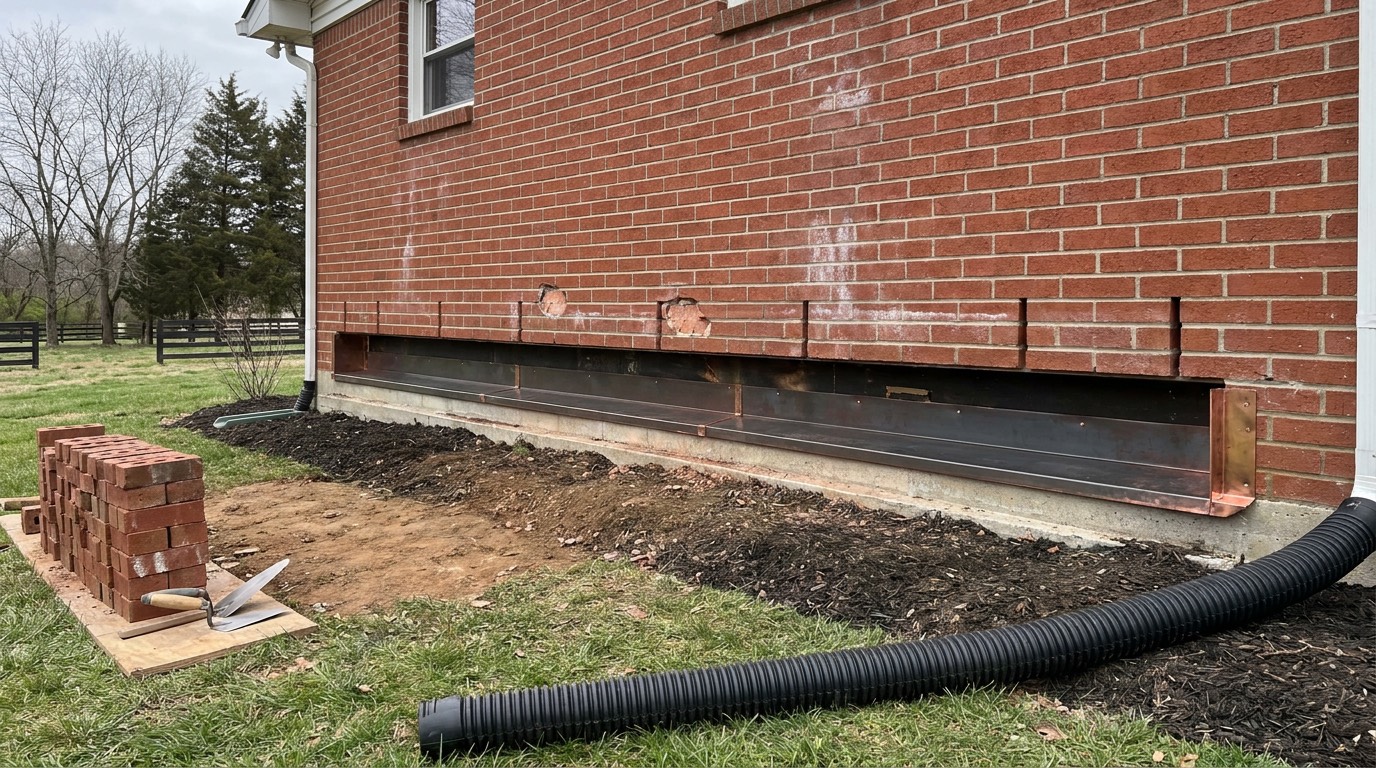 Seasonal
After a Spring Storm: What to Check on Brick and Stone
The damage that matters after a spring storm is rarely the kind you can see from the driveway. It is water that got somewhere it does not normally go.
ReadStair-Step Cracks in Brick: Reading What the Wall Is Telling You
A diagonal crack that steps through the mortar joints is the wall reporting movement below it. The pattern, the direction and the width all mean something specific.
Read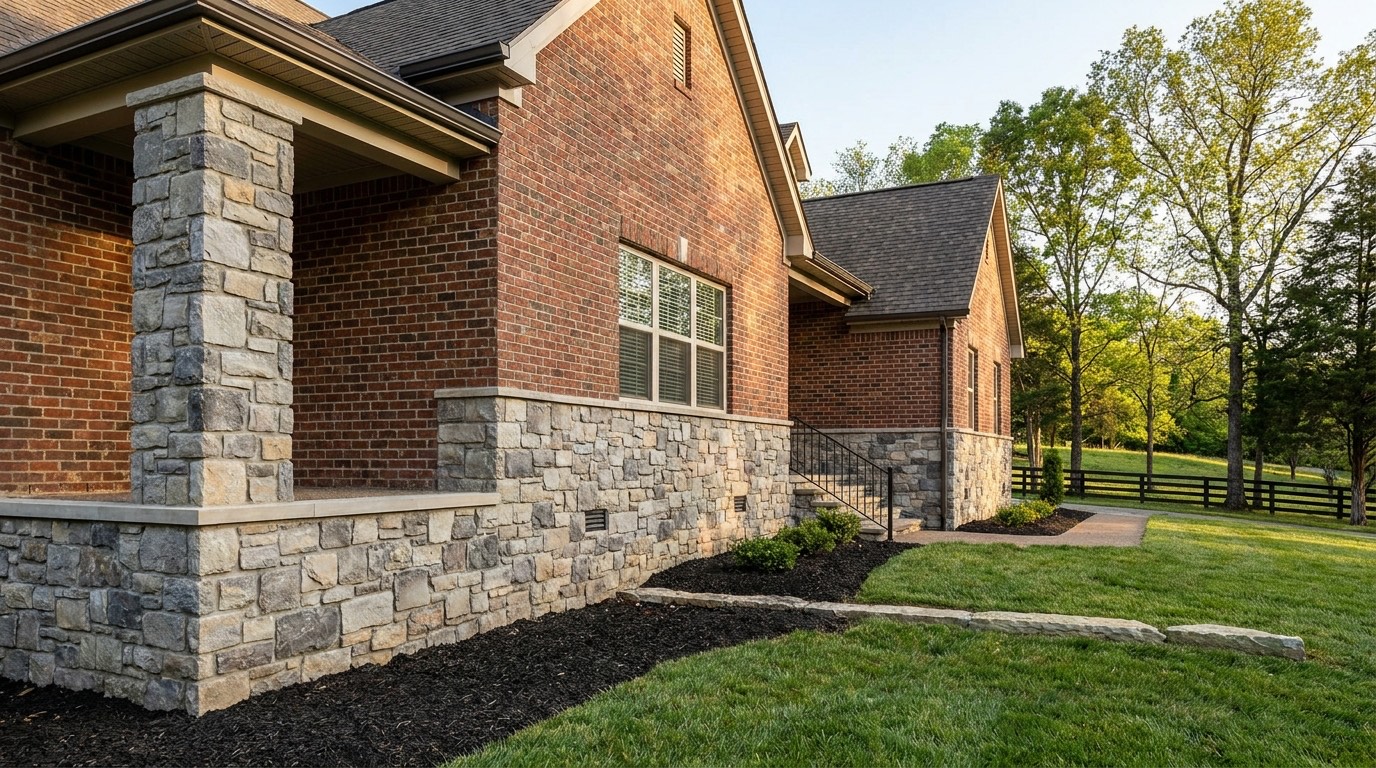 Cost guide
Stone Veneer Cost in Tennessee: What Moves the Number
Two stone veneer bids on the same Murfreesboro house can differ by half. Almost always the gap sits in three places: which stone, what is behind it, and how many hours the pattern takes to set.
Read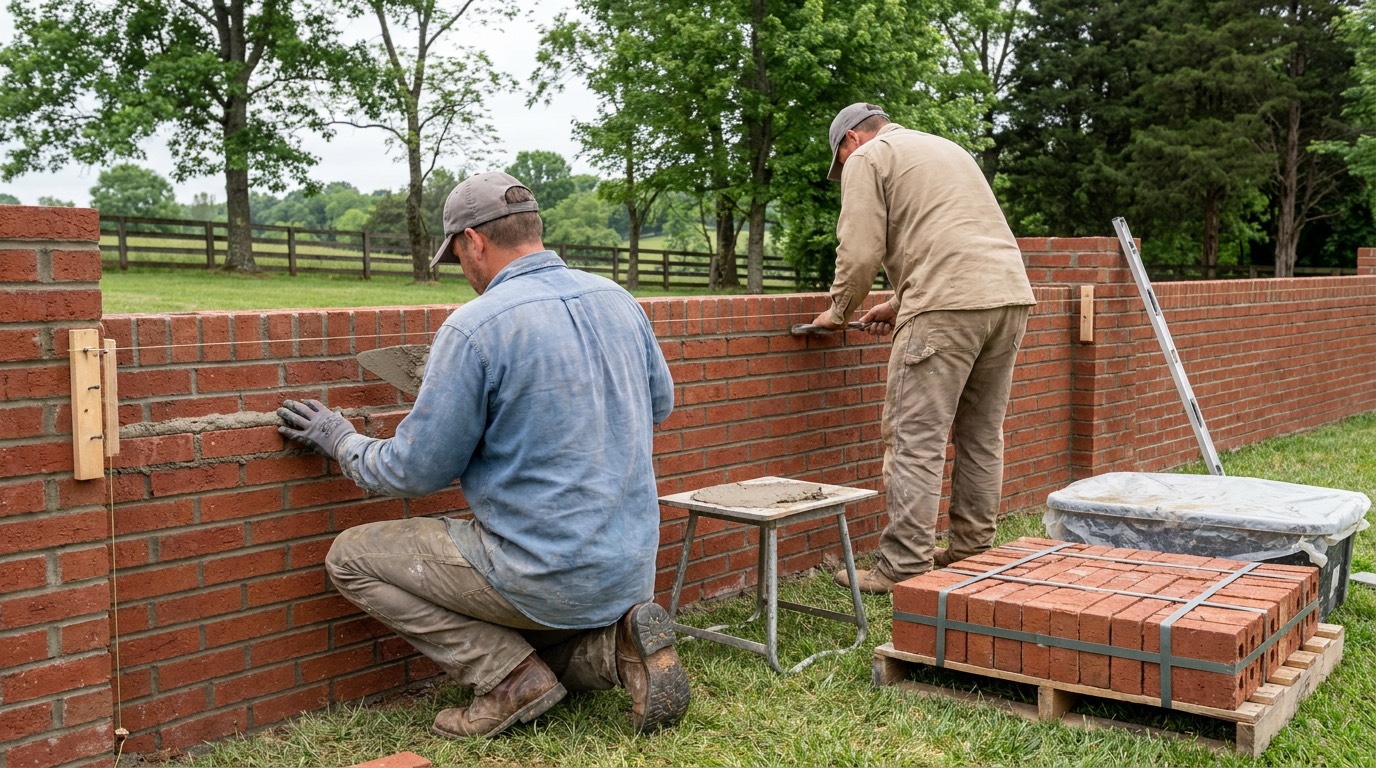 Hiring
Tennessee Licensing and Masonry Work: What It Covers and What It Does Not
Nobody in Tennessee holds a license that says mason on it. Knowing what the state license does cover, and what it never covers, changes the questions you ask.
ReadLocal guideTennessee Fieldstone or Shipped In Stone: Choosing for a House Here
The stone that comes off a Rutherford County fencerow and the stone on a pallet from three states away behave differently on a wall. Both have their place. Here is how to pick.
ReadStraight answer on your wall.
Call, or send the form and we will get you a written price.