After a Spring Storm: What to Check on Brick and Stone
The damage that matters after a spring storm is rarely the kind you can see from the driveway. It is water that got somewhere it does not normally go.
Impact is the obvious part, and the smaller part
After a rough night people walk out looking for a limb through the wall. That does happen, and it is easy to spot. It is also the least common way a storm hurts masonry.
March through May is severe weather season in Middle Tennessee, and Rutherford County sits in the middle of it. Tornado warnings, straight line wind and hail all belong to those weeks. What does the most masonry damage across the season, though, is the plainest ingredient in it: rain driven sideways at a wall for an hour at a time. Ordinary rain falls on a roof. Storm rain is pushed into vertical surfaces under pressure, into joints and around openings, from directions the wall never sees the rest of the year.
That damage is invisible from the yard. It shows up as a stain on a ceiling three weeks later.
Brick is a screen, not a raincoat
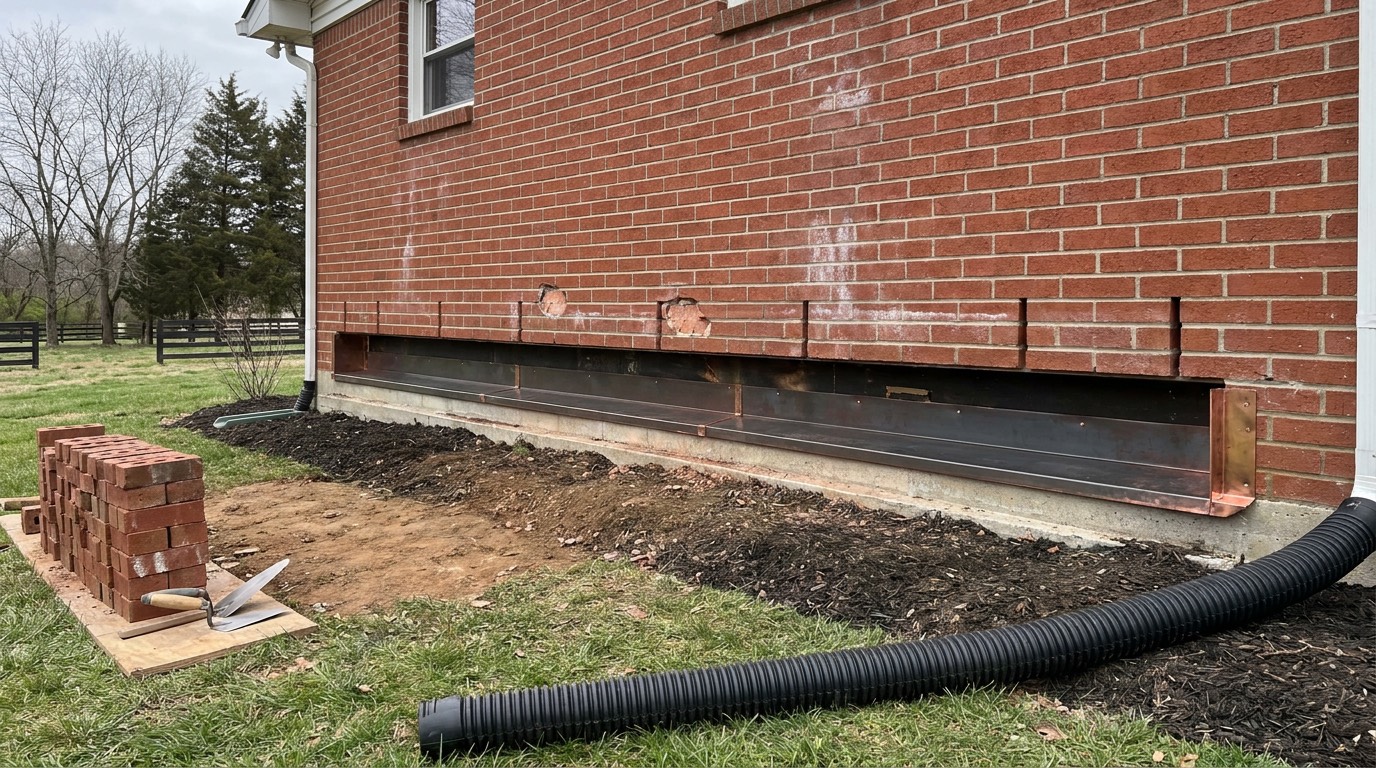
This surprises most homeowners, and it explains everything else in this post. Brick veneer is not waterproof and was never meant to be. Water passes through brick and mortar in heavy weather by design.
What keeps the house dry is the cavity behind the veneer. Water runs down the back of the brick, lands on flashing, and exits through the weep holes at the bottom. The system assumes water gets in and gives it a way back out.
So a leak after a storm almost never means the brick failed. It means the drainage path failed. Blocked weeps, mortar droppings sitting on flashing, flashing that was never lapped correctly, or an open joint above a window that lets water bypass the path entirely.
Want a price for your own wall?
Four quick questions and we come back with a written quote. Or call (772) 251-6654 if that is faster.
Request a quote
Four questions, about a minute. We'll call you back.
Check inside while the wall is still wet
There is a window of roughly a day where evidence is visible, and after that a small leak dries and hides until the next storm. Go inside first, before you go out.
Work the walls that took the wind. In our storms that is usually the south and west faces, though a specific cell can come from anywhere. Look where masonry meets something else, because that is where paths open.
- Ceiling and wall corners on the windward elevations
- Window sills and the wall under them, felt with a hand
- Baseboards, and carpet edges along exterior walls
- The inside of closets on exterior walls, where nobody looks
- The chimney chase, in the attic as well as the room below
- Basement or crawlspace block walls, for fresh damp streaks
Then the walk outside
Do the outside lap in daylight with your phone in hand. You are looking for two things: what moved, and what is now blocking water from leaving.
Gutters do more damage after storms than wind does. A clogged gutter overflows down one section of wall, and a downspout extension that got knocked aside dumps hundreds of gallons at a single corner. Both soak masonry that then has to get through next winter.
That last point carries more weight than it usually gets, because it is the piece of storm season people defer. Brick that goes into December still holding April water is the brick that spalls, and the reason is the way winter behaves in this region. It does not freeze once and stay there. It drops under freezing overnight and climbs back through the afternoon, repeatedly from December into February, and every swing works on the same water trapped in the same unit until the face gives up. So drying a wall out after a spring storm is not housekeeping. It decides how much masonry damage you own the following winter.
- Weep holes at the base course, clear of debris and mud splash
- Gutters overflowing, and downspout extensions still in position
- Fresh mortar chips or sand at the bottom of a wall
- Cap stones, pier caps and wall coping shifted or knocked loose
- Flashing at the chimney or roof-wall line lifted or bent
- Retaining walls, which lean after saturation more than during wind
Hail and limb strikes
Hail rarely bothers the face of hard brick, but it does bother the softer parts. Mortar joints, chimney crowns, cast stone caps and limestone sills can all take fresh chips. A crown that already had a hairline crack can open up in one storm.
Look for bright, chalky spots that are lighter than the weathered surface around them. That color difference is the signal that material came off recently.
Limb strikes tend to look worse than they are on a wall and better than they are on a chimney. A chimney is tall, unbraced above the roofline and easy to knock out of alignment. Any limb that hit a chimney is worth a real inspection, even if nothing looks bent.
What to stay away from
Some post-storm masonry is genuinely dangerous, and there is no reason to prove anything by walking up to it. A chimney leaning out of plumb can come down without further warning. So can a freestanding or garden wall with a fresh crack running through it.
The one people underestimate is a saturated retaining wall. Ground that took several inches of rain is heavy, and a wall already at its limit can move days after the weather clears. Keep people and vehicles off the low side and away from the top.
And treat any downed line near masonry as live. Call the utility and stay clear.
Document it, then decide calmly
Photograph everything you found the same day, with something in frame for scale. Note the date of the storm. If you have last year's inspection photographs, you now have a before and after, which is worth more than any description you can write.
Be straight with yourself about what is storm damage and what is deferred maintenance that the storm revealed. Mortar that had been soft for a decade did not fail Tuesday night. Insurers know the difference, and an honest claim goes through more smoothly than a padded one.
Then be patient about the repair and impatient about the water. Storms bring out-of-town crews knocking on doors around Murfreesboro and Smyrna within a day or two, so get a written scope from someone local you can still find in two years. While you wait, cover whatever is letting water in and give the wall a chance to dry out. Taking your time over the decision is fine. Leaving a saturated wall to sit until fall is how a storm in April turns into a masonry bill in December.
Related questions
Water came in during the storm but everything is dry now. Do I still have a problem?
Yes. Water that reached the inside of the house found a path, and the path is still open. It may only run under wind from one direction, which is why it seems to skip storms. That matters more in March, April and May than at any other point in the year, because the Middle Tennessee severe weather season delivers the next round of the same wind within a week or two. Photograph where it appeared and have that area looked at rather than waiting to watch it happen again.
Is it normal for rain to get through my brick?
Through the brick, yes. Into the house, no. Brick veneer is a drainage system that expects water behind it and sheds it out through the weep holes. The wall is doing its job right up until the cavity, flashing or weeps stop moving that water back outside.
Should I file an insurance claim for masonry damage?
It depends on scale and on your deductible. Sudden storm damage such as a limb strike or displaced coping is usually the kind of thing coverage contemplates, while gradual deterioration generally is not. Get an assessment and a written scope first, then decide whether a claim makes sense.
Would sealing the brick stop storm leaks?
No, and it can leave you worse off. A coating does not repair flashing, unblock a weep or close a failed joint, and it slows the wall down at the moment it needs to dry. That is the part that counts in this climate. A wall still carrying April rain in November is the wall that spalls in a Middle Tennessee January, once the temperature starts crossing freezing night after night. Repair the drainage path. Drying is what protects the brick.
A contractor knocked on my door the morning after. Should I use them?
Be careful. Crews follow severe weather into Rutherford County, ask for money up front, and are hard to reach when something has to come back. Ask for a local street address, a written scope of work, and proof the company is licensed and insured, then get a second opinion before you sign anything. The wall will still be there next week.
How quickly do storm repairs need to happen?
Anything letting water inside should be covered or diverted immediately, even temporarily. Structural concerns such as a leaning chimney get looked at right away. Everything else can wait for a proper assessment and a fair price, and rushing that decision the same week is how people end up paying twice.
More guides
All guides →Stair-Step Cracks in Brick: Reading What the Wall Is Telling You
A diagonal crack that steps through the mortar joints is the wall reporting movement below it. The pattern, the direction and the width all mean something specific.
Read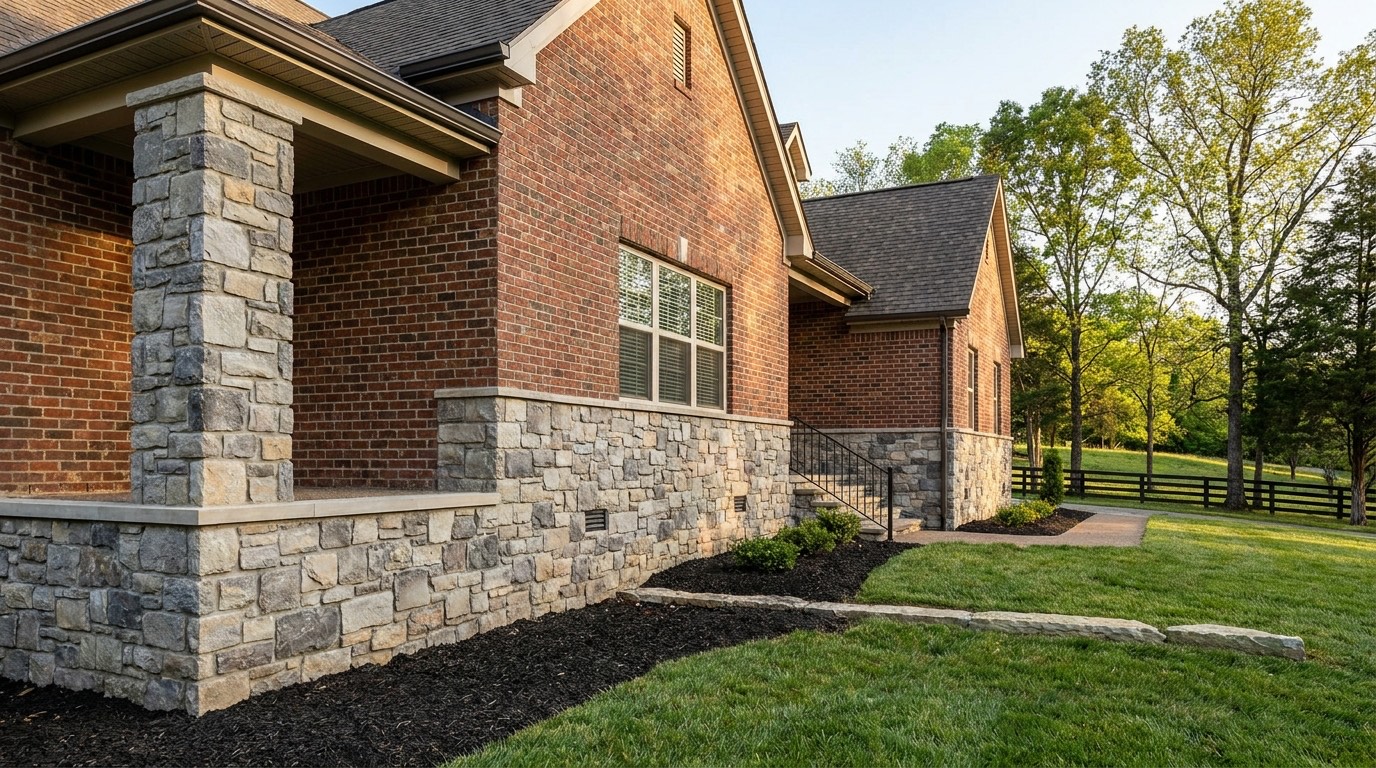 Cost guide
Stone Veneer Cost in Tennessee: What Moves the Number
Two stone veneer bids on the same Murfreesboro house can differ by half. Almost always the gap sits in three places: which stone, what is behind it, and how many hours the pattern takes to set.
Read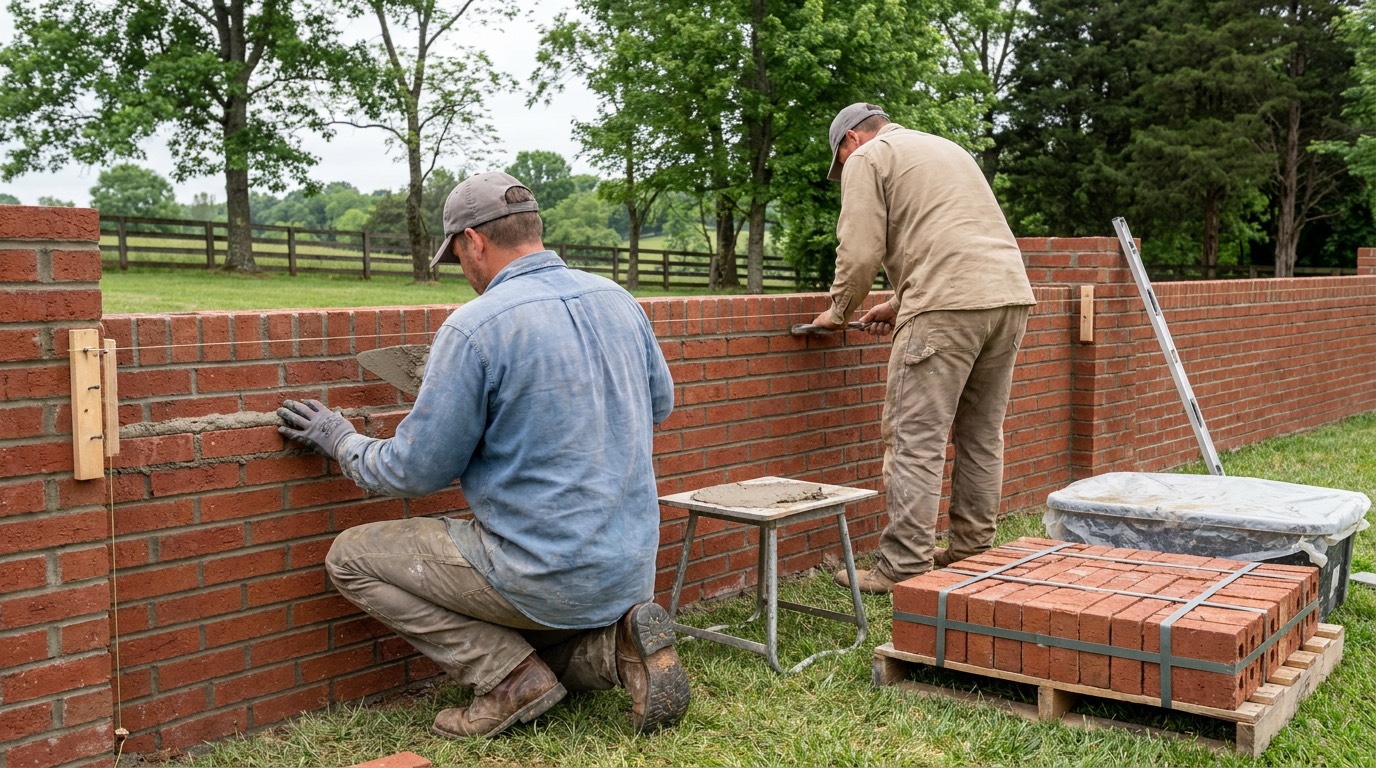 Hiring
Tennessee Licensing and Masonry Work: What It Covers and What It Does Not
Nobody in Tennessee holds a license that says mason on it. Knowing what the state license does cover, and what it never covers, changes the questions you ask.
ReadLocal guideTennessee Fieldstone or Shipped In Stone: Choosing for a House Here
The stone that comes off a Rutherford County fencerow and the stone on a pallet from three states away behave differently on a wall. Both have their place. Here is how to pick.
ReadWhat Tuckpointing Costs in Rutherford County, and What Moves the Number
Two brick walls the same size can hold very different amounts of mortar joint, which is why the same square foot of wall is not the same amount of work.
ReadStraight answer on your wall.
Call, or send the form and we will get you a written price.