Should You Seal Your Brick? Usually Not, and Here Is Why
Somebody offered to seal your brick and it sounded like cheap insurance. On most Murfreesboro houses it is the wrong move, and the reason is what winter does to trapped water.
The short answer
No, for most houses. Sound brick in good condition with sound mortar joints does not need to be sealed, and coating it can make a wall worse rather than better.
This is not a popular answer, because sealing sounds like exactly the sort of responsible thing a homeowner should do, and there is always somebody willing to sell it. But the wall was designed around water getting in and getting back out. Interrupt the second half of that and you have not protected anything. You have trapped it.
Brick is supposed to get wet
A brick wall is not a raincoat. Fired clay absorbs water, mortar absorbs water, and both give it back up as the wall dries. That is the design, and it has worked for a very long time.
On most houses built here in the last fifty years, what you see is brick veneer. A single wythe of brick standing off the framing with an air gap behind it, tied back with metal ties, sitting on flashing at the base with weep holes in the bottom course. Water driven through the brick in a storm runs down the back face, lands on the flashing and exits through those weeps. Older solid masonry walls near the square work differently, with thickness and drying time doing the same job. Either way the wall handles water by letting it move, and the Brick Industry Association publishes its Technical Notes series on exactly this, water penetration resistance in brick masonry.
Want a price for your own wall?
Four quick questions and we come back with a written quote. Or call (772) 251-6654 if that is faster.
Request a quote
Four questions, about a minute. We'll call you back.
What a coating does in a Middle Tennessee winter
Now add our climate. December through February we drop below freezing regularly and come back above it, over and over. That cycle is the defining masonry problem in this region.
Water inside a brick face expands when it freezes. If the brick can dry between events, it survives that indefinitely, which is why the 19th century brick around the Murfreesboro square is still standing. Put a film over the face and water still gets in, through a hairline crack in a joint, around a window, from a leaking gutter, up from splash at the base. It just cannot get back out through the coated face. So it sits in the outer half inch of the brick and freezes there, and the face pops off in flakes. That is spalling, it is permanent, and a spalled brick cannot be repaired, only replaced.
Film formers versus breathable repellents
The word sealer covers two very different products and the distinction is the whole subject.
A film former sits on top of the brick as a continuous layer. Acrylics, urethanes, most glossy or wet look products, and any masonry paint belong here. They block liquid water and they also block vapor, which is the problem. A breathable water repellent works differently. Silanes and siloxanes penetrate into the pores and line them so liquid water beads and runs off, while water vapor still passes through and the wall keeps drying. If a product makes brick look glossy or darker and wet, it is the kind to avoid on a house in this climate.
- Avoid: acrylic and urethane film formers, wet look or gloss finishes
- Avoid: masonry paint on brick that has never been painted
- Avoid: anything a salesman calls waterproofing for a whole house
- Consider: a breathable penetrating silane or siloxane repellent
- Look for: a stated vapor permeability and a masonry specific label
- Expect: a finish that looks like nothing was applied at all
The narrow cases where a repellent earns its place
There are real ones, and an honest mason will tell you when you are in one. A wall taking severe wind driven rain on one exposure with a documented history of interior dampness, where the joints and flashing have already been put right and the water is still getting through, is a genuine candidate.
So is highly absorbent brick on an exposed elevation, a parapet or freestanding wall that gets wet from the top as well as the face, or a chimney stack above the roofline where the exposure is brutal on all four sides. Below grade block in a crawl space is a different conversation with different products. What these cases share is that somebody diagnosed a specific water path first. Nobody should be sealing a house because it has brick on it.
Fix these before you buy a single bucket
Almost every wall we get called to because it is wet has an ordinary cause sitting in plain sight, and none of them are solved by a coating. Water is nearly always arriving from somewhere it should not be.
Work down this list first, in this order. If the wall is still getting wet after all of it, then a repellent is a conversation worth having, and by that point you will actually know what it is for.
- Clean the gutters and add downspout extensions well away from the wall
- Grade the soil so it slopes away, and pull mulch beds back off the brick
- Aim sprinkler heads off the house, since daily spray keeps brick saturated
- Repoint failed and eroded mortar joints, which is where most water enters
- Clear blocked weep holes and never caulk or paint them shut
- Reseal or replace failed caulk at windows and doors, and check the chimney crown
If you do it anyway, do it like this
Repair before you apply. Sealing over cracked joints or a spalling face locks the damage in and adds moisture behind it, so repointing comes first and the wall needs time to dry afterward, which after new mortar means weeks rather than days.
Clean gently, since pressure washing brick at high pressure blows out joints and drives water deep into the wall. Test on an area nobody sees and live with it through a rain before committing to an elevation. Apply in mild dry weather with no freeze coming, not in late fall when a cold snap can arrive before the product cures. And go in knowing this is not permanent. Penetrating repellents wear out and get reapplied on a cycle of years, so anyone promising a one time permanent fix is selling something that does not exist.
Related questions
My brick is already painted. Should I strip it?
Not automatically. Stripping is aggressive work and it can take more off a soft wall than the paint ever did. That is the real risk on the old brick houses ringing the Murfreesboro square and in the older parts of Franklin, where units fired soft in the nineteenth century have been drying themselves out ever since. If the paint is sound and the wall is dry on the inside, keeping it maintained with a breathable masonry paint is usually the safer road. Have somebody look before you commit either way.
Will sealing stop efflorescence?
It treats the symptom and hides the cause. That white powder is salt carried out of the masonry by water moving through it, so it is telling you where water is traveling. Seal the face and the salt deposits behind it instead, which in a freeze thaw winter can push the brick face off.
A contractor says my brick is porous and needs waterproofing. Is that true?
Ask which brick, which elevation, and what evidence there is of water getting in. A specific answer about one wall with a real symptom is a conversation. Waterproof the whole house is a sales pitch. Also ask what they propose to do about the gutters, the grading and the joints first.
How often would a breathable repellent need redoing?
Penetrating repellents wear, with the service life depending on the product, the exposure and how much sun and rain the wall takes. Expect a cycle measured in years rather than decades, and expect the south and west elevations to need it sooner. Any claim of permanence is a reason to keep shopping.
Should I seal a new brick patio or walkway the same way?
Paving is a different case from a wall. It holds standing water, it takes salt, and it freezes right through rather than only at the face, which is why sealers are more common on horizontal work. Even so, what keeps a patio in Rutherford County intact through February is a compacted base and somewhere for the water to drain. Our winters run up to the freeze line and back down again all season instead of locking everything solid until March, and no coating changes what the ground underneath is doing.
What about sealing an old brick house near the square?
Be very careful. Soft 19th century brick of the kind still standing around the courthouse square in Murfreesboro depends on being able to dry, and trapping moisture inside it does real and irreversible damage. Historic masonry deserves somebody who works on it regularly, and the National Park Service preservation guidance is clear that breathability comes first on old fabric.
More guides
All guides →Spalling Brick: Why the Face Pops Off and Spreads
Spalled brick is the face of the unit flaking or popping away, leaving a rough lighter interior exposed. Once it starts on a Middle Tennessee wall it tends to get worse each winter, and the reason is simple physics.
Read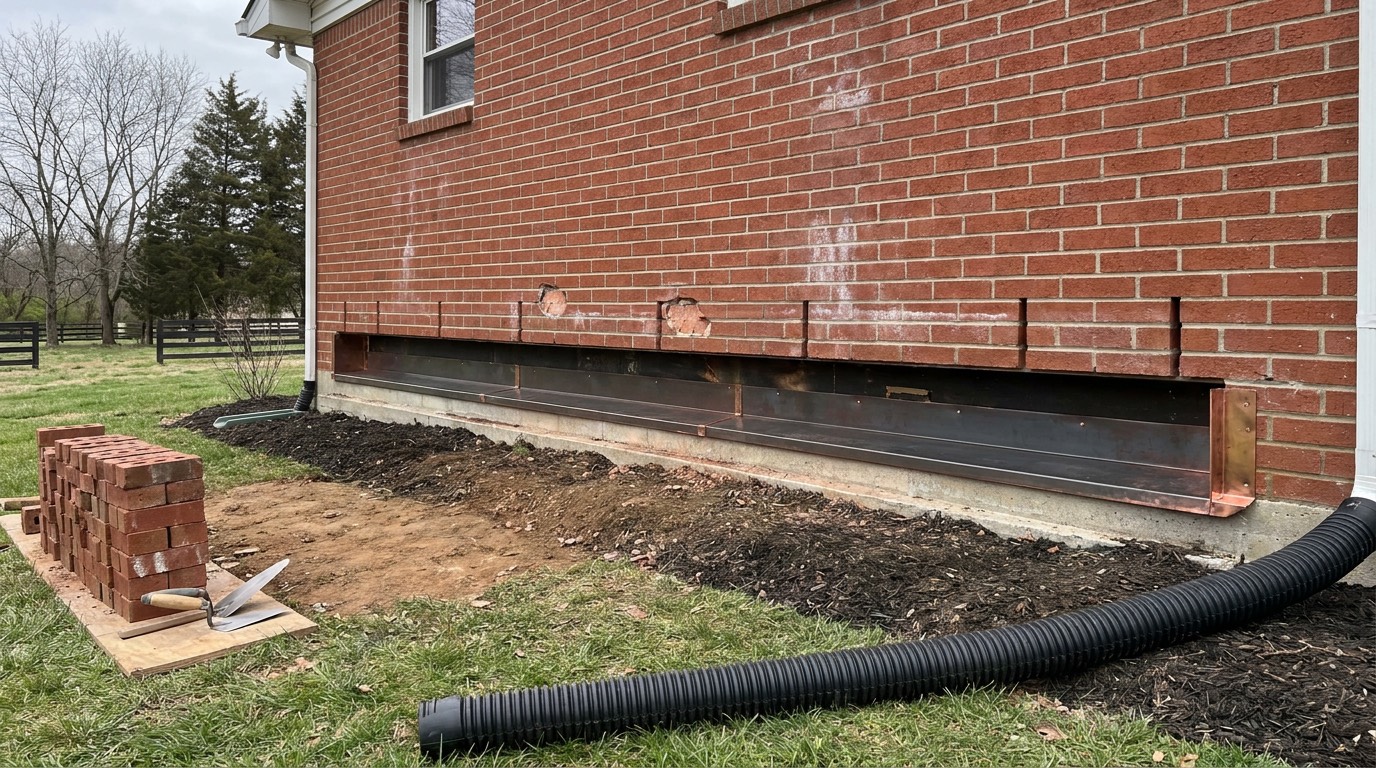 Seasonal
After a Spring Storm: What to Check on Brick and Stone
The damage that matters after a spring storm is rarely the kind you can see from the driveway. It is water that got somewhere it does not normally go.
ReadStair-Step Cracks in Brick: Reading What the Wall Is Telling You
A diagonal crack that steps through the mortar joints is the wall reporting movement below it. The pattern, the direction and the width all mean something specific.
Read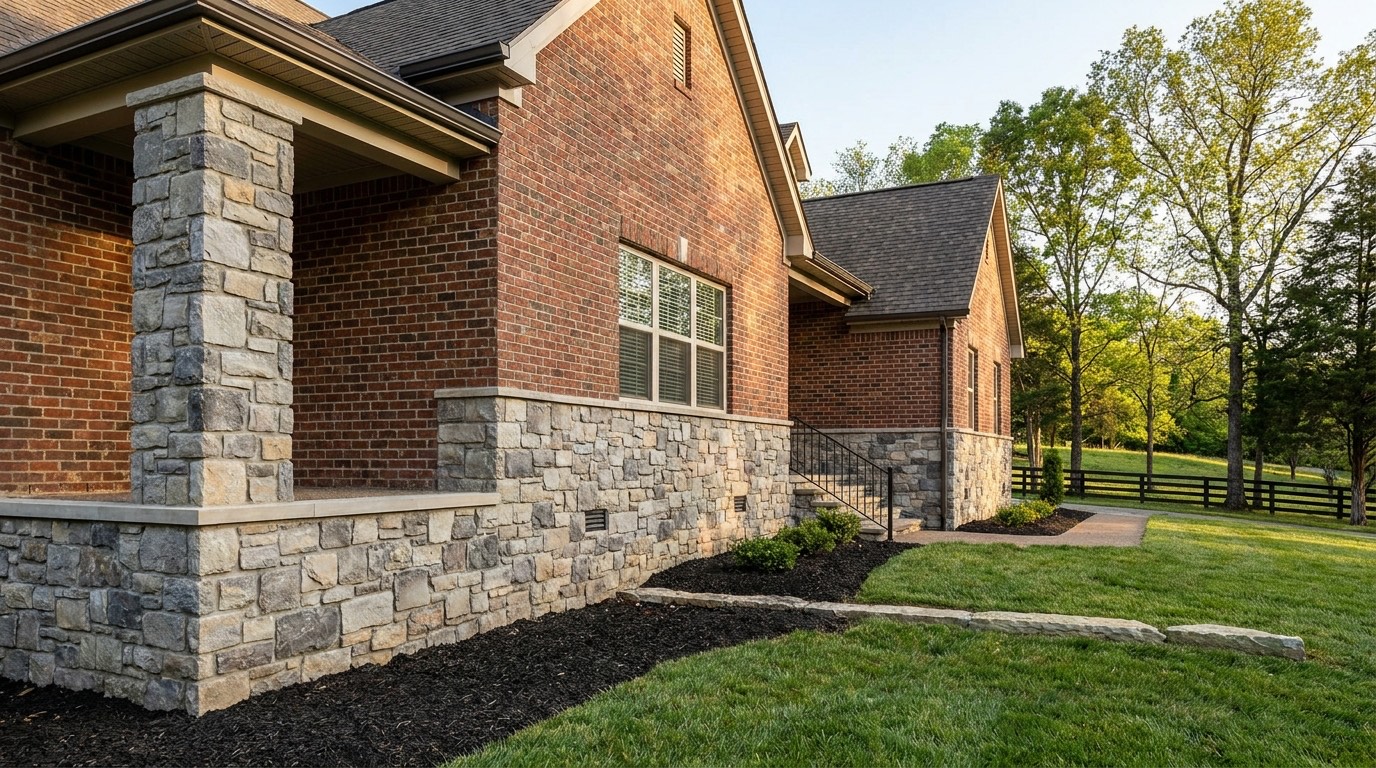 Cost guide
Stone Veneer Cost in Tennessee: What Moves the Number
Two stone veneer bids on the same Murfreesboro house can differ by half. Almost always the gap sits in three places: which stone, what is behind it, and how many hours the pattern takes to set.
Read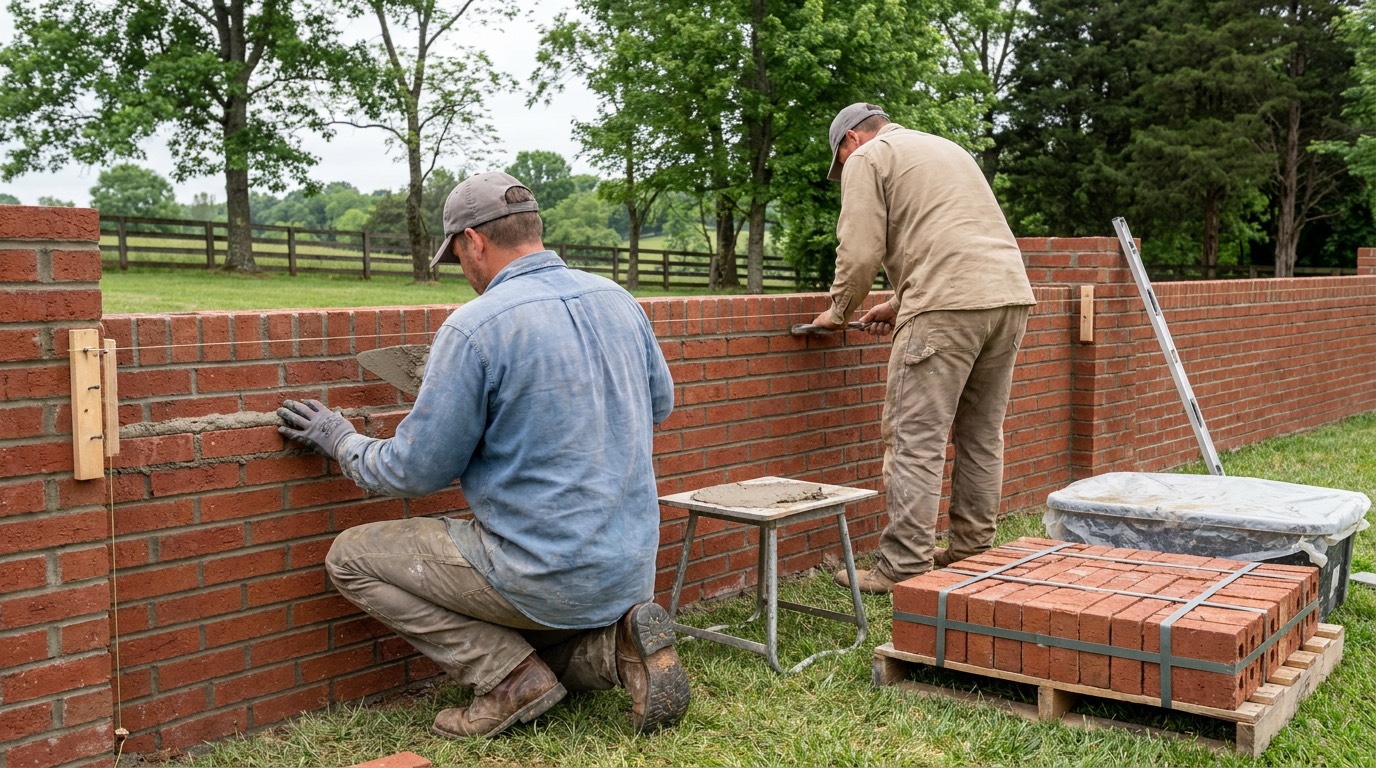 Hiring
Tennessee Licensing and Masonry Work: What It Covers and What It Does Not
Nobody in Tennessee holds a license that says mason on it. Knowing what the state license does cover, and what it never covers, changes the questions you ask.
ReadStraight answer on your wall.
Call, or send the form and we will get you a written price.