Historic Brick Around the Murfreesboro Square: What It Needs
The brick downtown was made in a different century by a different process. Treat it like modern brick and you will watch the faces come off within a few winters.
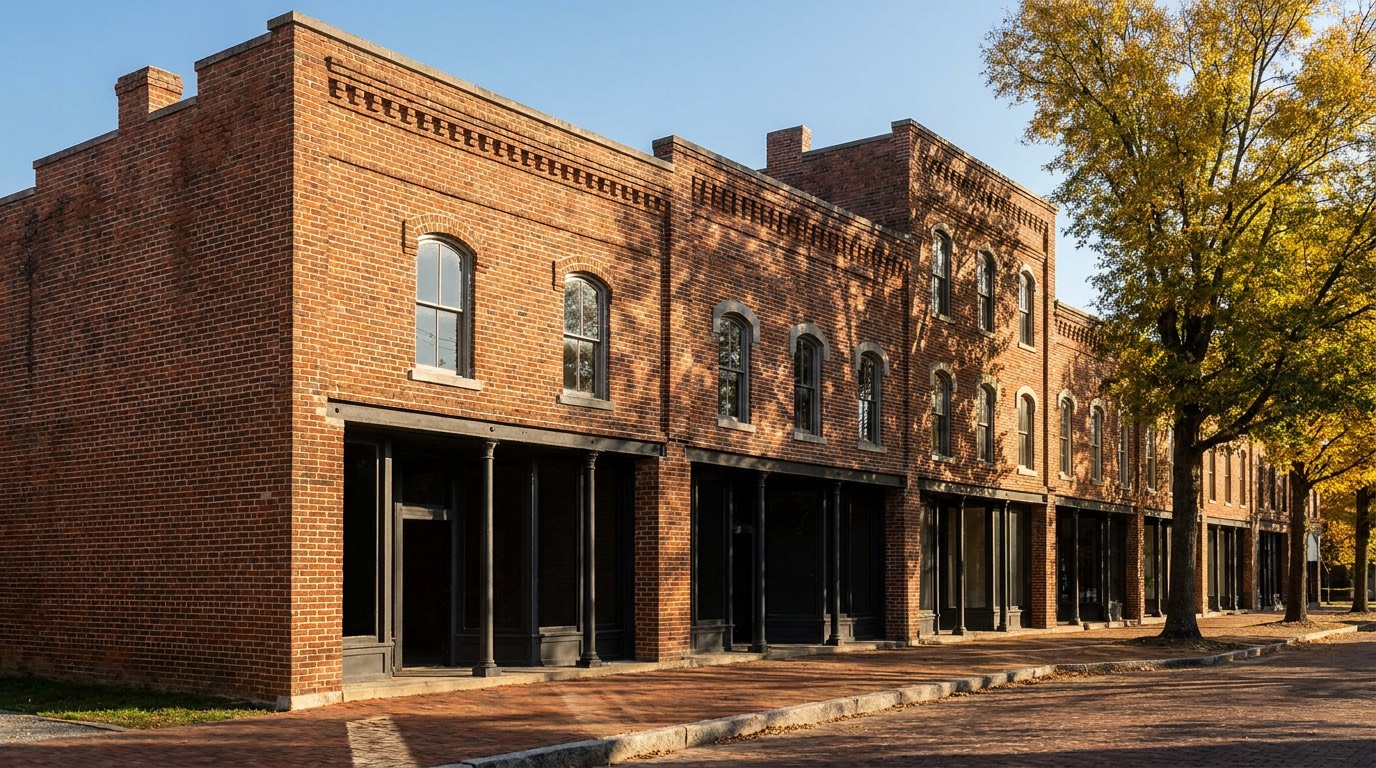
Downtown brick and subdivision brick are different materials
Stand on the Murfreesboro square and put your hand on a nineteenth century wall, then drive out to a new street in Blackman or Smyrna and do the same thing. The color may be similar. The material is not. One was pressed from local clay and fired in a periodic kiln with wildly uneven heat. The other came out of a tunnel kiln with controlled temperature and consistent absorption.
Everything that goes wrong on historic buildings around the courthouse traces back to people treating those two walls as the same thing. The repair that is correct on a new house in La Vergne will take a nineteenth century building on the square apart.
How nineteenth century brick was made, and why it is soft
Brick made around Murfreesboro in the 1800s was often molded by hand or on simple machines from clay dug close to the site, then stacked in a clamp or a periodic kiln and fired with wood or coal. Heat in that kiln was not even. Brick near the fire vitrified hard and dark. Brick further out fired soft and pale.
Builders knew this and sorted accordingly. The hardest, best fired brick went on the outside faces where weather hit. Softer, underfired brick went inside the wall as backup where it never saw rain. That sorting is why an original wall can perform well for a century and a half, and it is also why replacing a face brick with something pulled off the back of the same wall is a mistake.
The practical consequence is porosity. Historic brick absorbs more water and is weaker than modern facing brick. It survives by drying quickly, and anything that stops it drying shortens its life.
Want a price for your own wall?
Four quick questions and we come back with a written quote. Or call (772) 251-6654 if that is faster.
Request a quote
Four questions, about a minute. We'll call you back.
The sacrificial joint, and the whole logic of a soft wall
Original mortar around the square was typically lime based, sometimes almost entirely lime and sand with little or no portland cement, because portland cement was not in common use in ordinary American construction until later. Lime mortar is soft, it takes on and gives up moisture readily, and it will actually reseal fine hairline cracks over time as free lime moves through and recrystallizes.
That softness is a design feature, not a defect. In a lime built wall the joint is the part that moves, absorbs, breathes and eventually wears. It is meant to be replaced periodically. The brick is meant to survive. A wall built on that logic can be repointed several times over its life and still hold its original units.
What hard modern mortar does to soft brick
Put a stiff portland cement mortar into a wall built for lime and you invert the hierarchy. The joint is now the hardest, densest, least permeable part of the assembly. Water that enters the wall can no longer leave through the joint, so it leaves through the only path remaining, which is the face of the brick.
In Middle Tennessee the weather settles it. A Rutherford County winter is not one long freeze, it is dozens of crossings back and forth over freezing, and each crossing is another chance for water trapped just behind a brick face to freeze, expand and pop the fired skin off. Once the skin is gone the exposed body absorbs faster, and the next winter takes more. The joints look immaculate and the wall is disintegrating between them.
Rigid mortar also refuses to accommodate seasonal movement, so instead of a hairline crack in a joint you get cracked brick. That damage is not reversible, and replacements for a locally fired 1870s brick are not something you order.
- Faces spalling and flaking while the joints stay perfect
- Cracks running through brick units rather than through mortar
- Fresh joints standing proud of an eroded brick face
- Persistent damp and salt staining on the interior of an exterior wall
The preservation approach, and NPS Preservation Brief 2
The National Park Service publishes a series of Preservation Briefs for people working on historic buildings, and Brief 2 covers repointing mortar joints in historic masonry. It is free, written for owners as much as for tradespeople, and anyone considering work on a building downtown should read it before taking a bid.
The principles it lays out are not complicated. Match the original mortar in strength, permeability and appearance rather than exceeding it. Analyze what is there before specifying what goes back. Remove only mortar that has genuinely failed rather than repointing sound joints for uniformity. Cut joints by hand where power tools would damage soft brick, and match the original joint profile.
Repointing a historic building is also not routine maintenance. Original joints can last a very long time, and repointing sound mortar removes historic fabric that cannot be put back. The right frequency is when joints have genuinely deteriorated, not on a schedule.
Cleaning, coating and the damage done with good intentions
More historic brick is lost to cleaning than to neglect. Pressure washing at the settings that strip paint will blast the fired skin off soft brick and hollow out lime joints in one pass. Acid based masonry cleaners are formulated for hard modern brick and can dissolve the surface of a soft unit while driving salts deeper into the wall.
The preservation default is the gentlest method that works. Water at low pressure, a soft bristle brush, time, and a mild detergent if needed, tested first on a small hidden area and left to dry fully before it is judged. Sandblasting historic brick is destruction.
Film forming water repellent coatings deserve the same suspicion, because a wall that survives by drying out should not be sealed shut. If a wall downtown is wet, the answer is almost always gutters, flashing, grade or a failed joint.
Before work starts on a building downtown
Historic buildings frequently carry obligations that ordinary property does not. Local review, design guidelines, or conditions attached to grants and tax credits can all govern what may be done to a facade, and those rules vary by property. Do not take a contractor's word for what applies to your building.
Confirm the specifics with the City of Murfreesboro and the Rutherford County building department, and with any commission or program your property falls under, before materials are ordered. Approval that arrives after the joints are cut is not approval.
Then choose the contractor on their historic work specifically, because general brick experience is not the same skill. Ask what mortar they intend to use and why, and ask to see a building they repointed several years ago.
Related questions
How can I tell if my brick is soft historic brick?
Age is the first clue. Pre-1900 work around the Murfreesboro square usually qualifies, and so does most of the older brick downtown in Shelbyville, which came out of the same era of local kilns. Beyond age, look for units that vary in size and color across one wall, a sandy feel where the face has weathered, and mortar you can scratch away with a key. A mason who works on old buildings settles it in a few minutes on site.
Is lime mortar still available?
Yes. Lime mortars and lime rich blends are made for preservation work and are stocked by specialist suppliers, which usually means ordering rather than picking it up at a yard in Murfreesboro. The right mix for a specific wall depends on what is already there, which is why analysis of the existing mortar comes before the order.
My building already has portland cement joints. What now?
That does not have to be an emergency. Look at how the brick is faring first, since some walls carry hard joints for years without much trouble. What decides it here is winter. A Rutherford County January sits near the freeze line rather than below it, so a saturated wall crosses that line and comes back dozens of times in a season, and every crossing works on water the hard joints will not release. Where faces are already spalling, the cement mortar comes out in stages and a compatible mix goes back, by hand rather than with a grinder.
Can spalled historic brick be turned around and reused?
Sometimes. If a unit is sound behind the damaged face and its back is intact, a mason may be able to reverse it or relay it in a less exposed position. It is a legitimate preservation technique because it keeps original material in the building. It is also slow, and not every brick is a candidate.
Should a historic brick building be painted?
Generally no, and the decision is difficult to undo. Paint restricts drying in a wall that depends on it, and stripping it later risks the brick face. If a building is already painted, a breathable mineral coating is usually a better path than adding another film forming layer over the top.
Where can I read the preservation guidance myself?
The National Park Service Preservation Briefs are published online at no cost, and Brief 2 on repointing mortar joints in historic masonry is the relevant one for joint work. The Brick Industry Association's Technical Notes series also covers mortar selection and brick properties. Both are worth reading before you interview contractors.
More guides
All guides →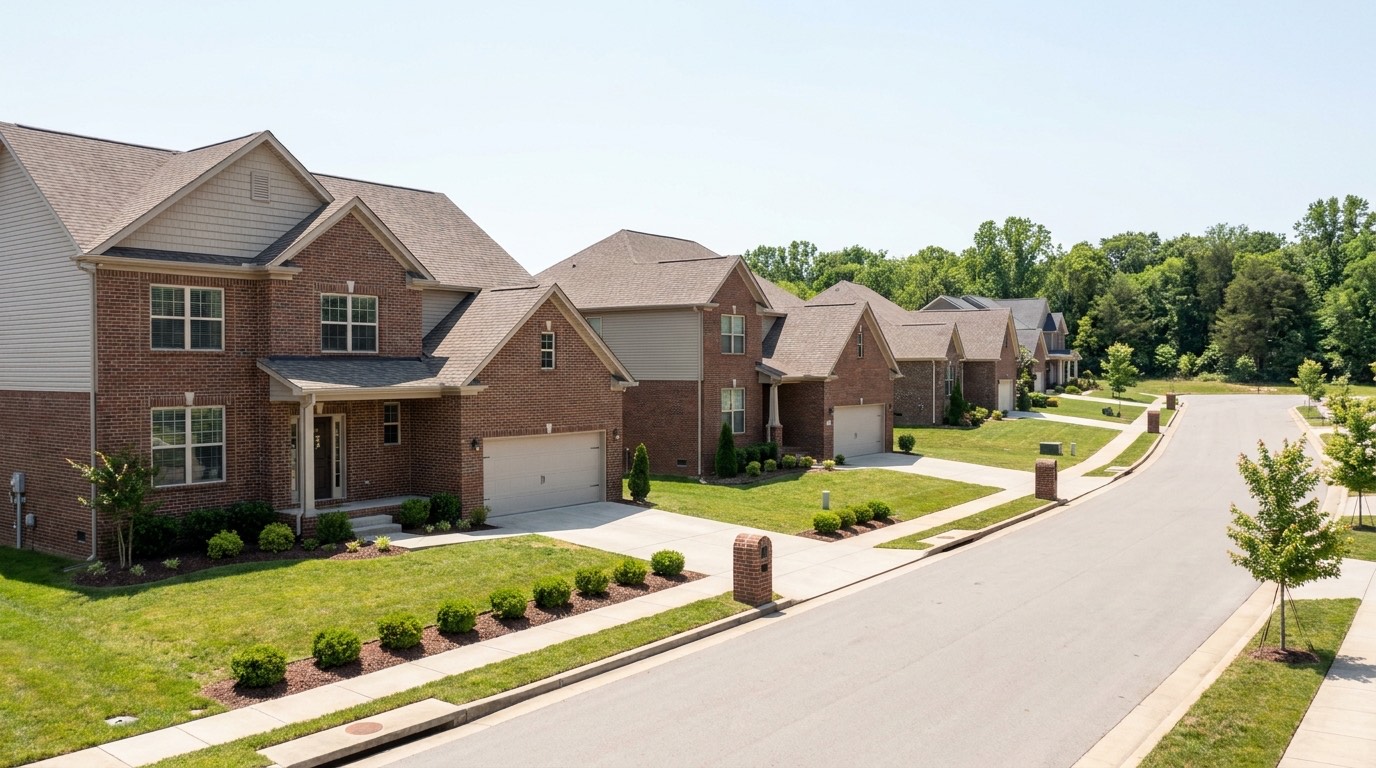 Local guide
HOA Rules and Brick Repair in Middle Tennessee
In most Middle Tennessee subdivisions the brick on your house is governed by covenants. Here is what architectural review usually wants, and why matching brick is the hard part.
Read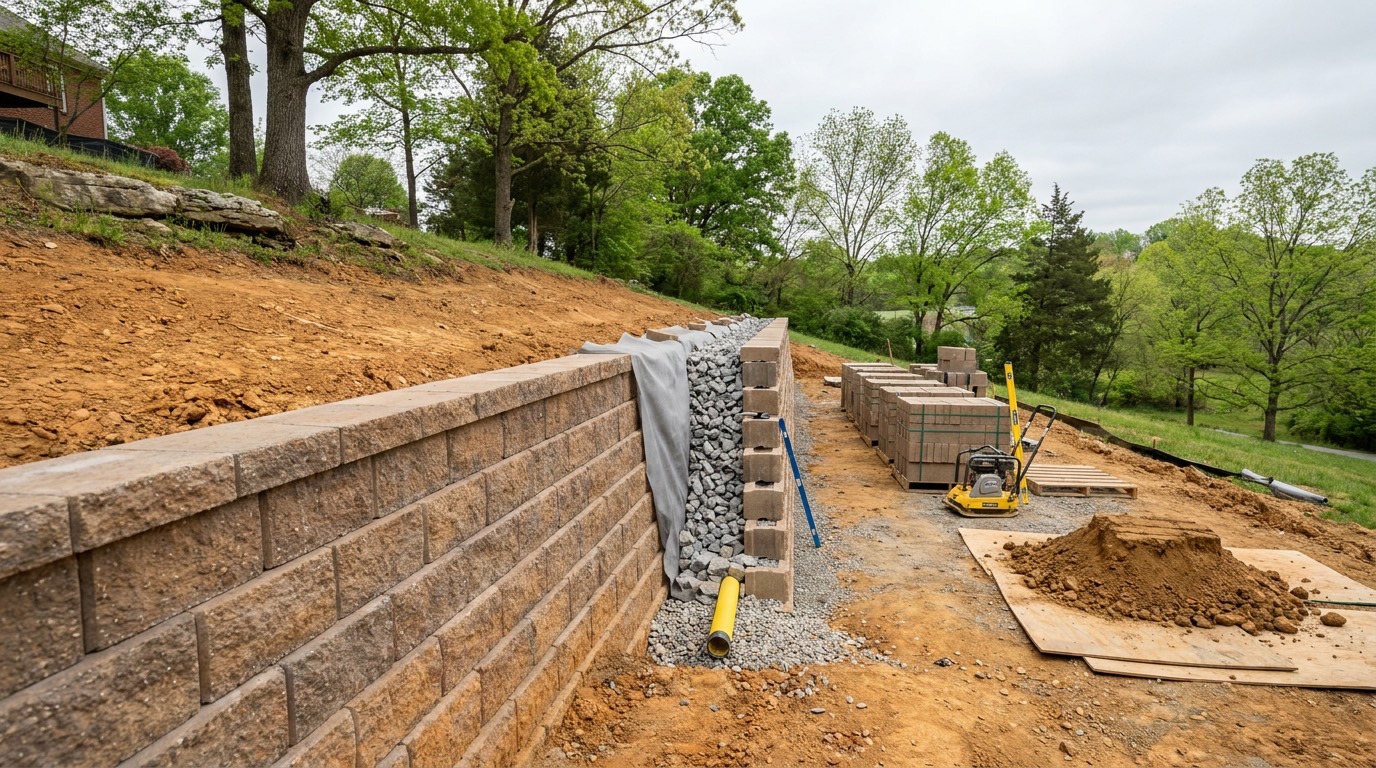 How it works
How a Retaining Wall Drains, and Why That Decides Everything
Retaining walls rarely fail because the blocks were weak. They fail because water got into the backfill and had nowhere to go. The drainage is the wall.
Read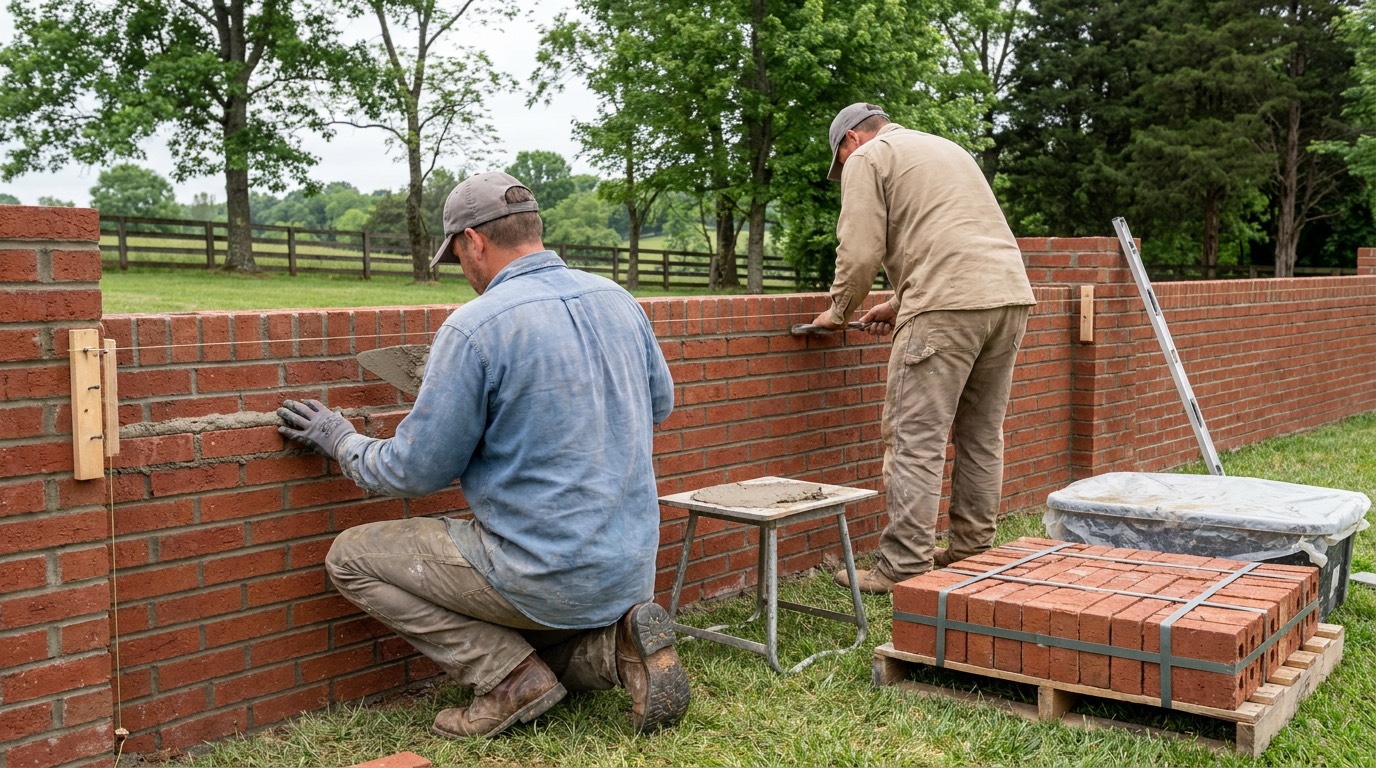 Hiring
How to Hire a Mason in Tennessee: What to Verify First
Masonry mistakes are permanent and expensive to undo. These are the things worth confirming before work starts, in the order a homeowner can actually do them.
ReadHow Tuckpointing Works, Step by Step
Good joint work is mostly removal. Here is what happens between the grinder and the finished joint, and why a skim of fresh mortar over failed joints never lasts.
Read Local guide
Karst, Sinkholes and Masonry in Middle Tennessee
The rock under Murfreesboro dissolves. That is not a defect, it is just what limestone does with rainwater, and it shapes how masonry here is built and how it fails.
ReadStraight answer on your wall.
Call, or send the form and we will get you a written price.