Water in a Basement Block Wall: Fix the Outside First
Most wet block walls are fixed in the yard, not the basement. Here is how to read what the wall is telling you, and the outside work that belongs before any coating goes on.
A wet block wall is a drainage problem before it is a masonry problem
Plenty of the calls we take about water in a basement end with a fix that never touches the basement. The wall is where the water shows up. It is rarely where the water starts. A concrete block foundation is a stack of units with hollow cores running through it and a mortar joint every eight inches, and it will pass along whatever water sits against its outside face.
Full basements are less common around Murfreesboro than crawl spaces and slabs, but they turn up on sloped lots, in older houses off the square, and in newer subdivisions with a walkout. Every one depends on the same thing: soil outside that drains instead of staying saturated. So the first question is never which sealer to buy. It is where the water is standing before it reaches the wall.
Where the water is actually coming from
Roof water is the biggest single contributor in Rutherford County, and the cheapest to redirect. A thousand square feet of roof sheds an enormous volume in one of our spring downpours, and if it lands at the foundation it soaks straight down the outside of the wall.
Groundwater is the other category and behaves differently. Middle Tennessee sits on limestone with shallow rock and seams that carry water sideways. After a wet stretch, a basement cut into that meets water moving through rock rather than water falling on the yard. Telling those two apart early saves money.
- Gutters overflowing, or downspouts dumping within a few feet of the wall
- Ground that is flat or falls toward the house across the first ten feet
- Mulch and flower beds built up above the top course of block
- A window well with no working drain, filling like a bucket during a storm
- Buried downspout lines that clogged or crushed years ago
- A settled driveway, patio, or walk that now drains back toward the foundation
- Seasonal groundwater riding a limestone seam and surfacing after a wet week
Want a price for your own wall?
Four quick questions and we come back with a written quote. Or call (772) 251-6654 if that is faster.
Request a quote
Four questions, about a minute. We'll call you back.
Read the wall before you buy anything
Go down after a good rain with a flashlight and look at where the water enters, not where it collects. Water tracks along the floor and pools in the low corner, which tells you almost nothing. The entry point does. Then repeat the walk two or three days into a dry spell, because timing is half of the diagnosis. Photograph both visits and note the date.
- Wet where the slab meets the wall: usually water under the slab pushing up
- A damp band across the wall with white powder on it: water entering around grade level
- One vertical wet streak: often a single core filling from a crack higher up
- Water only during rain and gone within a day: surface water, the good outcome
- Water arriving days after the rain and lingering: groundwater, a longer conversation
Why we do not start with a coating on the inside
Waterproof paint applied to the inside face is working against the pressure instead of with it. Water arriving from outside pushes the coating off the block, and it usually takes a layer of the block face with it when it goes. Salt left behind by evaporating water does the same job more slowly.
There is a second problem that matters more. A coating hides the evidence. Once the inside is painted, the pattern you would have used to find the source is gone, and the block cores still fill every time it rains.
That does not make sealers useless. A masonry coating is reasonable once the outside water is under control and what remains is minor damp rather than running water. Outside first, inside last.
The outside work, cheapest first
Work down this list in order, and give each step a couple of real rains before deciding it did not work. A surprising number of basements go dry somewhere in the first three items, and none of those require a mason.
All of it is about the first ten feet around the house. That strip does more for a foundation than anything installed inside it.
- Clean the gutters and confirm every downspout actually discharges
- Extend downspouts at least six to ten feet out, or tie them to daylight
- Rebuild the grade so the ground falls away from the wall for the first ten feet
- Pull mulch and soil back down below the top of the block, and keep it there
- Add a cover or a working drain to any window well
- Cut in a swale to intercept water running downhill toward the house on a sloped lot
- Repair the settled slab or walk that is now steering water back at the foundation
When grading is not enough
If the water is genuinely coming from below, yard work will not solve it. That is the point where the honest answer is a drain system, either an exterior footing drain in a new excavation or an interior perimeter drain and sump. Both are real solutions. Exterior work addresses the water before it reaches the wall, interior work manages it after it arrives.
Around here, shallow limestone complicates the exterior option. On some lots you hit rock a couple of feet down and the excavation becomes a different job with different equipment. That fact often decides which approach makes sense on your house.
On price, expect a wide spread. Downspout extensions and regrading are a few hundred dollars of material and a day of work. A full drain system runs into the thousands, and a deep wall, a tight side yard, a deck to work around, or rock at eighteen inches moves that number a long way. Nobody can quote it honestly without walking the lot.
Call a structural engineer, not a contractor, if the block is bowing inward, if a horizontal crack runs the length of a wall, or if a wall has visibly shifted. Those are soil pressure problems, even though water usually caused them.
Repairing the block itself, and when that belongs
Once the water is handled, the masonry work is straightforward. Deteriorated joints get raked out and repointed. Cracks get cut and filled with the right material rather than caulk. Spalled block gets cut out and replaced.
The exposed courses above grade take the worst of it here, because that is where freeze and thaw work on saturated block through December, January, and February. Water gets into the face, freezes overnight, expands, and pushes a flake off. Do this work in the right order and it lasts. Do it while the wall is still getting soaked and you will repeat it in a few winters.
Related questions
Water only shows up in my basement two or three times a year. Is that worth fixing?
It is worth understanding, and usually worth fixing cheaply. Water that turns up only a few times a year is nearly always surface water arriving in a heavy rain, and around Murfreesboro that means the spring downpours, when a roof sheds more water in an afternoon than the ground beside the wall can take. Track which storms produce it and where it enters. If gutter and grading work stops it, you are done.
Should I fill the block cores with concrete to stop the water?
No. Filling cores is a structural reinforcement technique, not a waterproofing one, and it does nothing about water arriving at the outside face. It also removes any path for water already in the wall to drain out. Solve the drainage instead.
The white crusty deposit keeps coming back after I scrub it. Why?
That is efflorescence, salt carried out of the block and mortar by water and left on the surface when the water evaporates. Scrubbing removes the salt but not the mechanism, so it returns with the next wet cycle. It stops returning when the wall stops getting wet.
Do I need a permit for foundation drainage work in Rutherford County?
It depends on the scope, and it is worth a phone call rather than a guess. Grading and downspout work usually is not permitted, while structural repairs and some drainage systems can be. Check with the Rutherford County building department, or the City of Murfreesboro if you are inside city limits, before work starts.
My neighbor put in an interior drain and sump. Should I do the same?
Maybe, but not on that basis. Interior systems suit houses where groundwater is the source and digging outside is impractical. They are the wrong first move where a downspout is discharging at the wall. Two houses on one street here can honestly need different answers, because the limestone under Middle Tennessee runs at different depths beneath adjoining lots and carries water sideways along its seams. Your neighbor may be fighting rock. You may be fighting a gutter.
Can I just monitor a small damp spot instead of repairing it?
Often yes. A wall that shows a faint damp patch after heavy rain and dries out completely is not an emergency. Photograph it each season and watch for change in size, for new cracking, or for the drying time getting longer. Those are the signals that the situation is moving.
More guides
All guides →Weep Holes: Why Your Brick Wall Is Built to Drain
Every year somebody caulks the gaps along the bottom of their brick to keep bugs out. It works on the bugs. It also traps water in a wall built on the assumption that water gets out.
Read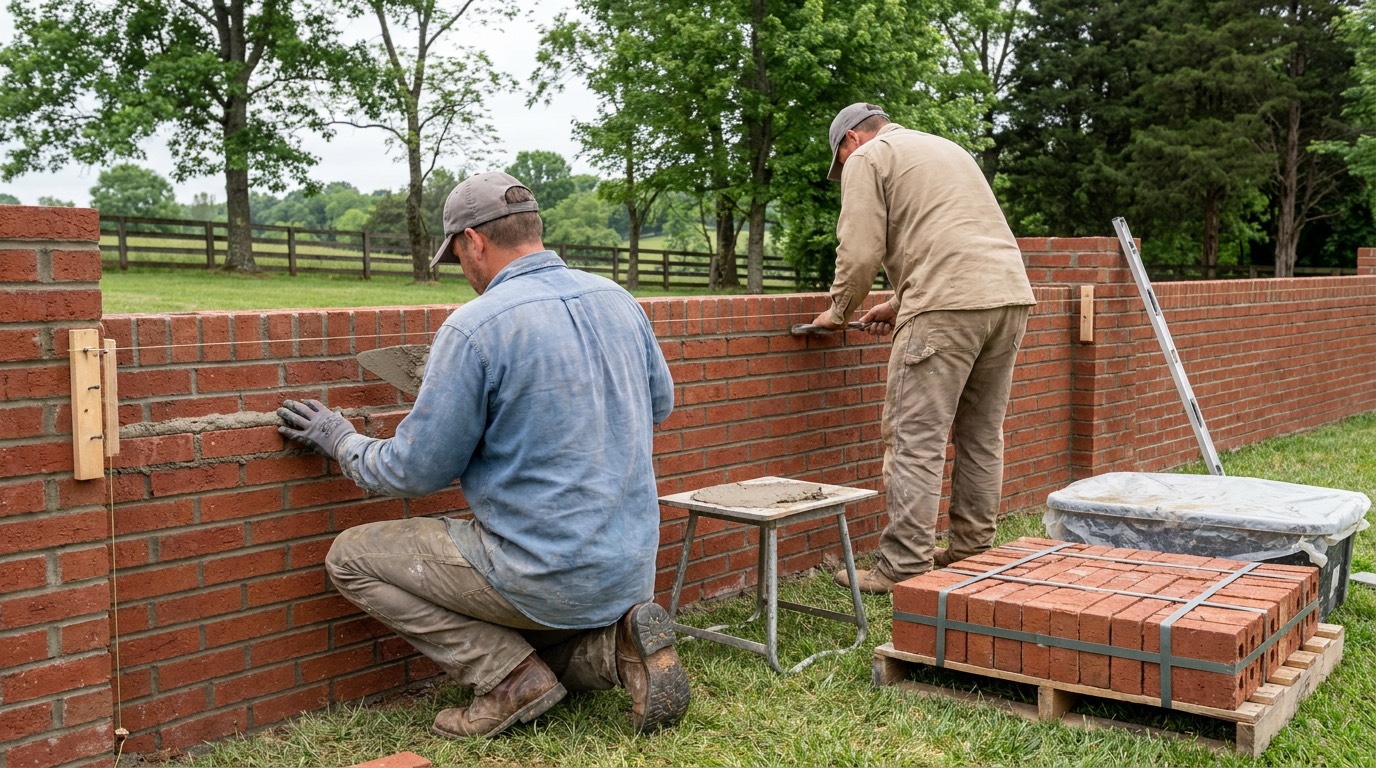 Hiring
What Belongs in a Masonry Quote Around Murfreesboro
A masonry quote is really a specification, and the price is only the last line of it. When the specification runs one sentence long, there is nothing there to compare.
ReadGetting a Chimney Ready Before the First Hard Freeze
The deadline for chimney work here is the first sustained freeze, not the first fire. Everything on this list is about one thing: how much water is inside the masonry when the temperature drops.
ReadChecking Masonry After a Tornado: Safety, Signs, Records
Tornado damage to masonry is different from ordinary storm damage. It moves things. This is what to check, what to keep your distance from, and what to photograph before anyone starts cleaning up.
Read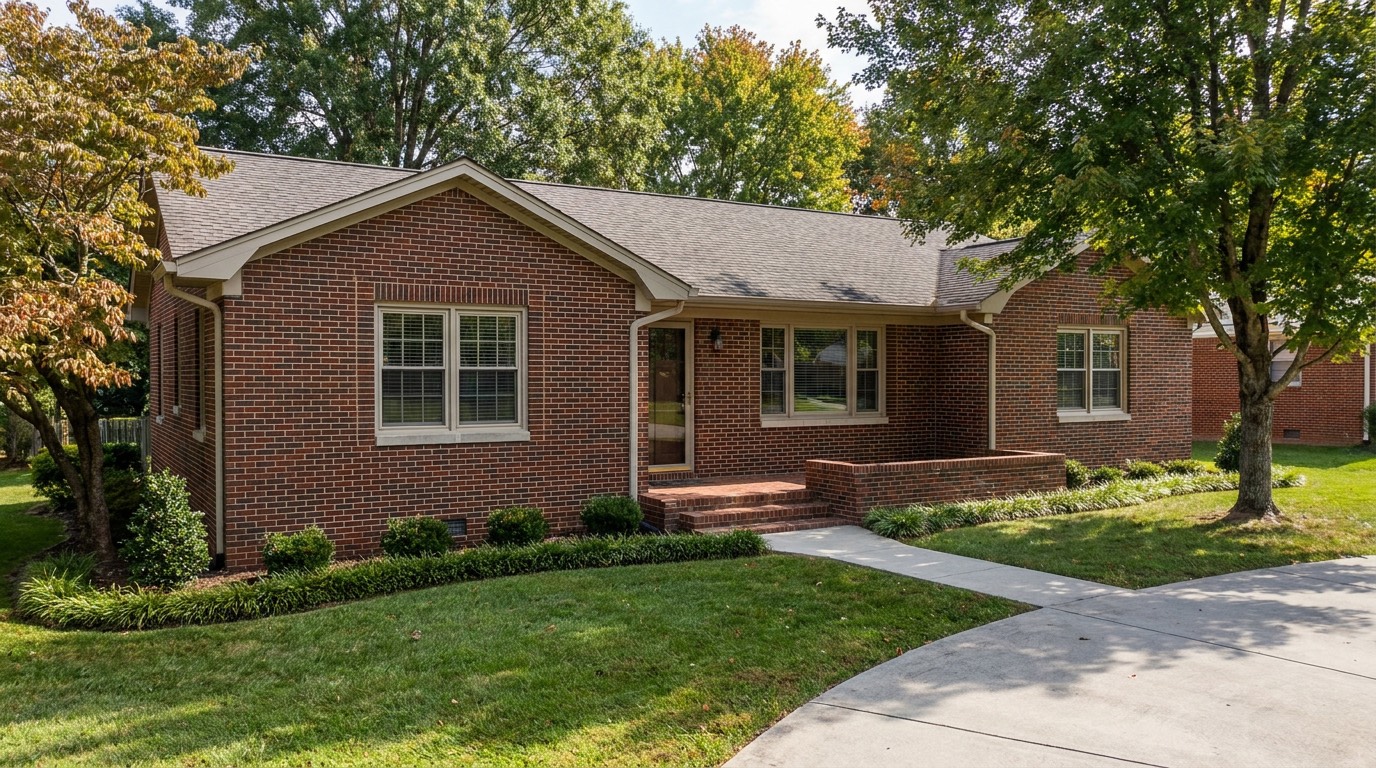 Maintenance
The Annual Masonry Walk-Around Any Homeowner Can Do
You are not diagnosing anything. You are building a record, so that next year you can tell what moved and what has been sitting still since the house was built.
ReadStraight answer on your wall.
Call, or send the form and we will get you a written price.